 UK
Preppers Shop UK
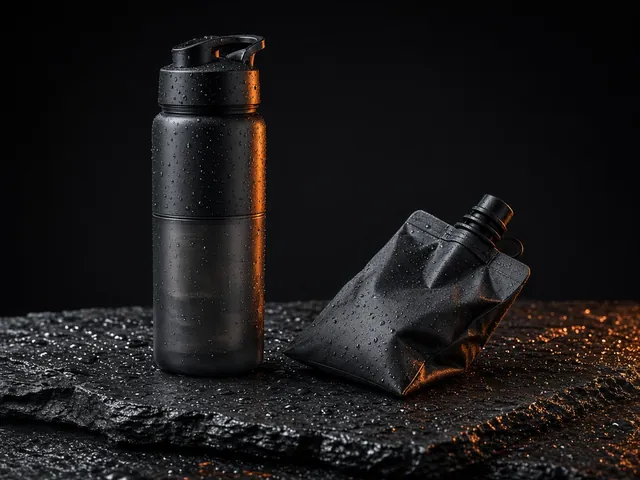
Water-to-Go 1 Litre Water Purifier Filter Bottle Jet Black
UK-made filter bottle
Check price at Preppers Shop UK ↗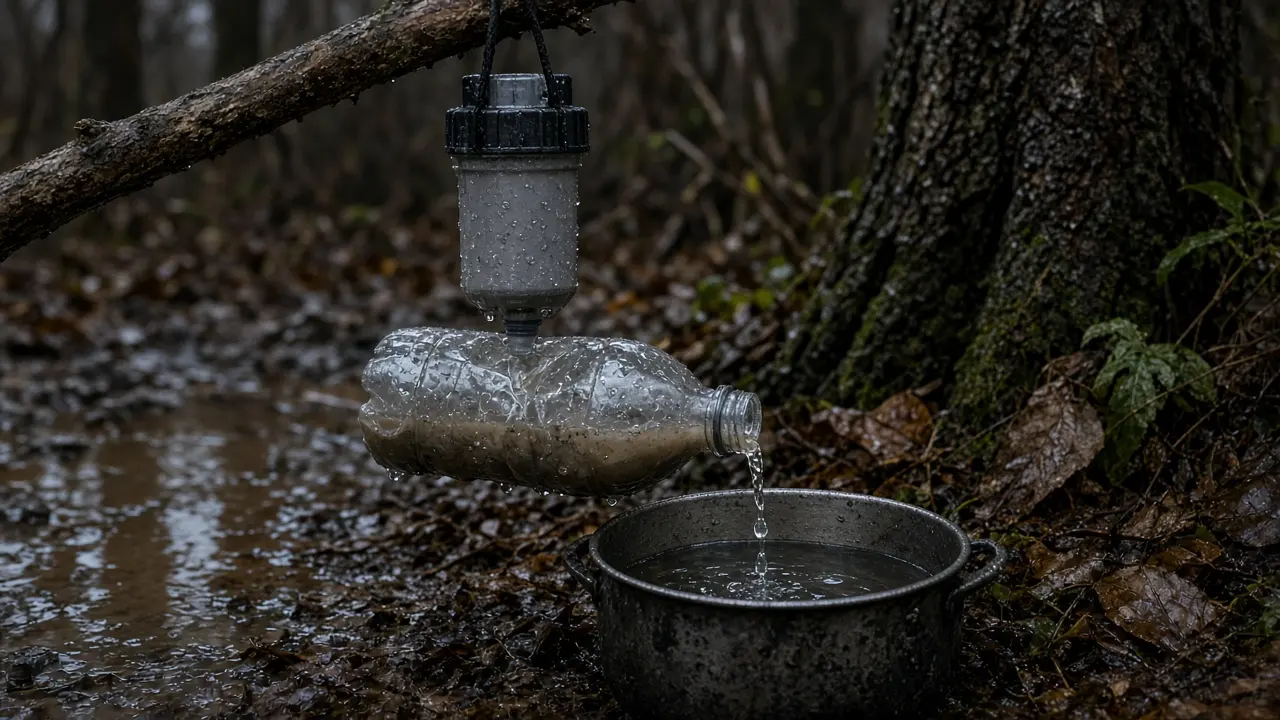
Home / Guides / Water when the taps stop: the four-rung ladder
Field guide · water
Most people own a water plan that is a single point of failure: a few bottles, or a filter they have never tested. Build a ladder instead. Each rung covers the one above it when it fails.
By the Civilian Survival Handbook team · 20 November 2026 · Official figures checked against the sources at the end; forum advice paraphrased and labelled as such.
The official line is simple. GOV.UK Be Ready: power cuts says keep at least 3 days of bottled water at 3 litres per person per day. A family of four is 36 litres for three days for drinking alone, before cooking or washing. That is the floor, not the plan.
Preppers on r/preppers add a useful way to think about it: tap water, stored water, and the ability to purify other water. Fill the bath, pans and bottles at the first sign of trouble, but treat that as the top-up, not the plan. Water you stored years ago is a gamble: one commenter reported opening jugs filled years earlier and finding them smelling off, and concluded the answer was either to buy sealed bottled water or to carry filters. Rotate, label, and date what you store.
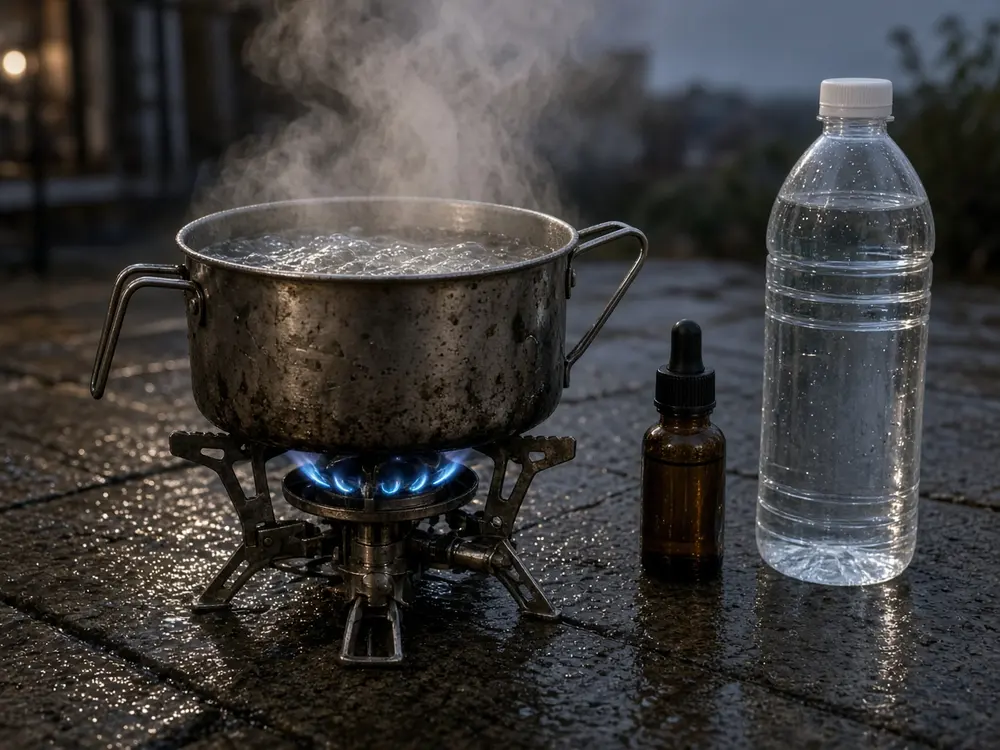
The CDC: How to make water safe in an emergency guidance is blunt: boiling is the best method. If the water is cloudy, strain it first through a clean cloth, paper towel or coffee filter, or let it settle and pour off the clear water. Then bring it to a rolling boil for 1 minute (3 minutes above 6,500 feet, which is higher than anywhere in the UK), let it cool, and store it in a clean, covered container.
Boiling kills viruses, bacteria and parasites. It does not remove chemicals. The CDC says water contaminated with harmful chemicals or toxins cannot be made safe by boiling, disinfecting or filtering. If the authorities say the supply is chemically contaminated, do not drink it.
The catch in a blackout is fuel and a safe place to burn it. Cook outdoors or with the door open. A camping stove inside a closed room can kill you. See our guide to cooking without electricity.
A filter is a physical barrier. What it stops depends on its absolute pore size, and the CDC is specific:
Some products go finer. For example, Sawyer states its pointONE filter has a 0.1 micron absolute pore and removes bacteria and protozoa, while its PointZERO TWO purifier has a 0.02 micron absolute pore and so also removes viruses. That gap is why "filter" and "purifier" are not the same word on the box. Read what the maker says it is rated to remove, and buy on that.
Two habits from the prepper forums are worth stealing. First, pre-filter murky water through cloth so the filter does not clog. Second, test and replace. One long-time r/preppers user described running a gravity filter for years on tap water, then doing a dye test and finding it passing dye it should have blocked. Their lesson, and ours: filters are consumables, spares are cheap, and you should not wait for the emergency to find out whether yours works. Keep a second method as backup.
Chemical disinfection kills most viruses and bacteria but works less well on parasites such as Cryptosporidium and Giardia, which is why you filter first when you can. The CDC table for unscented household bleach containing 5% to 9% sodium hypochlorite is 2 drops per litre: stir, then let it stand at least 30 minutes. If the water is cloudy, murky, coloured or very cold, double the amount. Use only plain, unscented bleach with no additives.
Read the label. The CDC table assumes 5% to 9%. If your bottle states a lower strength or gives no strength at all, do not guess the dose. Use purpose-made chlorine dioxide or chlorine tablets and follow the packet instructions instead.
Never drink flood water. None of the methods above are designed for it, and flood water carries sewage and chemicals. Boil-water notices from your water company are to be followed exactly.
Filters and bottles to look at. Plain links to each brand's own site. No prices shown: check the current price and shipping there. We do not earn anything from these links yet.
UKUK-made filter bottle
Check price at Preppers Shop UK ↗UKUSPress purifier bottle, viruses included
Check price at GRAYL ↗USPersonal straw filters for the grab bag
Check price at LifeStraw ↗USGravity-fed household filter
Check price at My Patriot Supply ↗Pictures are illustrations of the product type, not photos of the exact item. More: all water gear · no water hub
Not always. Per the CDC, portable filters do not remove viruses unless they are rated to. A filter plus a chemical disinfectant, or boiling, covers more. If the water may contain chemicals, none of these methods make it safe.
The CDC says a rolling boil for 1 minute, 3 minutes above 6,500 feet, after straining cloudy water through a clean cloth or coffee filter.
General information, not professional, medical or safety advice. In an emergency call 999 (UK) or 911 (US). Store links are plain links to the brand's own site; we do not earn from them today.