In short: The NHS lists the symptoms of carbon monoxide poisoning as headache, dizziness, feeling or being sick, weakness, tiredness and confusion, chest or muscle pain, shortness of breath, facial flushing and vision loss. If you suspect it, turn off the appliance if it is safe to, get everyone outside, and call the gas emergency line on 0800 111 999 (0800 002 001 in Northern Ireland).
Key facts
- Carbon monoxide has no colour and no smell. NHS-listed symptoms include headache, dizziness, nausea or vomiting, tiredness and confusion, and shortness of breath. Source
- The NHS says to call 999 or go to A&E if someone exposed has difficulty breathing, sudden confusion, loss of consciousness, weakness, or chest or muscle pain. Source
- The gas emergency number in Great Britain is 0800 111 999 (24 hours). In Northern Ireland it is 0800 002 001. Source
- HSE strongly advises that gas appliances, flues and pipework are serviced at least once a year by a Gas Safe registered engineer. Source
- In England, since 1 October 2022, private and social landlords must fit a CO alarm in any room used as living accommodation with a fixed combustion appliance (not gas cookers). Source
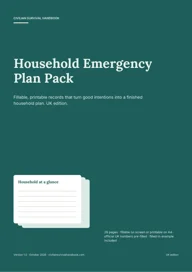 Want this written down for your home? Household Emergency Plan Pack — printable, £6.99.
Carbon monoxide (CO) is a gas you can't see, smell or taste, which is why it catches people out. It is made when fuel doesn't burn properly — in boilers, fires, cookers and heaters, and in barbecues, camping stoves and generators used in the wrong place. The good news is that the main protections are simple: a working alarm, appliances that are serviced, and knowing what to do if you suspect a problem. This guide sticks closely to NHS and Health and Safety Executive (HSE) advice.
Carbon monoxide symptoms (NHS)
The NHS lists these symptoms of carbon monoxide poisoning:
- headache
- dizziness
- feeling sick or being sick
- weakness
- tiredness and confusion
- chest or muscle pain
- shortness of breath
- facial flushing (redness can be harder to see on brown and black skin)
- vision loss
The NHS notes that symptoms may come and go, and often get worse in the affected room or building and ease when you leave or go outside. If several people in your home feel unwell in the same way, or you feel better when you're out and worse when you come back, take it seriously.
This page can't diagnose anything. If you're worried, follow the steps below and get medical advice.
What to do if you suspect carbon monoxide
Based on NHS and HSE advice:
- Stop using the appliance you suspect, if you can. HSE says to switch it off and turn off the gas at the meter control valve if you know where it is.
- Open doors and windows to let fresh air in.
- Get everyone outside into fresh air, including pets.
- Call the gas emergency line if a gas appliance may be the cause: - Great Britain: 0800 111 999 (National Gas Emergency Service, 24 hours) - Northern Ireland: 0800 002 001 (NI Gas Emergency Service, 24 hours)
- Get medical advice. The NHS says call 111 if you think you might have symptoms. Call 999 or go to A&E if someone has been exposed and has difficulty breathing, sudden confusion, loss of consciousness, weakness, or chest or muscle pain.
- Don't drive yourself to A&E. The NHS says to ask someone to drive you or call 999 for an ambulance.
- Don't go back in until you've had advice, and keep the appliance off until a qualified engineer has checked it.
HSENI adds that if you see a doctor, mention you may have been exposed to carbon monoxide, as a blood or breath test can be less accurate more than four hours after exposure ends.
Write the gas emergency number on your household emergency contacts list so nobody has to search for it. Our household plan guide shows where it fits.
Signs of carbon monoxide in the house
You can't detect the gas itself, but HSE lists warning signs that an appliance may be producing CO:
| Sign | What to look for |
|---|---|
| Flame colour | Yellow or orange flames where they should be blue (fuel-effect fires and flueless appliances may normally show this colour) |
| Staining | Soot, or yellow or brown staining on or around the appliance |
| Pilot light | A pilot light that often blows out |
| Windows | More condensation than usual on the inside of windows |
If you notice any of these, stop using the appliance and get it checked by a Gas Safe registered engineer (or a qualified engineer for oil and solid fuel). None of these signs replaces an alarm.
Carbon monoxide alarms: which kind and where to fit them
Which alarm to buy
HSE strongly recommends CO alarms as an extra precaution — not a replacement for servicing. It advises choosing an alarm that complies with EN 50291 and has a British or European approval mark, such as a Kitemark. nidirect and HSENI both recommend an audible alarm.
Where to put it
- The NHS advises a CO alarm in each room with a gas, oil, coal or wood-burning appliance.
- Follow the manufacturer's instructions. GOV.UK guidance for landlords says alarms are generally placed at head height, on a wall or shelf, about 1 to 3 metres from a potential source.
Looking after it
- Test it regularly using the test button
- Replace batteries when it warns you, or as the instructions say
- Check the replacement date — HSENI notes CO alarms have a limited lifespan
- Replace it if it's past its date or doesn't respond to testing
Carbon monoxide alarm rules for rented homes
The rules differ across the UK:
- England: Since 1 October 2022, private landlords and registered social housing providers must fit a CO alarm in any room used as living accommodation that has a fixed combustion appliance, such as a gas or oil boiler or a log burner. Gas cookers are excluded. Landlords must repair or replace an alarm once told it's faulty (tenants are advised to try new batteries first). Councils can fine landlords up to £5,000 for not complying with a remedial notice.
- Scotland: CO detection is part of the Tolerable Standard and applies to all houses, owned or rented. Detectors should be in every room with a fixed combustion appliance (other than one used only for cooking) or a flue.
- Wales: Landlords must make sure a working CO alarm is in each room with a gas, oil-fired or solid-fuel appliance.
- Northern Ireland: HSENI says CO alarms have been mandatory in new homes built since the Building Regulations changes of 31 October 2012.
Separately, HSE says landlords must arrange a gas safety check every 12 months by a Gas Safe registered engineer and give existing tenants a copy of the record within 28 days. If you rent, you can ask your landlord for it.
Power cuts and carbon monoxide
Power cuts are when people are most tempted to cook or heat in ways they normally wouldn't. The NHS is clear on the main risks:
- Don't use a barbecue or camping stove indoors or in a tent — the NHS lists both as causes of CO build-up.
- Portable generators are listed by the NHS as a source of carbon monoxide. Follow the manufacturer's safety instructions and official guidance; we don't give generator set-up advice.
- Don't run vehicle or other engines in an enclosed space such as a garage.
- Gas or paraffin heaters are on the NHS list of sources too — they need to be properly installed, maintained and used with ventilation.
- On a gas hob, the NHS says not to use oversized pots that cover more than one gas ring.
GOV.UK's Be Ready advice for power cuts is to keep warm with blankets and layers, close doors to unused rooms, and use a torch rather than candles. For food in a power cut, see our food guide, which focuses on things that need no cooking. Our power cuts guide covers the rest.
Boiler and appliance servicing
Alarms warn you; servicing helps stop CO being made in the first place.
- Service yearly. HSE strongly advises that gas appliances, flues and pipework are serviced at least once a year by a Gas Safe registered engineer.
- Check the engineer. Gas engineers carry a Gas Safe ID card listing the work they're qualified to do. HSE says you can check registration on the Gas Safe Register website or by calling 0800 408 5500.
- Sweep chimneys. If you burn solid fuel, have the chimney swept regularly — nidirect says yearly.
- Keep vents clear. The NHS advises keeping rooms ventilated and chimneys and flues clean and well maintained.
- Leave gas work to the professionals. Don't attempt repairs yourself — use a Gas Safe registered engineer.
A quick yearly routine:
- Boiler and gas appliances serviced (book before winter)
- Chimney swept if you use a solid-fuel fire or stove
- CO alarm tested and replacement date checked
- Gas emergency number on your fridge or contacts list
- Everyone at home knows the symptoms and what to do
Limitations
This is general information based on NHS, HSE and UK government guidance, not medical or professional advice. It cannot diagnose carbon monoxide poisoning. If you think someone has been exposed and is seriously unwell, call 999. Rules for rented homes differ between England, Scotland, Wales and Northern Ireland, and can change — check the official guidance for where you live.
Turn this guide into a written plan
Reading helps. Writing it down is what makes it work when the phones are flat. Start with the free plan builder, or get the full printable version:
Your whole household planHousehold Emergency Plan Pack£6.99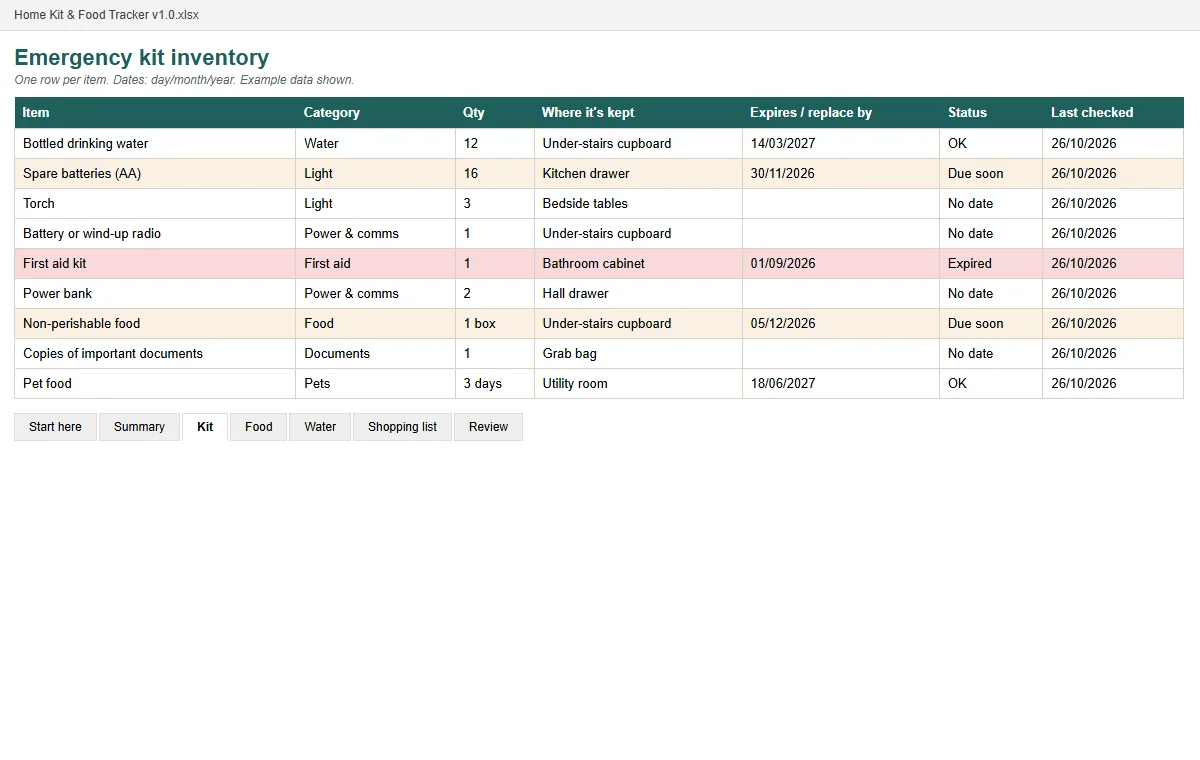 Bundle · £15.97 separatelyPrepared, Not Panicked bundle£9.99
Real pages shown before you buy · instant PDF · one-off price · 30-day refund.
Get the free 72-hour UK household checklist
Tick-box lists for each part of a UK home emergency kit, plus the key numbers on one page. Enter your email and we'll take you straight to the download.
That email address doesn't look right — please check it and try again.
We'll also email you when we publish new guides — occasional, never daily. Unsubscribe any time. See our privacy notice.
Frequently asked questions
What are the first signs of carbon monoxide poisoning?
The NHS lists headache, dizziness, feeling or being sick, weakness, tiredness and confusion as common symptoms. A key clue is that symptoms often get worse in one room or building and ease when you go outside.
What are the signs of carbon monoxide in the house?
HSE says warning signs around an appliance include yellow or orange flames instead of blue, soot or yellow-brown staining, a pilot light that keeps blowing out, and more condensation on the inside of windows. You can't smell or see the gas itself, so fit an alarm.
What should I do if my carbon monoxide alarm goes off?
Stop using appliances, open doors and windows, and get everyone outside into fresh air. Call the gas emergency line (0800 111 999 in Great Britain, 0800 002 001 in Northern Ireland), and get medical advice if anyone feels unwell; call 999 for serious symptoms.
Where should a carbon monoxide alarm be placed?
Follow the alarm maker's instructions. GOV.UK guidance for landlords says alarms are generally placed at head height, on a wall or shelf, about 1 to 3 metres from a possible source. The NHS advises one in each room with a gas, oil, coal or wood-burning appliance.
Is it safe to use a camping stove or barbecue indoors in a power cut?
No. The NHS says not to use a barbecue or camping stove indoors or in a tent, because they can cause a dangerous build-up of carbon monoxide. Portable generators are also listed as a source.
Do landlords have to fit carbon monoxide alarms?
In England, yes, in any room used as living accommodation with a fixed combustion appliance such as a boiler or log burner (gas cookers excluded). Scotland applies CO detection rules to all homes, Wales requires alarms in rented homes with gas, oil or solid-fuel appliances, and Northern Ireland requires them in new homes built since 31 October 2012.
Sources
- NHS — Carbon monoxide poisoning
- HSE — Carbon monoxide (domestic gas)
- HSE — Domestic gas FAQs
- HSENI — Carbon monoxide
- nidirect — Gas safety and carbon monoxide
- GOV.UK — Smoke and carbon monoxide alarms: Q&A booklet for landlords and tenants (England)
- Scottish Government — Tolerable standard guidance: carbon monoxide detection
- legislation.gov.uk — Renting Homes (Fitness for Human Habitation) (Wales) Regulations 2022
- GOV.UK Be Ready — Power cuts