 UK
Home / Guides / When to leave, and how to leave fast
Field guide · evacuation
When to leave, and how to leave fast
Most emergencies are survived at home. A few are not. The difference between a calm exit and a bad one is deciding your triggers, destination and kit before anyone is shouting.
By the Civilian Survival Handbook team · 20 November 2026 · Official figures checked against the sources at the end; forum advice paraphrased and labelled as such.
Default to staying, unless one of these happens
The advice from emergency planners is consistent. If you are not directly involved in an incident, in most cases it is Go In, Stay In, Tune In: go into a safe building, stay until you are told otherwise, and tune in to local TV or radio. Home has your supplies and shelter, and roads are often where people get hurt or stuck.
Prepping guides give a sensible shortlist of reasons to actually leave: an official evacuation order, a direct threat to the building (fire, flood, gas leak, structural damage), or you cannot stay safely. If you cannot answer "go where, by which route?", you do not have a plan, you have a panic.
If you are told to leave
A local council household plan (Worcestershire, May 2026) puts it plainly. If you are advised to leave because of imminent danger such as fire, leave immediately and do not stop to gather belongings. Follow the emergency services. Take medication, medical equipment, your phone and charger, and key documents (ID, purse or wallet). Tell family, friends and carers where you are going. If you have time and it is safe, turn off mains water, gas or electricity. Ask about pets, and do not put yourself in danger to help others.
If an Emergency Alert arrives, stop and follow it. If you are driving, pull up somewhere safe and legal before you read it. GOV.UK says it is illegal to use a hand-held device while driving.
The half-tank rule
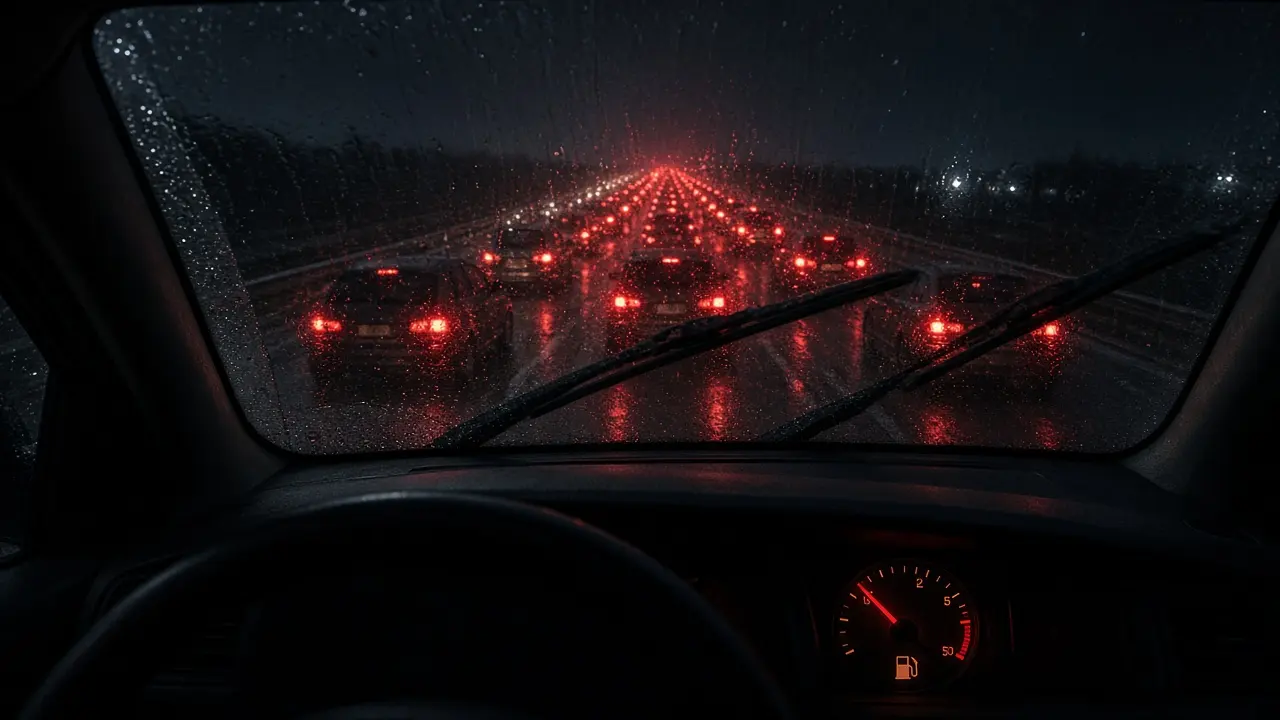
Keep your car's tank at least half full, always. Ready.gov and other emergency agencies give the same reason: fuel pumps often fail during power cuts and forecourts may close. It costs you nothing but a habit, and it is the single cheapest evacuation prep there is. Add a paper road atlas or a route you have driven before, and know a second route in case the first is blocked.
The 15-minute list
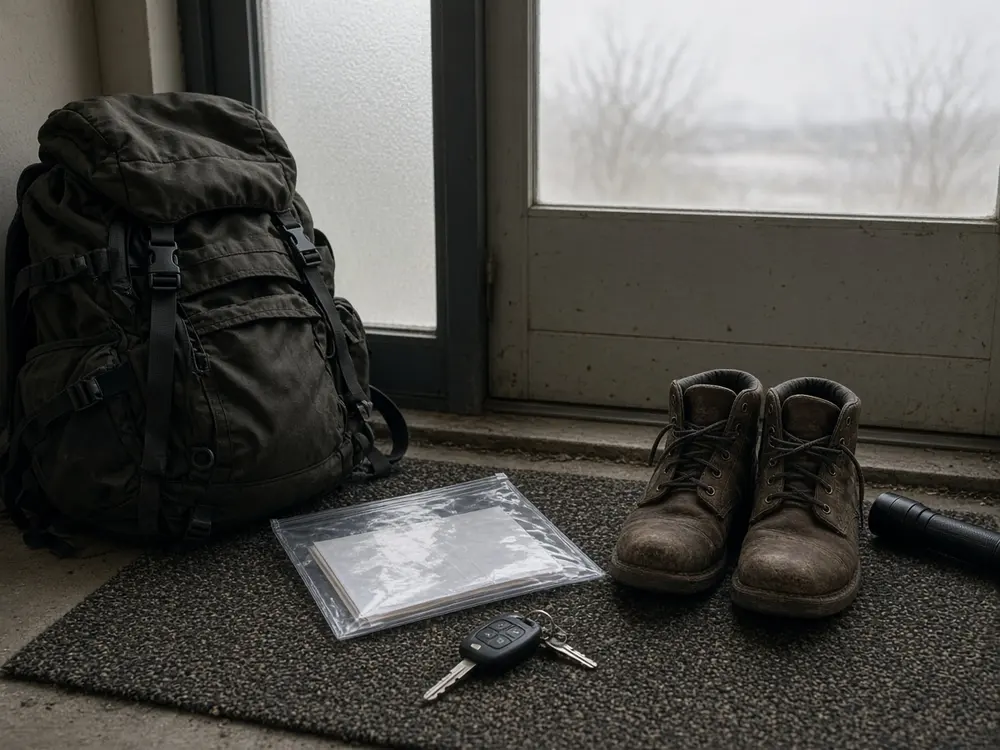
- Grab bag by the door: see our kit contents guide.
- Medication and the list of what you take. Keep a few days spare.
- Phone, charger and power bank.
- ID, bank cards, some cash, keys, and a sealed folder of copies of documents.
- Warm layers, sturdy shoes and a waterproof for everyone.
- Water and food for the first day.
- Pets, baby supplies, glasses.
- Tell someone where you are going and keep that message written on paper too.
Decide before you need to
- Name two places you could go: friends or family inland or out of town, and a second option.
- Drive both routes once.
- Agree a triggering event with your household: an evacuation order, a flood warning at your level, a gas smell.
- Run a ten-minute drill so everyone knows their job.
Gear for this
Bags and kit to be ready to move. Plain links to each brand's own site. No prices shown: check the current price and shipping there. We do not earn anything from these links yet.
UK UK
 UK
 US
MIRA Safety
MIRA Safety® Evacuation Kit – EvakPak™ Survival Kit
Evacuation survival kit
Check price at MIRA Safety ↗USLegacy Food Storage
Premium 2-Person Bug-Out Bag
Two-person bug-out bag
Check price at Legacy Food Storage ↗USLegacy Food Storage
Ultimate Auto Emergency and Safety Kit
Car emergency kit
Check price at Legacy Food Storage ↗Pictures are illustrations of the product type, not photos of the exact item. More: all grab bags and kits · evacuation hub
Quick answers
When should I evacuate?
When officials tell you to, or when there is a direct threat such as fire, flood, a gas leak or structural damage and staying is not safe. Otherwise, emergency planners advise Go In, Stay In, Tune In.
Why keep the car tank half full?
Fuel pumps often fail in power cuts and forecourts may close, so a half tank at all times keeps your options open.
More field guides
water
Water when the taps stop: the four-rung ladder
kitWhat actually goes in a prepper kit
blackoutGrid down: what fails first (UK)
Sources (read 20 November 2026):
- Worcestershire County Council household emergency plan (May 2026)
- GOV.UK: about Emergency Alerts
- Ready.gov: evacuation
- Practical Prepping: bug-out and evacuation
- GOV.UK Be Ready: power cuts
General information, not professional, medical or safety advice. In an emergency call 999 (UK) or 911 (US). Store links are plain links to the brand's own site; we do not earn from them today.