In short: Keep originals of passports, driving licences, birth certificates, insurance, tenancy or mortgage papers and vehicle documents together in one known place, and keep copies plus a list of NHS numbers, medication and contact numbers in a grab folder. Never write PINs or passwords on paper, back up digital copies to more than one place, and review the folder once a year.
Key facts
- GOV.UK's Be Ready guidance recommends having printed copies of important documents such as passports, birth certificates and insurance policy details. Source
- Your NHS number is 10 digits and can be found in the NHS App or your NHS account, on NHS paperwork such as prescriptions or letters, or by asking your GP surgery. Source
- A photocopy or photo of your passport can help you answer the questions when cancelling a lost or stolen passport. Source
- Replacing a lost V5C vehicle log book usually costs £25. Source
- The NCSC advises disconnecting removable backup media when not in use, as malware can spread to attached drives. Source
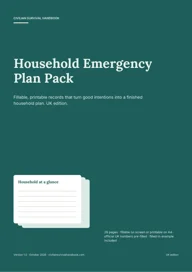 Want this written down for your home? Household Emergency Plan Pack — printable, £6.99.
Most of us only go looking for a passport, policy number or NHS number when we need it in a hurry. A little organising now means that if you have to leave home quickly, make an insurance claim after a leak, or replace something lost, you know exactly where everything is. This checklist covers which documents matter, what to keep as copies, how to put together a grab folder, and how to keep it all private.
Why keep important documents together?
GOV.UK's Be Ready guidance recommends having printed copies of important documents such as passports, birth certificates and insurance policy details, and suggests keeping your household emergency plan with them so they're easy to gather. Its flood advice says the same thing in a different way: keep your flood plan in a safe place with other essential items, such as spare medication, important documents and contact details.
Important documents checklist
Use this as a tick-list. You won't have everything on it, and that's fine.
Identity
- Passports (check expiry dates)
- Driving licences
- Birth, marriage or civil partnership certificates
- National Insurance numbers (written down, not the card itself if you still have one)
Home
- Tenancy agreement, or mortgage lender's name and account reference
- Landlord, letting agent or housing association contact details
- Home and contents insurance policy, with policy number and claims line
- Recent utility bills (they show account numbers and your supplier's phone number)
Health
- NHS number for each person
- A list of regular medication, doses and who takes it
- GP surgery and pharmacy details
- Instructions for any medical equipment you rely on
- Allergy and condition notes
Money
- Bank and building society names with their phone numbers (not PINs or passwords)
- Pension and benefits reference numbers, if relevant
- Other insurance policies (life, travel, pet)
Vehicles
- V5C vehicle log book
- Car insurance certificate and breakdown cover details
- MOT certificate
Family and pets
- Children's school or nursery contact details
- Pet vaccination records and microchip number
- Your household emergency plan and contacts list
How do I find my NHS number?
The NHS says your NHS number is 10 digits long, written in groups. The old online "find your NHS number" service is no longer available, but you can still find it by:
- Logging in to the NHS App or your NHS website account
- Looking at NHS paperwork such as a prescription, test result or appointment letter
- Contacting your GP surgery
You don't need your NHS number to use NHS services, but having it written down can make things quicker, particularly for someone helping you. The NHS App can also be used to request and manage prescriptions, which is handy if your paper list goes missing.
Copies or originals: which should you keep where?
A simple split works for most households:
| Keep the original at home, in one known place | Keep a copy in your grab folder |
|---|---|
| Passports | Photo pages of passports |
| Birth and marriage certificates | Copies of certificates |
| V5C log book | Vehicle registration and insurance details |
| Tenancy or mortgage documents | Landlord or lender contact and reference |
| Insurance schedule | Policy number and claims phone number |
| Prescriptions as issued | Medication list with doses |
Copies are useful because replacing documents can be slow and cost money. For example, GOV.UK says a photocopy or photo of your passport can help when you report it lost or stolen, and replacing a lost V5C log book usually costs £25. Some details can be checked online — you can view your driving licence record using your licence number, National Insurance number and postcode — so keep those numbers written down.
If you might need to leave quickly, keep the originals together in one folder or box so you can pick them up in seconds rather than searching several drawers.
How to put together a grab folder
A grab folder is a slim wallet of copies and lists that you could take with you if asked to leave home quickly. GOV.UK mentions people calling a bag of essentials for leaving quickly a "grab bag", and the official household emergency plan lists copies of IDs and important documents among emergency supplies.
What to put in it:
- Your filled-in household emergency plan
- Your emergency contacts list
- Copies of photo ID for each adult
- Medication list and NHS numbers
- Insurance policy numbers and claims lines
- Bank, utility and landlord phone numbers
- A small amount of cash, if you keep it here (store it separately if you prefer)
Keep it in a clear plastic wallet, label it, and tell everyone in the household where it lives. It can sit next to, or inside, your 72-hour kit.
Keeping it private: what not to write down
A grab folder is designed to be carried, which means it could be lost. Keep it useful but low-risk:
- Never write PINs or passwords on paper. Government fraud guidance says to never write down or reveal your password where others might see it.
- Use phone numbers, not full account details. "Bank: [name], phone number" is enough to get help.
- Don't copy both sides of bank cards.
- Shred old copies when you replace them, rather than putting them in the recycling whole.
- Think about who can see it. If a carer or lodger has access to your home, keep originals somewhere more private.
Tips for digital copies
Photos or scans of documents can be a helpful backup, but they need protecting just like paper.
- Keep more than one backup. The NCSC suggests that for things you can't replace, you can keep one copy in the cloud and another on removable media.
- Disconnect backup drives when not in use. The NCSC warns that malware, including ransomware, can spread to drives that stay attached.
- Protect the account they're stored in. The NCSC encourages a strong, separate password for your email, turning on 2-step verification, and using a password manager.
- Name files clearly, such as "Passport-Priya-photo-page", so anyone helping you can find the right one.
- Don't rely on digital only. In a power cut or with a flat phone, paper copies are what you'll be able to use.
We don't recommend particular apps or services. Use whatever you already trust and keep secured.
Storing documents safely from flood and fire
There's no storage that makes paper indestructible, so the aim is simply to reduce risk:
- Keep them off the floor and away from where water collects. If you live in a flood risk area, a higher shelf or upstairs room is a sensible spot. See our storms and flooding guide.
- Use a sealed waterproof bag or container for the grab folder so it survives rain or a leak.
- Keep the originals in one place so you can take them if you're asked to leave.
- If you buy a fire- or water-resistant box, read exactly what its rating says it protects against and for how long. We haven't tested any products and can't recommend one.
- Keep a second set of copies elsewhere — digital, or with a trusted relative — so one event can't destroy everything.
How often should you review your documents?
Go through the folder at least once a year. Be Ready suggests a reminder every six months to check expiry dates on your emergency supplies, so you could check documents at the same time.
- Passports and driving licences still in date?
- Insurance policy numbers changed at renewal?
- Medication list current?
- New baby, new pet, new car or new home to add?
- Old copies shredded and replaced?
Limitations
This guide is general information based on GOV.UK, NHS and NCSC guidance, not legal, financial or professional advice. In an emergency, call 999 and follow official instructions. Document rules, services and fees can differ between England, Scotland, Wales and Northern Ireland, and can change, so check the linked official pages for your situation.
Turn this guide into a written plan
Reading helps. Writing it down is what makes it work when the phones are flat. Start with the free plan builder, or get the full printable version:
Your whole household planHousehold Emergency Plan Pack£6.99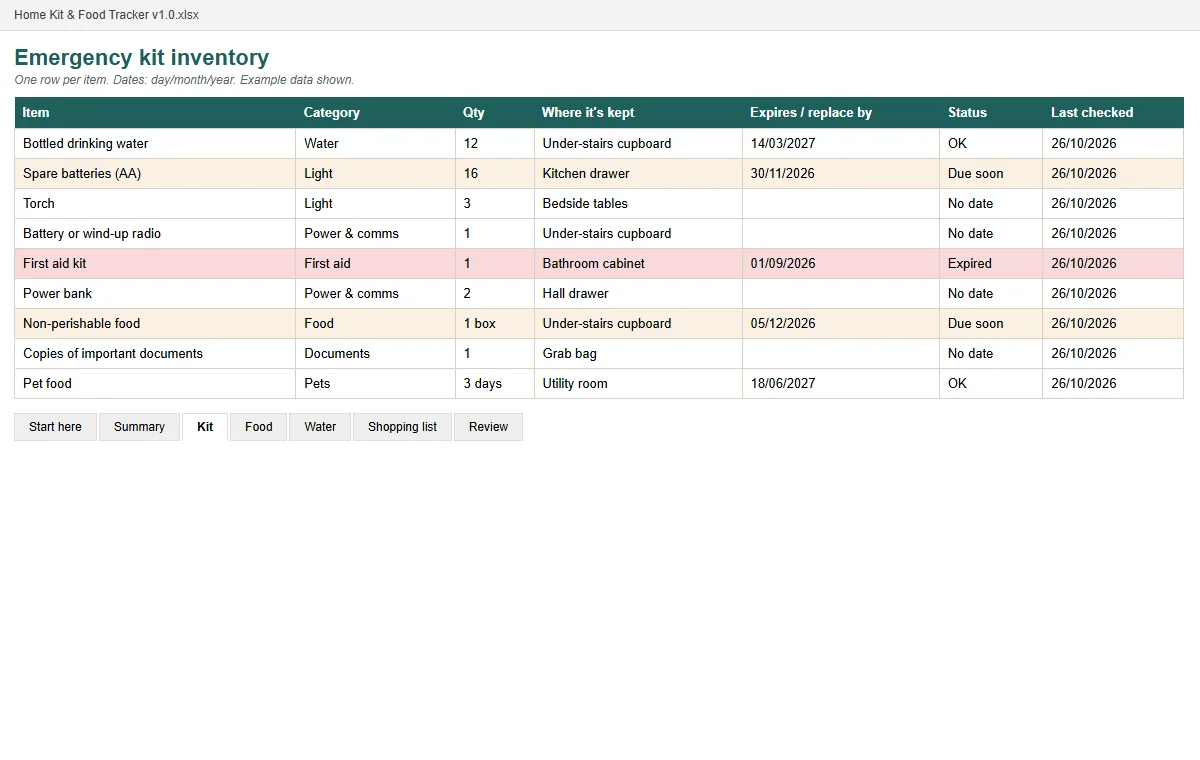 Bundle · £15.97 separatelyPrepared, Not Panicked bundle£9.99
Real pages shown before you buy · instant PDF · one-off price · 30-day refund.
Get the free 72-hour UK household checklist
Tick-box lists for each part of a UK home emergency kit, plus the key numbers on one page. Enter your email and we'll take you straight to the download.
That email address doesn't look right — please check it and try again.
We'll also email you when we publish new guides — occasional, never daily. Unsubscribe any time. See our privacy notice.
Frequently asked questions
What documents should I keep in an emergency folder?
Copies of passports, driving licences and birth certificates, insurance policy details, tenancy or mortgage contact details, NHS numbers, a medication list, bank and utility contact numbers, vehicle details and your household emergency plan.
Should I keep originals or copies in a grab folder?
Copies are usually safer for a grab folder you might carry. Keep originals together in one secure, known place at home so you can take them quickly if you need to leave.
How do I find my NHS number?
The NHS says you can find it in the NHS App or your NHS website account, on NHS letters, prescriptions or test results, or by contacting your GP surgery. It is 10 digits long.
Is it safe to write down PINs or passwords?
No. Government fraud guidance says never to write down or reveal passwords where others might see them. Leave PINs and passwords off any paper list.
Should I keep digital copies of documents?
Digital copies can help, but protect them. The NCSC suggests keeping important data backed up in more than one place, such as cloud storage and a removable drive that you disconnect when not in use.
Sources
- GOV.UK Be Ready — Be ready for emergencies
- GOV.UK Be Ready — Household Emergency Plan (PDF template)
- NHS — How to find your NHS number
- NHS — NHS App help and support
- GOV.UK — Report a lost or stolen passport
- GOV.UK — View your driving licence information
- GOV.UK — Get a vehicle log book (V5C)
- GOV.UK — Prepare for flooding
- Stop! Think Fraud (GOV.UK) — Protecting against fraud in public places
- NCSC — Always back up your most important data
- NCSC — Use a strong and separate password for your email