In short: If a pipe freezes, the Consumer Council for Water (CCW) advises turning off the water at the stop tap, switching off the immersion heater and central heating, opening the cold tap and thawing the pipe slowly with gentle warmth, never a naked flame or blow torch. If a pipe bursts, turn off the stop tap, switch off the boiler or immersion heater, turn on the indoor taps to reduce flooding, call a professional plumber and contact your insurer with photos. The best prevention is to know where your stop tap is before you need it.
Key facts
- CCW says the stop tap is usually under the kitchen sink but may be elsewhere in the house, or even outside. Source
- To thaw a frozen pipe, CCW suggests a hairdryer on a warm setting, a hot water bottle or a heated cloth, and says never to use a naked flame or blow torch. Source
- CCW says to call a professional plumber to repair a burst pipe, and points to WaterSafe to find a registered one. Source
- Customers on their water company's Priority Services Register can ask for bottled water to be delivered to their door during icy or snowy weather. Source
- GOV.UK Be Ready advises heating the rooms you use most to at least 18°C in cold weather. Source
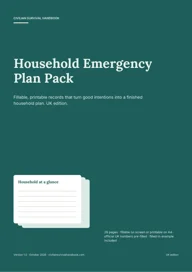 Want this written down for your home? Household Emergency Plan Pack — printable, £6.99.
A frozen pipe is a common winter problem in UK homes. It's much easier to handle calmly if you've done one thing in advance: found your stop tap. This guide follows advice from the Consumer Council for Water (CCW), which represents water customers in England and Wales, and the GOV.UK Be Ready cold-weather advice.
Before winter: a few small jobs
CCW's prevention advice comes down to a few small jobs:
- Find your stop tap. CCW says it's usually under the kitchen sink, but it can be elsewhere in the house, or even outside. Show every adult in the home where it is.
- Insulate what's exposed. Insulate exposed pipes and fit covers on outside taps. Put insulating jackets on water tanks, cisterns and boilers.
- Fix dripping taps, and keep a registered plumber's number handy.
Be Ready's cold-weather page adds heating the rooms you use most to at least 18°C, and having your heating and cooking appliances checked by a Gas Safe registered engineer.
Write the stop tap's location, the plumber's number and your water company's number on your household plan, so nobody has to search for them when something goes wrong.
Signs a pipe has frozen
CCW lists these warning signs:
- no running water, or only a trickle, when you turn on a tap
- frost on a pipe you can see, such as an outside pipe (hidden pipes are harder to spot)
- unusual smells from taps or drains
- the boiler or central heating won't switch on, or gurgles when it runs
If a pipe freezes
CCW's steps, in order:
- Turn off the water at the stop tap.
- Switch off the immersion heater (if you have one) and the central heating.
- Open the cold tap, so thawed water has somewhere to drain. Close it once the pipe has thawed.
- Thaw the pipe slowly with a hairdryer on a warm setting, a hot water bottle, or a heated cloth wrapped around it. CCW is clear: never use a naked flame or blow torch.
- Call a registered plumber before the pipe bursts.
If a pipe bursts
CCW's steps:
- Turn off the stop tap if you haven't already, and switch off the central heating boiler or immersion heater.
- Turn on all the indoor taps to reduce flooding, and soak up the water with towels.
- Call a professional plumber to repair the burst pipe. WaterSafe lists approved plumbers across the UK.
- Contact your insurer, and photograph or film the damage.
- Turn the taps off again before you turn the stop tap back on.
Be Ready's flooding advice is to not touch an electrical switch if you are standing in water. If anyone is in danger, call 999.
If you have no water at all
Call your water company, even if you think it already knows, so it knows you're affected. Be Ready also suggests checking your water provider's website for service updates in your area.
Be Ready recommends keeping 3 litres of drinking water per person per day for 3 days, plus extra for baby formula, medical devices and pets. If someone in your home needs extra support, ask to join your water company's Priority Services Register. CCW notes that registered customers can ask for bottled water to be delivered to their door during icy or snowy weather. Our Priority Services Register guide explains who qualifies.
When the water comes back, Be Ready suggests running the cold tap nearest your stopcock for a while to clear any discoloured water. If problems continue, contact your water provider.
Check on others
Be Ready's cold-weather and water pages both ask you to check on family, friends and neighbours who might need extra help, and to offer practical help such as collecting bottled water. An older neighbour with frozen pipes and no water may not want to ask.
Who to call
| Problem | Who |
|---|---|
| No water in your street | Your water company (contact details are on your bill) |
| Frozen or burst pipe inside your home | A registered plumber (WaterSafe) |
| Damage to your home | Your home insurer |
| Complaint about your water company (England/Wales) | CCW: 0300 034 2222 (England), 0300 034 3333 (Wales) |
| Anyone in danger | 999 |
Limitations
This is general information based on Consumer Council for Water and GOV.UK Be Ready advice, checked on 28 October 2026. It isn't plumbing, electrical or insurance advice. Arrangements differ in Scotland and Northern Ireland, so check Scottish Water or NI Water for local contacts. If in doubt, call a qualified professional.
If you'd like one place to write down your stop tap, meters, fuse box and the numbers above, the Household Emergency Plan Pack has fillable utilities and shut-off pages, with official UK numbers already filled in.
Turn this guide into a written plan
Reading helps. Writing it down is what makes it work when the phones are flat. Start with the free plan builder, or get the full printable version:
Your whole household planHousehold Emergency Plan Pack£6.99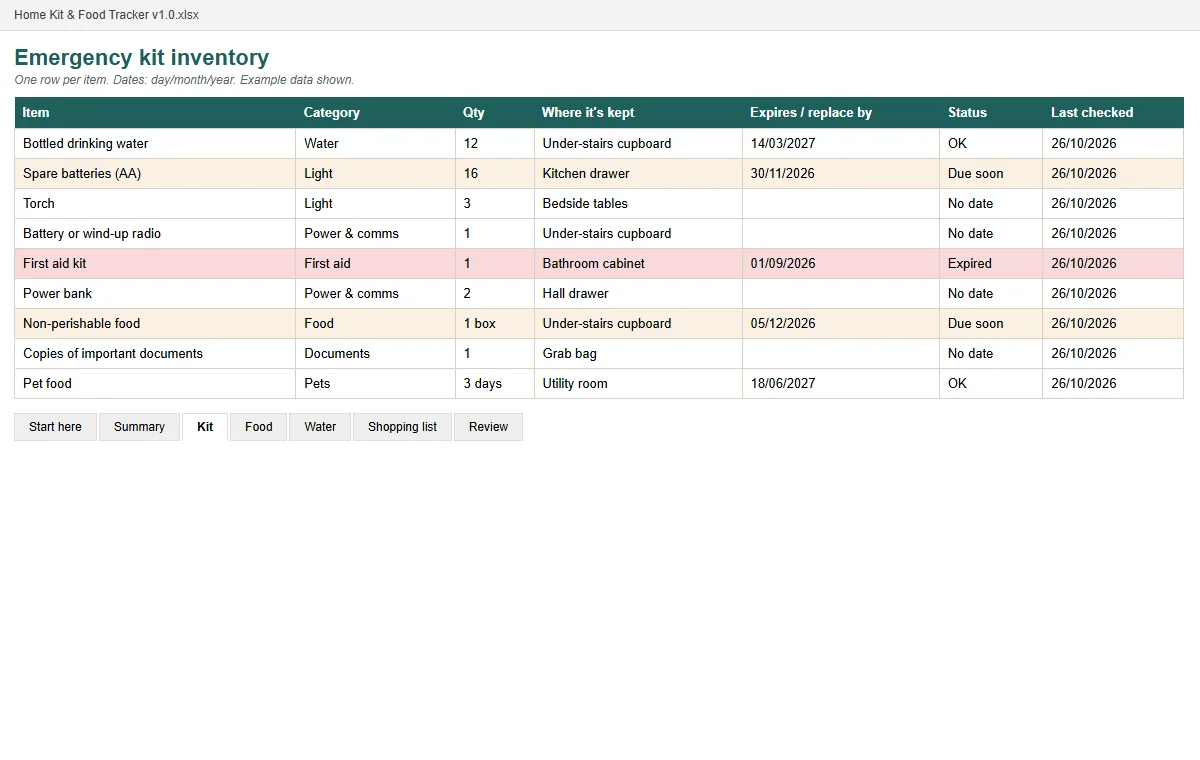 Bundle · £15.97 separatelyPrepared, Not Panicked bundle£9.99
Real pages shown before you buy · instant PDF · one-off price · 30-day refund.
Get the free 72-hour UK household checklist
Tick-box lists for each part of a UK home emergency kit, plus the key numbers on one page. Enter your email and we'll take you straight to the download.
That email address doesn't look right — please check it and try again.
We'll also email you when we publish new guides — occasional, never daily. Unsubscribe any time. See our privacy notice.
Frequently asked questions
Where is my stop tap?
CCW says it's usually under the kitchen sink, but it can be elsewhere in the home or even outside. Find it before winter and write its location on your household plan.
How do I know if a pipe is frozen?
CCW lists no water or only a trickle from a tap, frost on a visible pipe, unusual smells from taps or drains, and a boiler or central heating that won't switch on or gurgles.
Can I use a heater or blow torch to thaw a pipe?
Not a flame. CCW says to thaw slowly with a hairdryer on warm, a hot water bottle or a heated cloth, and never to use a naked flame or blow torch.
Who pays for a burst pipe?
CCW suggests calling a professional plumber and contacting your insurer with photos or video of the damage. What's covered depends on your policy, so check it.
What if I have no water at all?
Call your water company so it knows you're affected. If someone in your home needs extra help, ask to join the company's Priority Services Register. CCW says registered customers can ask for bottled water to be delivered during icy or snowy weather.
Sources
- Consumer Council for Water: Winter advice (checked 28 Oct 2026)
- GOV.UK Be Ready: Cold weather, snow and ice (checked 28 Oct 2026)
- GOV.UK Be Ready: Water supply interruptions or outages (checked 28 Oct 2026)
- GOV.UK Be Ready: Flooding (checked 28 Oct 2026)
- WaterSafe: approved plumbers