In short: GOV.UK Be Ready's emergency kit list includes first aid items such as waterproof plasters, bandages, a thermometer, antiseptic, eyewash solution, sterile dressings and gloves, medical tape and tweezers. NHS England's self-care advice adds a medicine cabinet with pain relief, oral rehydration salts, anti-diarrhoea tablets, antihistamines and indigestion remedies, and says high street pharmacies can give expert advice. Store medicines in a cool, dry place out of the sight and reach of children, and check expiry dates every six months, as Be Ready suggests for your emergency kit.
Key facts
- Be Ready's emergency kit list includes first aid items such as waterproof plasters, bandages, a thermometer, antiseptic, eyewash solution, sterile dressings and gloves, medical tape for dressings, and tweezers. Source
- NHS England (North West) lists bandages, plasters, a thermometer, antiseptic, eyewash solution, sterile dressings, medical tape and tweezers for a first aid kit. Source
- NHS England (North West) suggests a medicine cabinet with pain relief, oral rehydration salts, anti-diarrhoea tablets, antihistamines and indigestion remedies, and says high street pharmacies can give expert advice. Source
- Be Ready advises keeping essential medication and medical supplies, and a list of regular medication and doses, as part of your emergency kit. Source
- The NHS says not to give aspirin to children aged 15 or under. Source
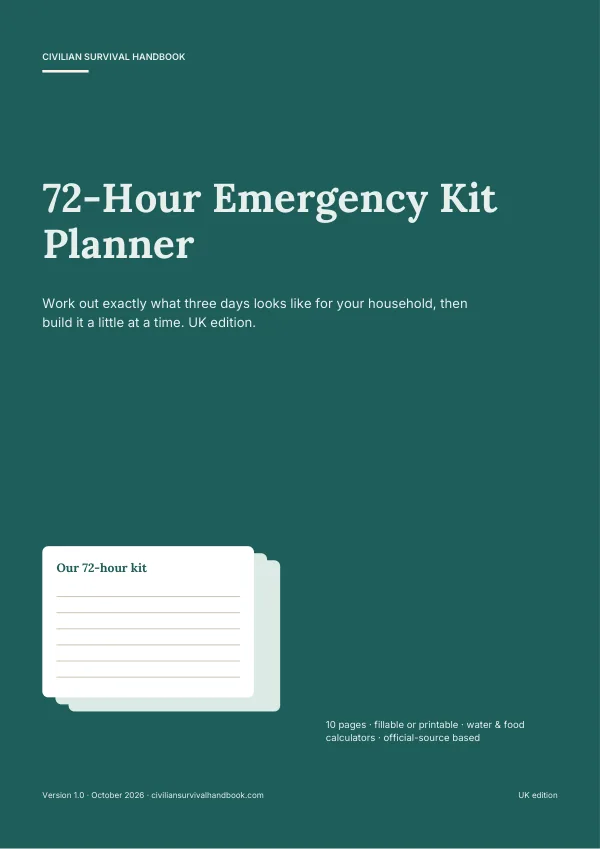 Want this written down for your home? 72-Hour Emergency Kit Planner — printable, £3.99.
A first aid kit isn't specialist gear. It's a small box of things you'll use for everyday cuts and fevers, which also happens to be on the official emergency kit list. This checklist combines GOV.UK Be Ready and NHS England self-care advice, so you can build one kit that covers both.
This isn't first aid training. Knowing what to do matters more than what's in the box. If you'd like to learn, many organisations run short courses, and NHS 111 can give advice at any hour.
First aid kit checklist
Both the Be Ready and NHS England lists include:
- Plasters (Be Ready suggests waterproof ones)
- Bandages
- Sterile dressings
- Medical tape for dressings
- Antiseptic
- Eyewash solution
- A thermometer
- Tweezers
Be Ready's list also includes:
- Gloves
Our own suggestions, not on the official lists:
- Small scissors
- Safety pins
- A printed list of household medicines, allergies and GP details
Medicine cabinet checklist
NHS England's self-care page suggests keeping a few everyday remedies at home, so you're ready if you or someone you love falls ill:
- Pain relief for aches, pains and high temperatures, such as paracetamol or ibuprofen
- Oral rehydration salts, to replace lost minerals and fluid after a fever, vomiting or diarrhoea
- Anti-diarrhoea tablets. The NHS notes these relieve symptoms but don't help with the underlying cause
- Antihistamines for allergies
- Indigestion remedies
The same page says high street pharmacies can give expert advice, and that it can cost less than £10 to stock a basic cabinet. Ask your pharmacist about children's versions and doses, and about anything that might interact with medicines someone already takes.
Children: the NHS says not to give aspirin to children aged 15 or under. Always follow the dosing on the label for the child's age.
Add your prescribed medicines
Be Ready's emergency kit list includes essential medication and medical supplies, and a list of regular medication and doses. In practice:
- ask your GP or pharmacist how best to keep your essential medicines ready for an emergency
- write each medicine's name, strength and dose on one sheet, and keep a copy in your grab bag
- if you run out, see our guide to getting an emergency prescription
Where to keep it
- Out of children's sight and reach. NHS guidance says to store medicines in a cool, dry, dark place out of the sight and reach of children, in their original packaging.
- Check the label. Some medicines need a fridge. This will be clearly marked on the packet or leaflet.
- Easy to find. Every adult in the home should know where the kit is. Label the box clearly.
- One kit, or two. Many households keep the main kit at home and a smaller one in the car. Our car emergency kit guide covers what to keep in the car.
Building it in stages
Be Ready says you don't need to do it all at once: build up gradually and pick up an extra item or two when you can. A calm way to build a kit:
- This week: gather what you already have into one labelled box, and take anything past its date back to a pharmacy.
- Next shop: add the missing basics: plasters, dressings, tape, antiseptic, gloves.
- Next month: add the thermometer, eyewash and medicine cabinet items, after asking a pharmacist what suits your household.
- Then: make up a smaller car or grab-bag version, and write your medicines list.
Buying the parts separately also lets you choose sizes and quantities that suit your household. A family with young children will use far more plasters than a couple.
Checking dates
Medicines and some first aid items have expiry dates. Be Ready suggests setting a reminder every six months to check expiry dates and swap out items that need replacing. Use the same reminder for your first aid kit:
- Replace anything past its date
- Restock what you've used
- Check the thermometer battery, if it has one
- Update the medicines list
Don't put unwanted or out-of-date medicines in the bin or down the toilet. NHS South Yorkshire says you can return unwanted medicine to any pharmacy for safe disposal, free of charge.
Where it fits in your emergency kit
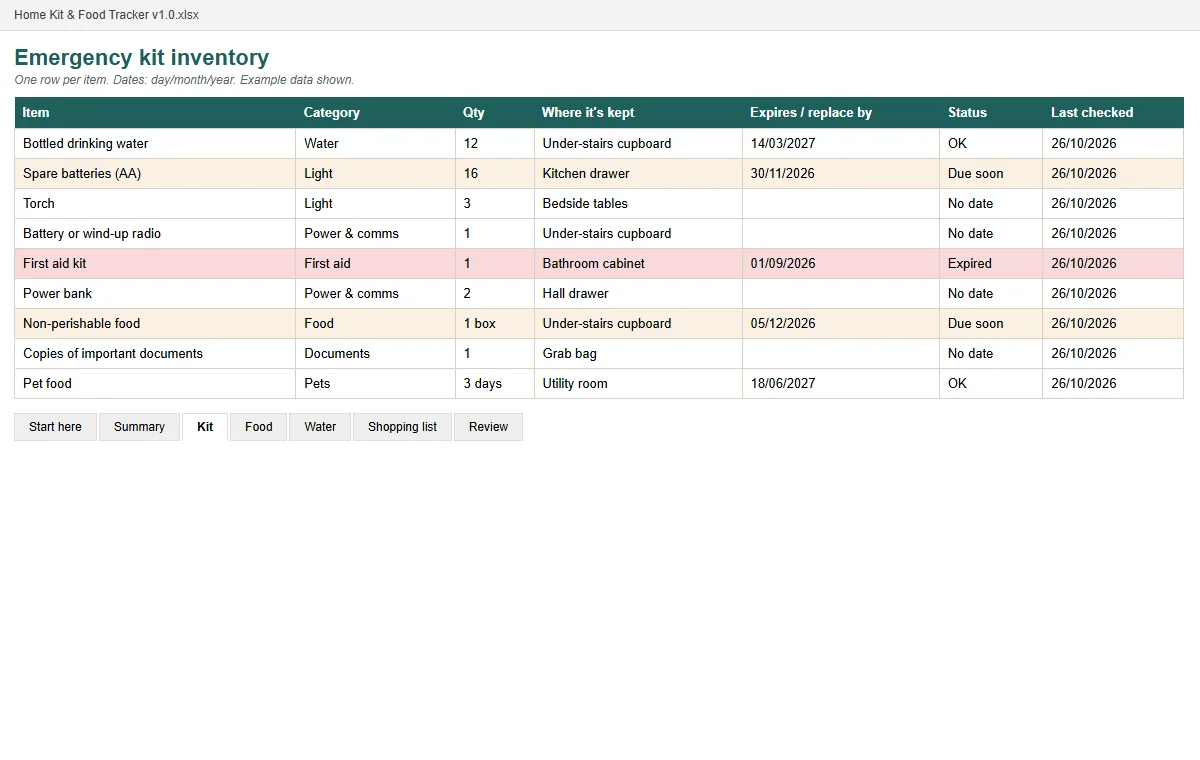
Be Ready's 3-day kit list puts first aid alongside bottled water (3 litres per person per day for drinking), non-perishable food, a torch, a battery or wind-up FM radio, a charged power bank, and copies of important documents. If you're building the whole kit, start with our 72-hour emergency kit guide or the printable emergency kit checklist.
Limitations
This is general information based on GOV.UK Be Ready and NHS pages checked on 28 October 2026. It isn't medical advice and isn't a substitute for first aid training. Always read medicine labels, and ask a pharmacist or GP if you're unsure. For urgent advice call NHS 111. In an emergency call 999.
To turn this into a full three-day kit with quantities worked out for your household, the 72-Hour Emergency Kit Planner includes a water and food calculator, a kit checklist and an inventory and rotation log.
Turn this guide into a written plan
Reading helps. Writing it down is what makes it work when the phones are flat. Start with the free plan builder, or get the full printable version:
For this topic72-Hour Emergency Kit Planner£3.99 Your whole household planHousehold Emergency Plan Pack£6.99
 Bundle · £15.97 separatelyPrepared, Not Panicked bundle£9.99
Real pages shown before you buy · instant PDF · one-off price · 30-day refund.
Get the free 72-hour UK household checklist
Tick-box lists for each part of a UK home emergency kit, plus the key numbers on one page. Enter your email and we'll take you straight to the download.
That email address doesn't look right — please check it and try again.
We'll also email you when we publish new guides — occasional, never daily. Unsubscribe any time. See our privacy notice.
Frequently asked questions
What should be in a basic home first aid kit?
Be Ready and NHS England lists both include plasters, bandages, sterile dressings, medical tape, antiseptic, eyewash solution, a thermometer and tweezers. Be Ready adds gloves.
What medicines should I keep at home?
NHS England's self-care advice suggests pain relief, oral rehydration salts, anti-diarrhoea tablets, antihistamines and indigestion remedies. Ask a pharmacist what suits your household, especially for children.
Can I give aspirin to children?
No. The NHS says not to give aspirin to children aged 15 or under. Always check the label and ask a pharmacist about children's medicines and doses.
Where should I keep my first aid kit and medicines?
Somewhere every adult knows and can reach quickly. NHS guidance says to keep medicines in their original packaging, in a cool, dry, dark place out of the sight and reach of children.
How often should I check it?
Be Ready suggests setting a reminder every six months to check expiry dates in your emergency kit. Check your first aid items and medicines at the same time.
Sources
- GOV.UK Be Ready: Be ready for emergencies (checked 28 Oct 2026)
- GOV.UK Be Ready: Checklist (PDF, checked 28 Oct 2026)
- NHS England North West: Keeping you well, all year round (checked 28 Oct 2026)
- NHS: Aspirin for pain relief (checked 28 Oct 2026)
- Wirral University Teaching Hospital NHS Trust: How should I store my medicines? (checked 28 Oct 2026)
- NHS South Yorkshire ICB: Medicine waste (checked 28 Oct 2026)
- NHS: Find a pharmacy