In short: In England, NHS 111 online lets you request a limited emergency supply of a medicine you've completely run out of, if it's one you're prescribed regularly on repeat. You pay your usual prescription fee, or nothing if you don't usually pay. It doesn't cover antibiotics for a new or recent problem, or controlled drugs that need ID to collect. If you also have symptoms, call 111 instead. GOV.UK Be Ready advises requesting repeat prescriptions up to 5 working days before you need them and keeping a written list of your medicines and doses.
Key facts
- NHS 111 online lets you request a limited emergency supply of a medicine you've completely run out of, if it's one you're prescribed regularly through a repeat prescription. Source
- You pay your usual prescription fee. If you don't usually pay, it's free. Source
- The NHS 111 emergency prescription service doesn't cover antibiotics for a new or recent problem, or controlled drugs that need ID to collect. Source
- NHS 111 says that if you need medicine and also have any symptoms, call 111 and speak to an adviser instead. Source
- GOV.UK Be Ready advises requesting repeat prescriptions up to 5 working days before you need your medicine, and keeping a list of regular medication and doses. Source
 Want this written down for your home? Care & Support Emergency Plan — printable, £4.99.
Running out of a regular medicine can happen at an awkward time: a bank holiday weekend, a snowy week, or a few days away from home. The NHS has a route for this. This guide explains it, using the NHS 111 emergency prescriptions page, local NHS guidance and GOV.UK Be Ready advice on keeping medicines in your emergency plan.
If you need medicine and also have any symptoms, NHS 111 says to call 111 and speak to an adviser. In an emergency, call 999.
In England: NHS 111 online
NHS 111 online lets you request a limited emergency supply of a medicine you've completely run out of. To use it:
- the medicine must be one you're prescribed regularly, through a repeat prescription
- it isn't for antibiotics for a new or recent problem
- it isn't for controlled drugs that need ID to collect
- you pay your usual prescription fee. If you don't usually pay, it's free
NHS 111 also says to always follow any medical advice you've already been given by your doctor.
How the supply works
Guidance from NHS Nottingham and Nottinghamshire explains what to expect:
- You can phone NHS 111 or use the online service, and NHS 111 will tell you which pharmacy to go to, or send you to an urgent care centre.
- The pharmacist decides how much to give, up to a maximum of 30 days. Sometimes the smallest pack has to be given, such as one inhaler.
- Only a few controlled medicines can be supplied in an emergency.
- It's for urgent need only. You should still order repeat medicine from your GP in good time.
You can also contact a community pharmacy yourself. That isn't an NHS service, so charges vary.
What to have ready
The pharmacist will ask whether you need the medicine straight away, who prescribed it before, and what medicine and dose you were told to take. It helps to have:
- the exact name and strength of the medicine (it's on the box)
- the dose and how often you take it
- who prescribed it, and your GP surgery's name
- the box, packaging or repeat slip, so you can read the details from it
Wales, Scotland and Northern Ireland
The NHS 111 online service above is for England. Arrangements are different in each nation. Check NHS 111 Wales, NHS inform in Scotland or nidirect in Northern Ireland, or ask a community pharmacist.
Away from home
If you're elsewhere in England when you run out, you can still use NHS 111. This is one reason to keep a copy of your medicine list in your grab bag and on your phone. If you're abroad, the rules of that country apply, so check before you travel.
So it doesn't happen again
Be Ready's advice is simple:
- Request repeat prescriptions early. Be Ready says to request them up to 5 working days before you need your medicine.
- Keep a list of your regular medication and doses.
- Keep essential medication and medical supplies in your emergency kit.
Its cold-weather advice adds checking you have enough medication in case leaving the house becomes difficult, and arranging for someone who can pick up medication for you if needed.
A routine that works for many households:
- Put a reminder in your phone at least a week before each repeat runs out, so you can order 5 working days ahead.
- Order earlier before Christmas, Easter and bank holidays, when there are fewer working days.
- Keep a written medicines list (name, strength, dose, prescriber, allergies) in your household plan and a copy in your grab bag.
- If you care for someone, keep their list too, and agree who collects their medicine if you're ill.
- Ask your pharmacist about any medicine that needs a fridge or special storage, and what to do in a power cut.
A simple medicines list
A one-page list saves time whether you're talking to NHS 111, a pharmacist, a paramedic or a relative helping out. For each person in the home, write down:
| What to write | Example |
|---|---|
| Medicine name and strength | As printed on the box |
| Dose and timing | "One tablet, morning" |
| What it's for | In plain words |
| Who prescribes it | GP surgery or clinic |
| Allergies and reactions | Including "none known" |
| Repeat due date | So you can order early |
Keep the original in your household plan, a photo on your phone, and a printed copy in your grab bag. Update it whenever a dose changes.
If you care for someone
Running out is more likely when one person manages several people's medicines, or when the carer is unwell. Our emergency planning guide for older people and carers covers a medicines record, power-dependent equipment and a plan for when the usual carer can't be there.
Limitations
This is general information based on NHS 111, NHS Nottingham and Nottinghamshire and GOV.UK Be Ready pages checked on 28 October 2026. It isn't medical advice. Some medicines can cause serious harm if stopped suddenly, so don't change or stop a medicine without speaking to your GP or pharmacist. If you have symptoms, call 111. In an emergency, call 999.
If you look after someone's medicines, the Care & Support Emergency Plan gives you fillable pages for a medicines record, daily support, priority registers and a plan for when the carer can't be there.
Turn this guide into a written plan
Reading helps. Writing it down is what makes it work when the phones are flat. Start with the free plan builder, or get the full printable version:
For this topicCare & Support Emergency Plan£4.99 Your whole household planHousehold Emergency Plan Pack£6.99
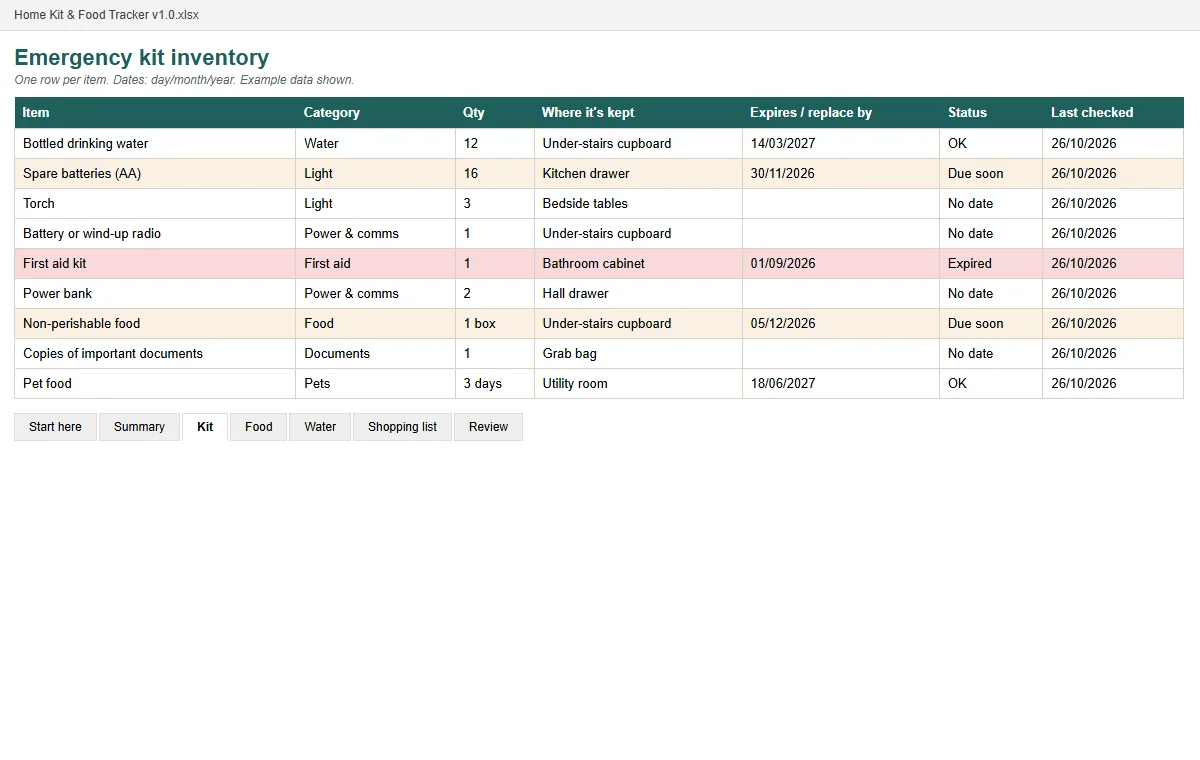 Bundle · £15.97 separatelyPrepared, Not Panicked bundle£9.99
Real pages shown before you buy · instant PDF · one-off price · 30-day refund.
Get the free 72-hour UK household checklist
Tick-box lists for each part of a UK home emergency kit, plus the key numbers on one page. Enter your email and we'll take you straight to the download.
That email address doesn't look right — please check it and try again.
We'll also email you when we publish new guides — occasional, never daily. Unsubscribe any time. See our privacy notice.
Frequently asked questions
Can I get my repeat medicine when the GP is closed?
In England, use NHS 111 online's emergency prescription service if you've completely run out of a regular repeat medicine. You can also phone 111. NHS 111 will tell you which pharmacy to go to.
How much does an emergency supply cost?
NHS 111 says you pay your usual prescription fee, and if you don't usually pay, it's free. If you go straight to a pharmacy yourself instead, that isn't an NHS service, so charges vary.
Which medicines can't I get this way?
NHS 111 lists antibiotics for a new or recent problem, and controlled drugs that need ID to collect. If you also have symptoms, call 111.
What will the pharmacist ask me?
NHS Nottingham and Nottinghamshire says the pharmacist will ask whether you need the medicine straight away, who prescribed it before, and what medicine and dose you were told to take. Having the box or your repeat slip to hand makes these easy to answer.
I live in Wales, Scotland or Northern Ireland. What do I do?
Arrangements differ. Check NHS 111 Wales, NHS inform (Scotland) or nidirect (Northern Ireland), or ask a community pharmacist.
Sources
- NHS 111: Emergency prescriptions (checked 28 Oct 2026)
- GOV.UK Be Ready: Be ready for emergencies (checked 28 Oct 2026)
- GOV.UK Be Ready: Cold weather, snow and ice (checked 28 Oct 2026)
- NHS Nottingham and Nottinghamshire ICB: Emergency supply of medication (checked 28 Oct 2026)