In short: A hosepipe ban, also called a Temporary Use Ban, is a rule a water company can bring in to save water in dry weather. GOV.UK Be Ready says that while one applies you can't use a hosepipe connected to the mains for things like watering the garden, filling a paddling pool or washing your car. Water companies decide on bans, so check your own company's website and local news. Keep drinking enough water and keep washing your hands, even during a ban.
Key facts
- Be Ready says water companies may enforce Temporary Usage Bans, or hosepipe bans, to conserve water. Source
- Under a hosepipe ban you can't use a hosepipe connected to the mains for things like watering the garden, filling a paddling pool or washing your car. Source
- Be Ready says water companies decide whether to enforce bans, and suggests checking local news and your water company's website regularly. Source
- Be Ready says older toilet cisterns can use up to 13 litres per flush, while modern ones use 6 litres or less. Source
- UKHSA advises people to keep drinking enough during a drought and not to cut back on drinking to save water. Source
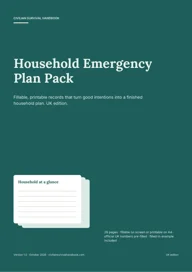 Want this written down for your home? Household Emergency Plan Pack — printable, £6.99.
When a dry spell goes on, people start asking whether a hosepipe ban is coming and what it would cover. This guide explains what a ban is, how to check whether one applies to you, and how to use less water at home without giving up anything that matters for health. It follows the GOV.UK Be Ready droughts page and advice from the UK Health Security Agency (UKHSA).
What is a hosepipe ban?
A hosepipe ban is the everyday name for a Temporary Use Ban. Be Ready says water companies may enforce one to conserve water in dry spells.
While a ban applies where you live, Be Ready says you can't use a hosepipe connected to the mains for things like:
- watering the garden
- filling a paddling pool
- washing your car
Each company publishes its own notice, which sets out the details and any exceptions. Be Ready links Ofwat's explainer on hosepipe bans for more.
How to check if a ban applies to you
Be Ready says water companies decide whether to bring in a ban. So the answer is always with your own company.
- Find your water company. It's on your water bill, or use Water UK's supplier finder.
- Check its website for any restrictions in force. Be Ready suggests checking regularly in dry weather.
- Watch your local news.
- Sign up for your company's alerts, as UKHSA suggests, and report any change in your supply, such as lower pressure.
If you want the bigger picture, Be Ready points to the Environment Agency's monthly water situation reports and weekly rainfall and river flow reports for England, and to Natural Resources Wales for drought planning in Wales.
What a ban doesn't change
A ban is about hosepipes and non-essential use. It isn't a reason to cut back on things that keep you well.
- Keep drinking. UKHSA says keep drinking enough and don't cut back to save water. Keep drinking tap water unless you're told otherwise, and carry water when you travel in hot weather.
- Keep washing your hands, especially when you get home, after coughing or sneezing, and before and after handling food.
- Keep washing food and kitchen things as normal.
If your water supply changes or stops, contact your water company. Be Ready's water outage page covers what to do.
Simple ways to save water at home
These come from Be Ready's droughts page. Most cost nothing.
In the bathroom
- Turn off the tap while you brush your teeth, shave or wash your hands. Be Ready says a running tap can waste up to 6 litres a minute.
- Have a shower instead of a bath.
- Check toilets for leaks, which can go unnoticed.
- Fit a water-saving device in your toilet cistern. Be Ready says older cisterns can use up to 13 litres per flush, while modern ones use 6 litres or less. UKHSA notes many water-saving devices are free from your water company.
In the kitchen and utility room
- Run the washing machine and dishwasher only when they're full, and use eco mode if you have it.
- Don't pour away water you could reuse, for example on plants.
Outside
- Use a watering can instead of a hosepipe.
- Fit a water butt if you can, to catch rainwater for the garden.
- Wash the car less often, and use a bucket rather than a hosepipe.
Who may need extra help in dry, hot weather
Be Ready lists people most at risk when a drought comes with a heatwave: older adults, babies and young children, people with serious long-term conditions, people with serious mental health problems or on certain medicines, people who are active outdoors, and people who are homeless.
UKHSA asks you to check on isolated neighbours, relatives and friends. If someone you care for may need extra help with water, ask their water company to add them to its Priority Services Register. Our Priority Services Register guide explains how.
Other dry-weather advice
UKHSA also suggests:
- carrying an inhaler during dry spells if you use one, as air quality and pollen can get worse
- checking the UK-AIR pollution forecast
- keeping windows and doors shut if wildfire smoke is affecting your area
- taking care at lakes and rivers, where low water can make swimming more dangerous (Be Ready says the same)
Drought can be stressful, especially for people whose work depends on water. UKHSA suggests talking to friends or family, NHS Every Mind Matters, NHS 111 or your GP.
Our extreme weather guide covers heat-health alerts and wildfires in more detail, and our water storage guide explains how much drinking water Be Ready suggests keeping at home: 3 litres per person per day for 3 days.
Limitations
This is general information based on GOV.UK Be Ready and UKHSA pages, checked on 28 October 2026. It doesn't say whether any ban is in place today. Each water company sets its own rules, dates and exceptions, so your company's notice is the one to follow. Arrangements in Scotland and Northern Ireland are run by Scottish Water and NI Water.
If you'd like one place for your water company's details, shut-offs and household contacts, the Household Emergency Plan Pack has fillable pages with official UK numbers already filled in.
Turn this guide into a written plan
Reading helps. Writing it down is what makes it work when the phones are flat. Start with the free plan builder, or get the full printable version:
Your whole household planHousehold Emergency Plan Pack£6.99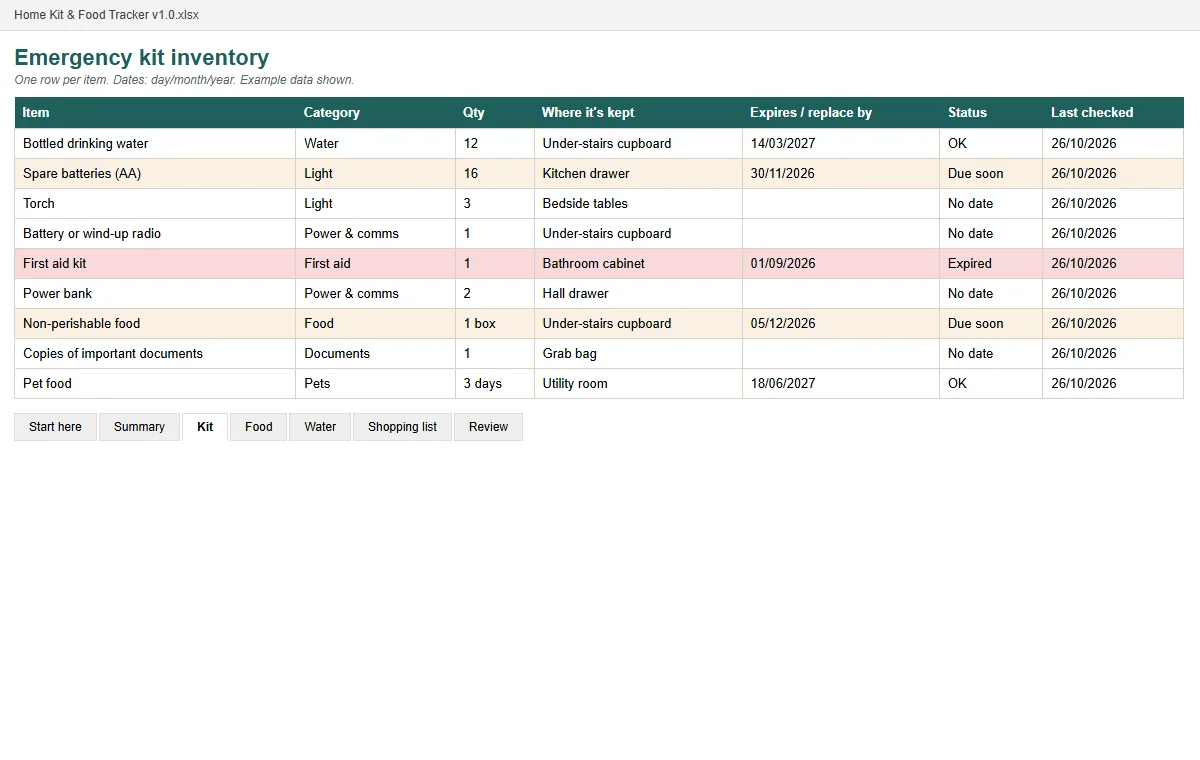 Bundle · £15.97 separatelyPrepared, Not Panicked bundle£9.99
Real pages shown before you buy · instant PDF · one-off price · 30-day refund.
Get the free 72-hour UK household checklist
Tick-box lists for each part of a UK home emergency kit, plus the key numbers on one page. Enter your email and we'll take you straight to the download.
That email address doesn't look right — please check it and try again.
We'll also email you when we publish new guides — occasional, never daily. Unsubscribe any time. See our privacy notice.
Frequently asked questions
What is a hosepipe ban?
A rule, also called a Temporary Use Ban, that a water company can bring in to save water. Be Ready says that while it applies you can't use a mains hosepipe for things like watering the garden, filling a paddling pool or washing your car.
How do I know if there is a hosepipe ban in my area?
Check your water company's website and your local news. Be Ready says water companies decide whether to enforce bans. You can find your water company through Water UK's supplier finder.
Can I still water my garden during a hosepipe ban?
Be Ready's water-saving tips suggest using a watering can instead of a hosepipe, and a water butt to collect rainwater. Your water company's notice explains exactly what is and isn't allowed, and any exceptions.
Should I drink less water during a drought?
No. UKHSA says keep drinking enough and don't cut back to save water. Keep drinking tap water unless you are told otherwise.
Are there exceptions for people with health needs?
Exceptions are set by each water company, so read your company's notice. If someone at home needs extra help with water, ask your water company about its Priority Services Register, as UKHSA suggests.
Sources
- GOV.UK Be Ready: Droughts (checked 28 Oct 2026)
- UKHSA: Drought, advice for the public (checked 28 Oct 2026)
- GOV.UK Be Ready: Water supply interruptions or outages (checked 28 Oct 2026)