In short: UK Health Security Agency advice for a radiation emergency is to go in, stay in and tune in: get inside the nearest solid building, close doors and windows, turn off fans and ventilation, and follow official updates. You may need to stay in for one to two days. Only take stable iodine tablets if you're officially told to, and don't evacuate unless advised.
Key facts
- UKHSA's advice is 'go in, stay in, tune in': go indoors, preferably into a brick, stone or concrete building, and stay there. Source
- UKHSA says you may need to stay indoors for one to two days, possibly longer. Source
- Stable iodine tablets are only for emergencies at operating or recently shut-down nuclear reactors, and should only be taken when officially advised. Source
- UKHSA says sheltering in a typical house reduces exposure from breathing in material by about 40% and direct exposure by about 85%. Source
- Under REPPIR 2019, the local authority, working with the site operator, must make information available to the public around certain sites and review it at least every three years. Source
 Want this written down for your home? Crisis & Conflict Readiness Plan — printable, £4.99.
If you've been searching for nuclear bunkers or what to do in a nuclear attack, you probably want a straight answer from an official source. Radiation emergencies are rare, and the UK's public advice for them is short and practical. This page sets out what the UK Health Security Agency (UKHSA) actually says, where people near nuclear sites get information, what the official position is on iodine tablets, and the honest answer on bunkers.
What is the official advice in a radiation emergency?
UKHSA's guidance, What to do in a radiation emergency (updated September 2024), comes down to three steps. The National Risk Register uses the same wording for emergencies in general.
Go in
- Get indoors as soon as you can, preferably into a brick, stone or concrete building.
- Close doors and windows.
- Go to the middle of the building if possible, away from outside walls.
- Cars and tents give little protection, so move calmly to a building.
Stay in
- Turn off fans, air conditioning and any ventilation that draws in outside air, and close vents, including trickle vents. UKHSA says safety-critical ventilation can stay on.
- Shelter in the nearest building rather than travelling home.
- Don't go to collect family from schools, nurseries or hospitals.
- Expect to stay in for one to two days, possibly longer, until you're told it's safe to go out.
- If you rely on regular medication, contact NHS 111.
Tune in
- Follow official advice on GOV.UK and updates from radio, TV, the internet, social media or the police.
- Advice depends on where you are. UKHSA points out that you can't see, smell or feel radiation, so official information is the only reliable guide.
- Be ready to leave if your area is told to evacuate, but don't evacuate unless you're told to. Leaving shelter can increase your exposure.
Why does sheltering indoors work?
UKHSA explains that exposure comes from breathing in radioactive material, from material settling on surfaces, skin and clothes, and from contaminated food or water. A solid building cuts most of that. UKHSA's planning figures for a typical house are a reduction of about 40% in exposure from breathing in material and about 85% in direct exposure. The most affected areas are generally within a few miles of an incident, though wind can carry material further.
What if I was outside when it happened?
UKHSA says your clothes, skin and hair may be contaminated. Its advice is to remove your outer clothing, which removes around 90% of contamination, and wash with ordinary soap or mild shampoo, avoiding conditioner. Do this wherever you're sheltering, as soon as possible. Follow UKHSA's step-by-step guidance for the details.
Bring pets in if they're with you, but don't go out looking for them.
Is food and tap water safe?
According to UKHSA:
- Food and drink that's already indoors, including mains tap water and sealed or covered food at home, in shops and at work, is considered safe.
- Mains tap water is unlikely to be affected immediately.
- Private supplies, such as roof-collected water or shallow wells, and food stored outside, including homegrown produce, may be contaminated. Follow official advice on what to avoid.
That's one reason a small supply of bottled water and food at home helps. Our 72-hour kit guide covers the basics, and the same kit is useful in a power cut or flood.
Should I take iodine tablets?
Only if you're officially told to. UKHSA's guidance says:
- Stable iodine tablets are only for radiation emergencies at operating nuclear reactors, or reactors shut down within the last 90 days.
- They only protect the thyroid gland. They're not a general radiation treatment.
- Take them only when officially advised, use only the tablets provided, and take them at the right time.
- Don't use iodised salt as a substitute.
- Reactor sites have plans for distributing tablets, and the government or emergency services will tell people how to get them.
I live near a nuclear site. Where do I get information?
In Great Britain, the Radiation (Emergency Preparedness and Public Information) Regulations 2019, known as REPPIR, cover emergency planning around sites that hold radioactive material above certain amounts.
- Planning zones. The local authority sets a Detailed Emergency Planning Zone (DEPZ) around relevant sites, where measures such as sheltering, evacuation and iodine tablets are planned in advance. Some sites also have an Outline Planning Zone (OPZ) for wider, less detailed planning (HSE).
- Information for residents. Regulation 21 requires the local authority, working with the operator, to make sure people in the DEPZ are made aware of, and where appropriate given, information on what to do. In an OPZ the information must be accessible. It has to be available online and in print, and reviewed at least every three years.
- Testing. The Office for Nuclear Regulation says off-site emergency plans must be tested every three years.
UKHSA's public information booklet advises people living close to a nuclear licensed site to use the local information they've been given. If you're not sure whether you live in a planning zone, check your council's website. In Northern Ireland, check nidirect or your council.
Is there a nuclear bunker I can go to?
Here's the honest answer. None of the official UK guidance we checked, including UKHSA's radiation advice, the National Risk Register and Be Ready, tells the public to find or build a bunker. The official advice is to shelter in the nearest solid building, as described above. We haven't found an official source on whether public shelters exist, so we won't guess either way.
This site doesn't give shelter-building instructions or advice on buying radiation detectors. Neither is part of the official advice above.
What should I do in a nuclear attack?
UKHSA's guidance is the government's published public advice for radiation emergencies, and it doesn't separate accidents from attacks. The National Risk Register notes that its scenario for a nuclear attack on the UK is held at a higher security classification, so it isn't published. In practice the published advice is the one to follow: go in, stay in, tune in, and act on official instructions at the time.
The NRR also notes the government's Emergency Alerts service can be used across a range of emergencies where there's a risk to life. Keep alerts switched on, and see our UK Emergency Alerts guide. For calm, general preparation, read Worried about war? How UK households can prepare.
Quick checklist: if you're told to shelter
- Get inside the nearest solid building and stay there
- Close doors, windows and vents, and turn off fans and air conditioning
- Move to the middle of the building
- Don't go to collect children from school or nursery
- If you were outside, remove outer clothing and wash
- Tune in to radio, TV, GOV.UK or the police for updates
- Only take iodine tablets if officially told to
- Don't evacuate unless you're told to
Limitations
This page is general information based on official UK guidance, not medical or professional advice. In an emergency, always follow instructions from the emergency services, UKHSA and your local authority, and call 999 if someone is in immediate danger. REPPIR applies in Great Britain. Arrangements in Northern Ireland, and details for each site, may differ, so check your council's local information.
Turn this guide into a written plan
Reading helps. Writing it down is what makes it work when the phones are flat. Start with the free plan builder, or get the full printable version:
For this topicCrisis & Conflict Readiness Plan£4.99 Your whole household planHousehold Emergency Plan Pack£6.99
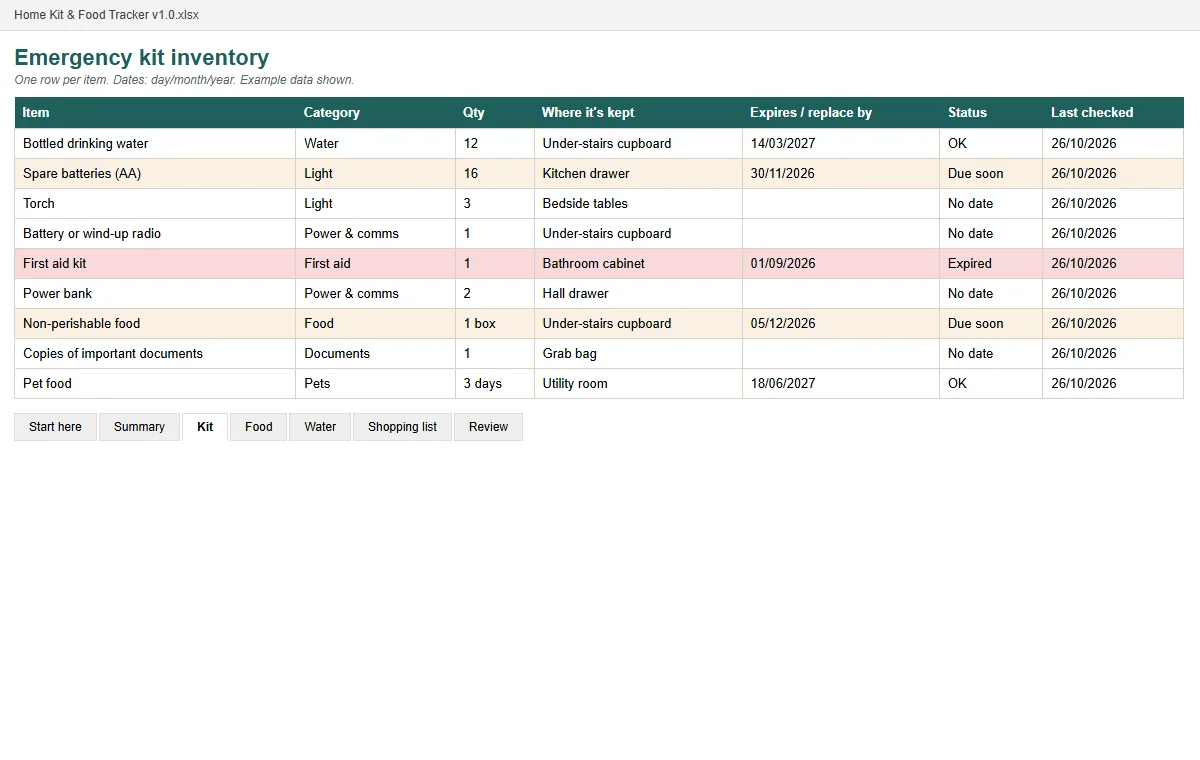 Bundle · £15.97 separatelyPrepared, Not Panicked bundle£9.99
Real pages shown before you buy · instant PDF · one-off price · 30-day refund.
Get the free 72-hour UK household checklist
Tick-box lists for each part of a UK home emergency kit, plus the key numbers on one page. Enter your email and we'll take you straight to the download.
That email address doesn't look right — please check it and try again.
We'll also email you when we publish new guides — occasional, never daily. Unsubscribe any time. See our privacy notice.
Frequently asked questions
What should I do in a radiation emergency in the UK?
Go in, stay in, tune in. Get into the nearest building, close doors and windows, turn off fans and ventilation that draw in outside air, and follow official updates on radio, TV, GOV.UK or from the police. Don't evacuate unless you're told to.
What should I do in a nuclear attack?
The UK government's published public advice for radiation emergencies is UKHSA's 'go in, stay in, tune in' guidance. It doesn't give separate public advice for an attack. Follow that guidance and any official instructions given at the time.
Are there public nuclear bunkers in the UK?
The official guidance we checked doesn't mention bunkers. UKHSA's advice is to shelter in the nearest building, preferably brick, stone or concrete, and to move to the middle of it, away from outside walls.
Should I buy iodine tablets?
UKHSA says stable iodine tablets only protect the thyroid and are only relevant to emergencies at nuclear reactors. Take them only when officially advised, use only the tablets you're given, and don't use iodised salt instead. Reactor sites have plans for giving out tablets.
Is tap water safe to drink after a radiation emergency?
UKHSA says food and drink already indoors, including mains tap water and sealed or covered food, is considered safe, and mains water is unlikely to be affected immediately. Follow any official advice on what to avoid.
I live near a nuclear site. Where do I get information?
Use the local information your council gives you. In Great Britain, the REPPIR regulations require the local authority, working with the site operator, to make information available to people around certain sites, in print and online.
Sources
- UKHSA (GOV.UK) — What to do in a radiation emergency
- UKHSA (GOV.UK) — Nuclear emergencies: information for the public
- Cabinet Office — National Risk Register 2025
- Cabinet Office — National Risk Register 2025 (PDF)
- legislation.gov.uk — REPPIR 2019, regulation 21 (prior information)
- HSE — Radiation (Emergency Preparedness and Public Information) Regulations 2019
- Office for Nuclear Regulation — Local emergency arrangements
- GOV.UK — Emergency Alerts
- GOV.UK — Be Ready: be ready for emergencies