In short: The National Energy System Operator (NESO) published its Winter Outlook 2026/27 on 23 October 2026. It forecasts a 5.9 GW surplus, a 9.5% buffer above peak winter demand, and says Great Britain's electricity supply is expected to remain secure. Electricity Margin Notices, if issued, are a routine signal and don't mean supplies are at risk. Local power cuts from things like storm damage can still happen, so keep a torch, save 105 and know your load block letter.
Key facts
- NESO's Winter Outlook 2026/27, published 23 October 2026, forecasts an operational surplus of 5.9 GW, a 9.5% buffer above peak winter demand. Source
- NESO modelled every day from 31 October 2026 to 31 March 2027, using 30,000 scenarios per day. Source
- NESO describes Electricity Margin Notices as a routine signal that extra generation may be needed, and says they don't indicate a risk to supplies. Source
- Be Ready says your load block letter, on your electricity bill or at powercut105.com, only matters in a rare national shortage, when areas may be cut off for about three hours at a time. Source
- To report a power cut, call 105 in England, Scotland and Wales (free) or 03457 643643 in Northern Ireland. Source
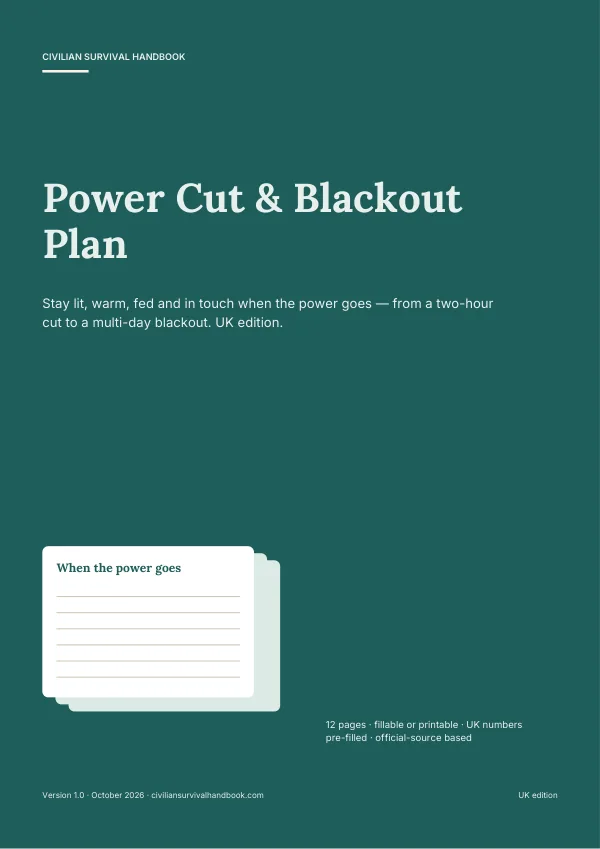 Want this written down for your home? Power Cut & Blackout Plan — printable, £4.99.
Each autumn, people ask whether the UK will have blackouts in winter. The organisation that answers this for Great Britain is the National Energy System Operator (NESO), which runs the electricity system. Its Winter Outlook for 2026/27 came out on 23 October 2026. Here is what it says, what the terms in the news mean, and the few simple things worth doing at home anyway.
The short answer
NESO's headline is that British electricity supplies are expected to stay secure this winter. Its key numbers:
| What | NESO's figure |
|---|---|
| Forecast surplus | 5.9 GW |
| Buffer above peak winter demand | 9.5% |
| Period modelled | Every day, 31 October 2026 to 31 March 2027 |
| Scenarios per day | 30,000 |
All figures come from NESO's Winter Outlook 2026/27 release. On the same day, National Gas published its own Gas Winter Outlook, which NESO says reported sufficient gas supply. Gas matters because, as NESO notes, it plays an important role on the winter days when electricity demand peaks.
What the words in the news mean
Surplus or margin. The extra electricity NESO expects to be available above the highest demand of the winter. NESO gives this year's as 5.9 GW, or 9.5%.
Electricity Margin Notice. NESO describes these as a routine signal that extra generation may be needed to cushion a tighter day, and says they don't indicate a risk to supplies.
Reliability standard. NESO's release refers to the government's reliability standard of three hours per year. It also says that in most cases, periods counted against that standard would be managed without affecting consumers.
National supply is not the same as a local power cut
The Winter Outlook is about whether there is enough electricity for the whole of Great Britain. A home can still lose power for local reasons, such as a fault or storm damage to lines nearby. Be Ready says to report those cuts to your local network operator, online or on 105. That's why a calm, small plan is still useful, whatever the national picture.
Your load block letter
Be Ready explains that every home has a load block letter. You can find yours on your electricity bill or at powercut105.com. Be Ready says it only matters in a rare national shortage, when areas may be cut off for about three hours at a time on a rota.
- Find your load block letter and write it on your household plan.
- Do the same for an older relative's home, if you help them.
Simple steps for any power cut
These come from the GOV.UK Be Ready power cuts page.
Before
- Save the number. 105 in England, Scotland and Wales (free), or 03457 643643 in Northern Ireland.
- Keep a torch (battery or wind-up) with spare batteries. Be Ready says torches are safer than candles, and using a torch saves your phone battery.
- Keep a battery or wind-up radio, and write the frequencies of your local and national stations on paper.
- Keep some cash in case card payments or cash machines are down.
- Keep water and food for 3 days: Be Ready suggests 3 litres of bottled water per person per day, plus food that needs no cooking and a tin opener.
- Join the Priority Services Register if you're eligible. Be Ready says it's free, and households with children under 5 may qualify.
- Check your landline. Ask your provider whether your phone will work in a power cut, and whether a free back-up battery is available.
- Medical equipment: if someone relies on powered equipment, make a plan with their care team.
During
- Report the cut and follow updates on your network operator's website, or call 105.
- Stay away from power lines.
- Turn off irons, ovens, electric fires and fryers. Unplug the TV and computer in case of a surge when the power comes back.
- Keep warm with blankets and layers. Close doors to rooms you aren't using and close the curtains.
- Keep fridge and freezer doors shut. Our food guide has the Food Standards Agency's timings.
- If you can, check on neighbours and share any news about when power is expected back.
- If someone's life is in danger and the landline isn't working, call 999 or 112 on a mobile. Be Ready says emergency calls can use any available network.
Our winter power cut checklist goes into keeping warm safely, and the power cuts hub lists every network operator's live map.
Who may need more help
Be Ready says older adults, babies, young children and people with long-term health conditions are most at risk from cold in a power cut. If that's someone you care for, the most useful single step is the Priority Services Register. Registered customers usually get advance notice of planned cuts and priority help in an emergency. In Northern Ireland, the equivalent is the Customer Care Register. Our Priority Services Register guide explains who qualifies.
Limitations
This is general information based on NESO's Winter Outlook release and the GOV.UK Be Ready power cuts page, checked on 28 October 2026. NESO's outlook is for Great Britain, and it is a forecast, not a promise. It isn't electrical advice. If anyone is in danger, call 999.
If you'd like your load block letter, network operator and Priority Services Register details in one place, the Power Cut & Blackout Plan has a first-hour checklist with 105 and NIE numbers, a fridge and freezer plan, a warm-room plan and a power-cut log for compensation claims.
Turn this guide into a written plan
Reading helps. Writing it down is what makes it work when the phones are flat. Start with the free plan builder, or get the full printable version:
For this topicPower Cut & Blackout Plan£4.99 Your whole household planHousehold Emergency Plan Pack£6.99
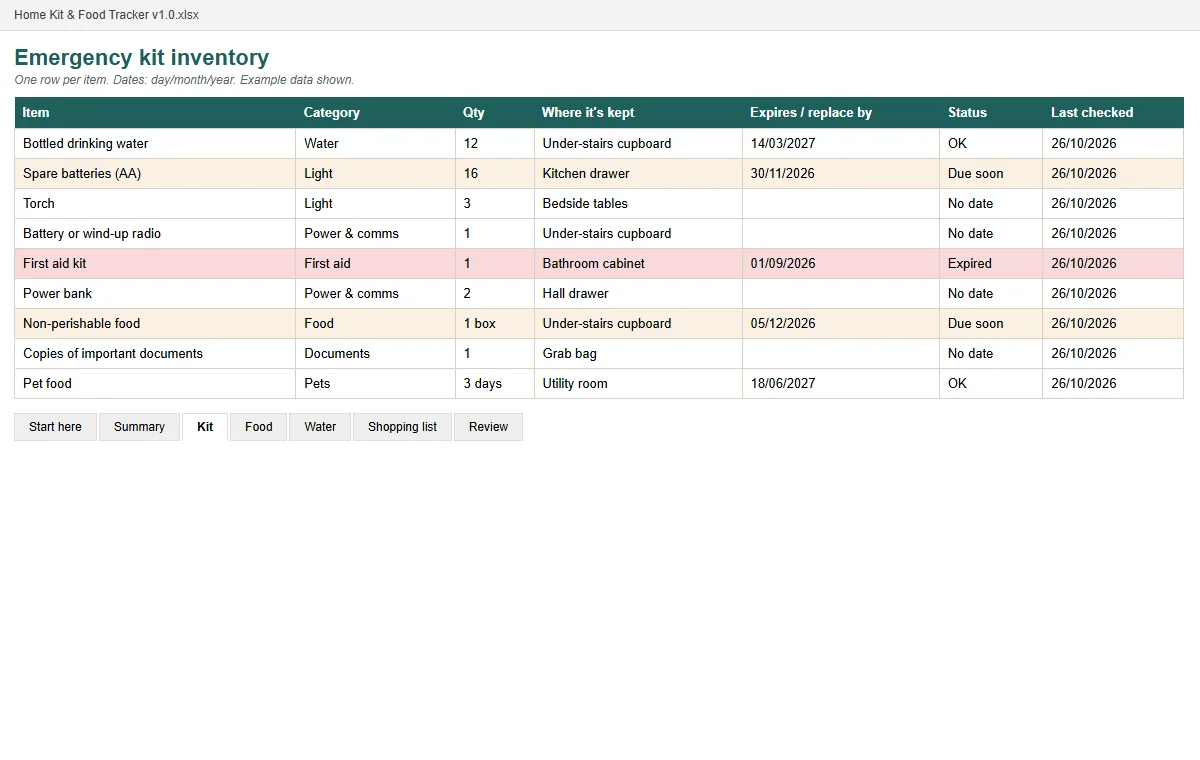 Bundle · £15.97 separatelyPrepared, Not Panicked bundle£9.99
Real pages shown before you buy · instant PDF · one-off price · 30-day refund.
The Power Cut Card for your fridge
Who to call, what to switch off, how long the fridge and freezer stay cold, and how to keep warm. One calm page from official UK advice. Enter your email and we'll take you straight to the download.
We'll also email you when we publish new guides — occasional, never daily. Unsubscribe any time. See our privacy notice.
Frequently asked questions
Will there be blackouts in the UK this winter?
NESO's Winter Outlook 2026/27 says Great Britain's electricity supply is expected to remain secure, with a forecast 5.9 GW surplus above peak demand. Local power cuts, for example from storm damage, can still happen, so it's worth having a torch and knowing to call 105.
What is an Electricity Margin Notice?
NESO describes it as a routine signal that extra generation may be needed to cushion a tighter day. It says these notices don't indicate a risk to supplies.
What is a load block letter?
A letter that shows which block your home is in for planned rota cuts in a rare national shortage. Be Ready says you can find it on your electricity bill or at powercut105.com, and that in such a shortage areas may be cut off for about three hours at a time.
What does a 3-hour reliability standard mean?
NESO's release refers to the government's reliability standard of three hours per year. It also says that in most cases, periods counted against that standard would be managed without affecting consumers.
Who do I call in a power cut?
Call 105 (free) in England, Scotland and Wales, or 03457 643643 in Northern Ireland. You can also report and track a cut on your network operator's website.
Sources
- NESO: British electricity supplies secure this winter (Winter Outlook 2026/27, 23 Oct 2026; checked 28 Oct 2026)
- GOV.UK Be Ready: Power cuts (checked 28 Oct 2026)
- Power Cut 105