In short: In a winter power cut, report it on 105, or 03457 643643 in Northern Ireland. Use torches, not candles. Wear warm clothing and use blankets and sleeping bags. Keep fridge and freezer doors shut. Check on neighbours who may need help, and if you need extra support, join the Priority Services Register.
Key facts
- Call 105 free to be put through to your electricity network operator, or report an unplanned power cut on the operator's website. Source
- If your supply is cut off because of a faulty energy meter, contact your energy supplier instead. Source
- Network operators must offer customers on the Priority Services Register extra help in planned and unplanned power cuts, such as battery packs to charge phones or medical equipment. Support varies by company. Source
- Priority Services Register customers get priority support in an emergency and, where possible, advance notice of planned power cuts. Source
- The UK Chief Medical Officers advise not using camping stoves or barbecues indoors because they can cause carbon monoxide poisoning, which can kill, and not using petrol or diesel generators indoors. Source
- A generator should be placed outdoors at least 6 metres (20 feet) away, with the exhaust pointing away from windows and doors. Source
- The Be Ready checklist lists a torch with spare batteries, blankets, sleeping bags and warm clothing, a battery or wind-up FM radio and a charged power bank. Source
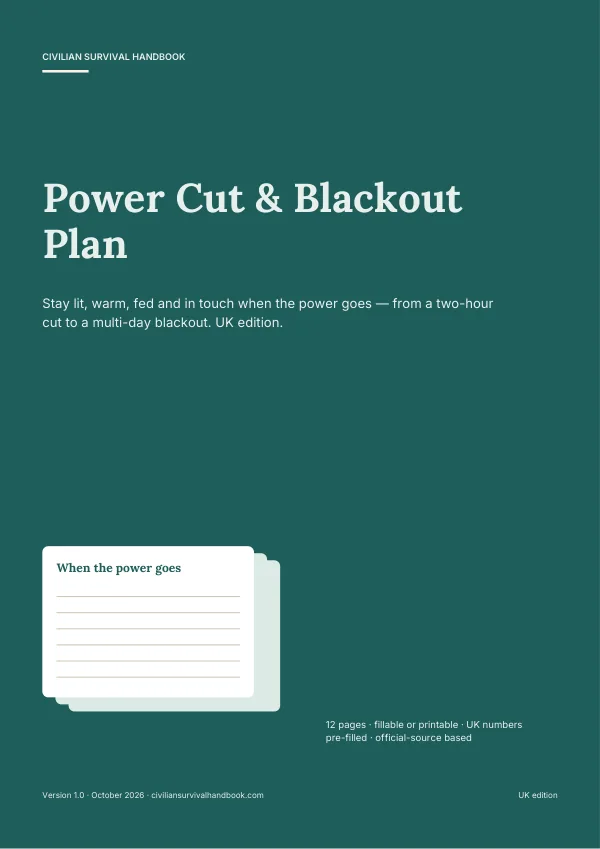 Want this written down for your home? Power Cut & Blackout Plan — printable, £4.99.
A power cut in winter can mean no heating as well as no lights. It is harder for babies, older people and anyone who is unwell. A few simple steps, done in the right order, help you stay warm and safe until the power comes back.
This checklist brings together advice from Ofgem, the UK Chief Medical Officers, the NHS and the government's Be Ready campaign. Print it, or save it on your phone before you need it.
Step 1: Check it's a power cut, then call 105
- Call 105. It's free and puts you through to your local electricity network operator (Ofgem). You can also report a power cut on your operator's website.
- If it's only your home, the problem might be your meter. Ofgem says to contact your energy supplier if your supply is cut off because of a faulty meter.
Our power cuts hub lists every network operator and how to contact them.
Step 2: Keep warm safely
The UK Chief Medical Officers have published simple advice for keeping warm without power (GOV.UK):
- Wear several thin layers and wrap up warm.
- Gather everyone in one room to share warmth.
- Stop draughts. Put a towel or sheet along the bottom of doors.
- Close curtains or blinds when it gets dark. If you have none, hang blankets or sheets over the windows.
- Close doors and windows of rooms you aren't using.
- Keep your feet up when sitting, and get up and move at least every hour.
The Be Ready checklist suggests keeping blankets, sleeping bags and warm clothing ready, along with a torch and spare batteries (Be Ready checklist).
Step 3: Never bring fuel-burning equipment indoors
This is the most important part of the checklist. When the heating goes off, it's tempting to use whatever you have. Some of these can kill.
The Chief Medical Officers advise:
- Don't use camping stoves or barbecues indoors. They can cause carbon monoxide poisoning, which can kill.
- Don't use petrol or diesel generators indoors, or any similar fuel-driven equipment.
- Put a generator outdoors, at least 6 metres (20 feet) away, with the exhaust pointing away from windows and doors.
- Don't light a fire indoors unless you have a proper appliance for it, or a fireplace with a working chimney.
- If you use an approved indoor portable gas heater, a wood burner or another non-electric stove, keep the room well ventilated.
- Never leave a fire, portable heater or generator unattended, and keep a fire extinguisher nearby.
- Only burn the right fuel. Don't burn old furniture, pallets, fence panels, rubbish, petrol, diesel or lighter fluid.
The NHS adds: don't use barbecues or camping stoves indoors or in a tent, and don't leave engines running in enclosed spaces such as garages. Carbon monoxide has no colour and no smell, so you can't tell it's there.
Signs of carbon monoxide poisoning include headache, dizziness, feeling sick, weakness, tiredness, confusion, chest or muscle pain and shortness of breath. If you suspect it:
- Stop using the appliance, if it's safe to.
- Get outside into fresh air.
- Call 999 if someone has trouble breathing, sudden confusion, or has collapsed. Otherwise call NHS 111.
- If you think a gas appliance is leaking, call the free National Gas Helpline on 0800 111 999, open 24 hours.
The NHS advises fitting a carbon monoxide alarm in each room with a gas, oil, coal or wood appliance. Our carbon monoxide guide explains where to fit them.
Step 4: Stay informed
- Keep a battery or wind-up FM radio and a charged power bank. Both are on the Be Ready checklist. See our wind-up radio guide.
- Save your network operator's website and social media to your phone while you still have power.
Step 5: Look out for others
The Chief Medical Officers encourage everyone to look out for neighbours, friends and family who may be struggling. A quick knock on the door or a phone call can make a big difference.
Know the signs of hypothermia: shivering, pale cold skin, slurred speech, slow breathing, tiredness and confusion. Babies may feel cold, seem limp or refuse feeds (NHS). Call 999 if you think someone has it.
The Priority Services Register: extra help in a power cut
The Priority Services Register is a list kept by your energy supplier and your network operator. Ofgem says network operators must offer extra help to people on it during planned and unplanned power cuts, such as battery packs to charge phones or medical equipment (Ofgem). Support varies by company. You also get priority support in an emergency and, where possible, advance notice of planned power cuts (Ofgem).
You may be able to join if you:
- have reached state pension age
- are pregnant or have young children
- have a disability or long-term medical condition, including mental health conditions
- use medical equipment that needs power
- struggle to speak or read English
- are recovering from an injury or hospital stay, or have had a bereavement or lost your job
Contact your supplier and your network operator to join. If your gas and electricity come from different suppliers, contact each one. There are no extra payments for being on the register.
Your winter power cut checklist
- 105 saved in your phone and written on paper
- Torch and spare batteries
- Blankets, sleeping bags and warm clothes
- Battery or wind-up FM radio
- Charged power bank
- Carbon monoxide alarm fitted and tested
- Priority Services Register checked for anyone who needs it
- Neighbours or family you'll check on
Write it all down with our free household plan builder. It finds your network operator from your postcode and makes a one-page plan for the fridge.
Limitations
This page explains official advice from Ofgem, the UK Chief Medical Officers, the NHS and GOV.UK. It isn't official guidance itself and isn't professional advice. Ofgem's power cut rules cover England, Scotland and Wales; Northern Ireland has its own arrangements. Follow instructions from the emergency services, your network operator and your local council, and call 999 if anyone is in danger.
Turn this guide into a written plan
Reading helps. Writing it down is what makes it work when the phones are flat. Start with the free plan builder, or get the full printable version:
For this topicPower Cut & Blackout Plan£4.99 Your whole household planHousehold Emergency Plan Pack£6.99
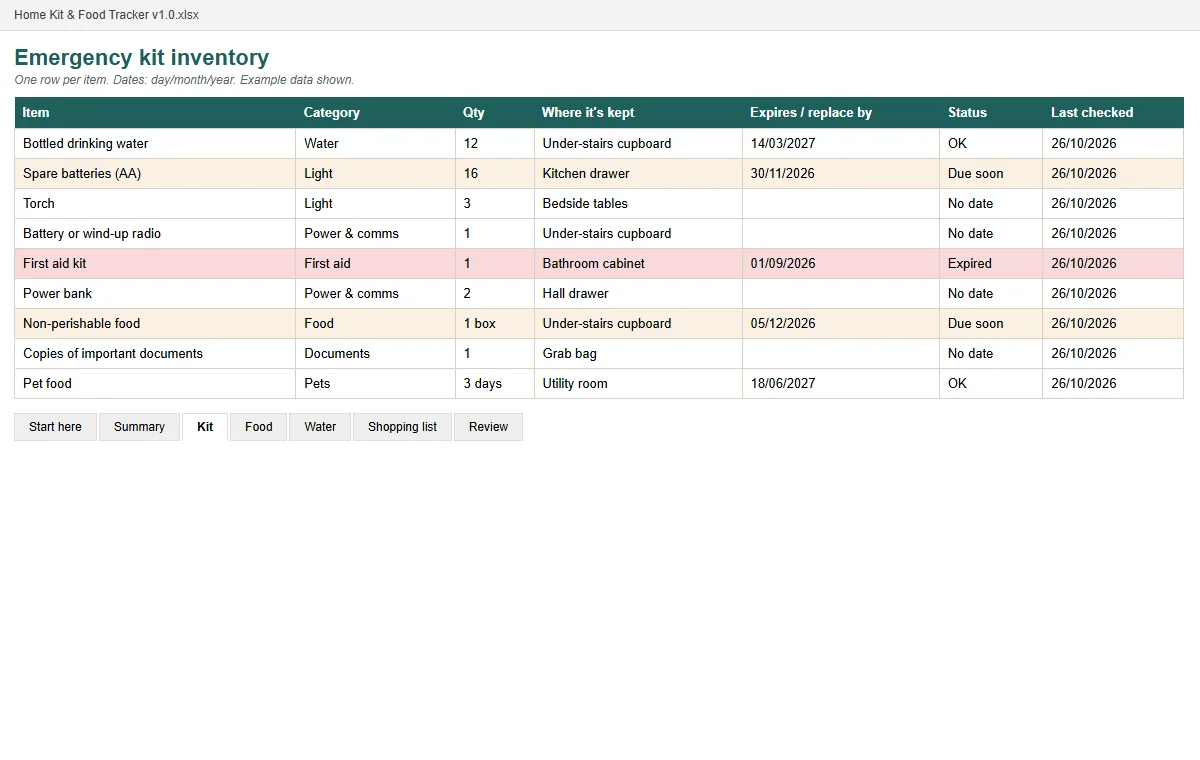 Bundle · £15.97 separatelyPrepared, Not Panicked bundle£9.99
Real pages shown before you buy · instant PDF · one-off price · 30-day refund.
The Power Cut Card for your fridge
Who to call, what to switch off, how long the fridge and freezer stay cold, and how to keep warm. One calm page from official UK advice. Enter your email and we'll take you straight to the download.
We'll also email you when we publish new guides — occasional, never daily. Unsubscribe any time. See our privacy notice.
Frequently asked questions
Who do I call in a power cut?
Call 105. It's free and puts you through to your local electricity network operator. You can also report a power cut on your network operator's website. If the problem is a faulty meter or an empty prepayment meter, contact your energy supplier instead.
How do I keep warm in a power cut?
The UK Chief Medical Officers advise wearing several thin layers, gathering everyone in one room, putting a towel under doors to stop draughts, closing curtains when it gets dark, and closing doors to rooms you aren't using. Get up and move at least every hour.
Can I use a camping stove or barbecue indoors?
No. The UK Chief Medical Officers and the NHS both say not to use camping stoves or barbecues indoors because they can cause carbon monoxide poisoning, which can kill.
Can I run a generator inside or in the garage?
No. The Chief Medical Officers advise never using petrol or diesel generators indoors. Put a generator outdoors at least 6 metres (20 feet) away, with the exhaust pointing away from windows and doors. The NHS also warns against running engines in enclosed spaces such as garages.
What extra help does the Priority Services Register give in a power cut?
Ofgem says network operators must offer extra help to people on the register, such as battery packs to charge phones or medical equipment, and priority support in an emergency. You'll get advance notice of planned power cuts where possible. Support varies by company, and there are no extra payments for being on the register.
What are the signs of carbon monoxide poisoning?
The NHS lists headache, dizziness, feeling sick, weakness, tiredness, confusion, chest or muscle pain and shortness of breath. Stop using the appliance if it's safe to, get into fresh air, and call 999 if someone is struggling to breathe, confused or unconscious.
Sources
- Ofgem — Check if you can get a payment for a power cut (plan for a power cut)
- Ofgem — Join your supplier's Priority Services Register
- GOV.UK — Keeping warm or cool in extreme weather: scripts for broadcast media (UK Chief Medical Officers, 16 December 2025)
- NHS — Carbon monoxide poisoning
- NHS — Hypothermia
- GOV.UK Be Ready
- Be Ready checklist (PDF, October 2026)