In short: After a house fire, don't go back in until the fire and rescue service says it's safe. Ask the incident commander for your incident number and which utilities were shut off. Call your insurer or landlord as soon as you can; the British Red Cross says insured homeowners can usually get a hotel or similar through their insurer, while renters should contact their landlord and then the council. On GOV.UK, being homeless after a fire can count as priority need for council help in England. Photograph the damage, keep receipts, don't reconnect gas or electricity until a qualified person has checked it, and throw away food or medicine affected by heat, smoke or water.
Key facts
- London Fire Brigade says access to your home may be restricted after a fire and not to enter it for any reason, as it may be dangerous. Source
- The British Red Cross says insured homeowners should have a hotel or similar arranged by their insurer; renters should contact their landlord, letting agent or housing association, then the council. Source
- GOV.UK says you may be in priority need for council help if you're homeless after a flood, fire or other disaster. Source
- The ABI advises keeping receipts and not throwing damaged items away too soon, as your insurer may want to inspect them. Source
- London Fire Brigade says not to turn on or reconnect services that have been shut off until they've been checked and confirmed safe. Source
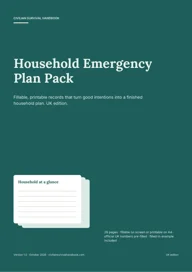 Want this written down for your home? Household Emergency Plan Pack — printable, £6.99.
A house fire is a shock, even when nobody is hurt. The days after can feel like a long list of calls and decisions. This guide puts them in order, using the London Fire Brigade "After we leave" booklet, the British Red Cross, GOV.UK and the Association of British Insurers (ABI). Take it one step at a time.
If anyone feels unwell, London Fire Brigade suggests NHS 111 (by phone or online), and 999 in a medical emergency.
At the scene
Before firefighters leave, the British Red Cross says the senior firefighter (the incident commander) will usually give you a handover covering whether it's safe to go back in, which utilities have been shut off, the damage, and your incident number. Write the number down. Your insurer and others may ask for it.
London Fire Brigade says that access to your home may be restricted and not to enter it for any reason while it may be dangerous. If the building is badly damaged, a council building inspector may need to advise on its safety. If an area has been sealed off for a fire investigation, stay out until officers tell you that you can go in.
In many areas, British Red Cross volunteers work alongside the fire service. London Fire Brigade says you can ask the officer in charge to refer you to the Red Cross for free practical help.
The first 48 hours: a checklist
- Get the incident number and note which utilities were turned off.
- Call your insurer (homeowners) or your landlord (renters). The British Red Cross says insurers may send a loss adjuster, usually within 48 hours.
- Sort out tonight's bed (see below).
- Tell your gas, electricity and water suppliers what has happened.
- Photograph the damage before anything is moved or cleaned.
- Keep every receipt for things you have to buy.
- Secure the property, or ask your landlord to.
- Let the local police know if the property will be empty.
- Check on pets. London Fire Brigade says animals affected by smoke should see a vet.
- Start a list of documents and cards you'll need to replace.
Where to stay tonight
The British Red Cross sets out who to contact:
| Your situation | Who to contact first |
|---|---|
| Homeowner with buildings insurance | Your insurer, which should arrange a hotel or similar |
| Renter or lodger | Your landlord, letting agent or housing association; then the council |
| Homeowner without insurance | The council's emergency housing team (Housing Executive in Northern Ireland) |
London Fire Brigade adds that you should check whether your policy includes alternative accommodation, and that without insurance you should contact your local housing department as soon as possible for homelessness support.
In England, GOV.UK says councils may offer emergency housing, and that you may be in priority need if you're homeless after a flood, fire or other disaster. It's still the council's decision, based on your circumstances. GOV.UK's house fire page also says the Red Cross can help with emergency accommodation, clothing and food, and with dealing with insurance companies.
If you rent and are still being charged rent with no arrangements in place, the British Red Cross suggests getting advice from Citizens Advice.
Utilities and appliances
London Fire Brigade's advice is clear: don't turn on or reconnect gas, electricity or water that has been shut off until it has been checked and a supplier or competent tradesperson confirms it's safe. Don't switch on electrical appliances damaged by fire or water until a registered electrician has checked them.
If you rent, contact your landlord. London Fire Brigade notes that repairs to supplies are often the landlord's responsibility. It also suggests checking smoke, heat and carbon monoxide alarms for damage and replacing them if you have any doubt. Our carbon monoxide guide covers alarms.
Insurance basics
The ABI and London Fire Brigade agree on the basics:
- Contact your insurer as soon as you can. The ABI says most insurers run 24-hour emergency helplines.
- Ask before you clear up. London Fire Brigade says insurers may want to inspect before anything is moved, cleaned or thrown away. The British Red Cross says to get authorisation before cleaning up yourself.
- Don't throw damaged items away too soon. The ABI says only discard things that are a health hazard, and photograph them first.
- Make temporary repairs to stop further damage if you can, after calling the helpline for advice.
- Keep receipts. The British Red Cross says your insurer may give a cash advance for essentials.
- Lost your policy? London Fire Brigade says you can ask your insurer for a replacement copy.
The British Red Cross also warns that anyone genuinely working with your insurer will already have your details, including your policy number. For help with a claim, Citizens Advice has a consumer service you can contact by phone or online chat.
Food, medicine and going back in
London Fire Brigade says to throw out damaged or contaminated food and return medicines to a pharmacy for safe disposal. The British Red Cross says to check with a pharmacist before using any medicine that has been exposed to heat.
When you're allowed back in, London Fire Brigade says soot, debris and firefighting water can contain harmful chemicals and sharp objects. It suggests making sure the property has been well ventilated, keeping anyone with asthma or breathing problems away until the air is back to normal, and wearing protective clothing such as a P3 dust mask and nitrile gloves when cleaning. Your insurer or landlord may arrange professional cleaners.
Replacing documents
London Fire Brigade's booklet links to GOV.UK services for replacing a driving licence, a passport, birth, marriage and death certificates, and vehicle log books. The British Red Cross adds your bank or building society for cards. Our important documents checklist helps you keep copies in future.
Looking after yourselves
The British Red Cross notes that distress after a fire can last for months, even when nobody was injured. Its support line is 0808 196 3651 (Mondays and Thursdays 10am to 8pm; Tuesdays, Wednesdays and Fridays 10am to 5pm). London Fire Brigade suggests speaking to your GP if you'd benefit from counselling.
Next time
When things settle, revisit your home fire escape plan and smoke alarms. GOV.UK Be Ready advises smoke alarms on every floor, tested at least monthly.
Limitations
This is general information based on London Fire Brigade, British Red Cross, GOV.UK, ABI and Citizens Advice guidance, checked on 29 October 2026. London Fire Brigade's booklet is written for London, and housing law differs in Scotland, Wales and Northern Ireland. It isn't legal, insurance or medical advice. Always follow instructions from the fire and rescue service, and check your own policy.
Turn this guide into a written plan
Reading helps. Writing it down is what makes it work when the phones are flat. Start with the free plan builder, or get the full printable version:
Your whole household planHousehold Emergency Plan Pack£6.99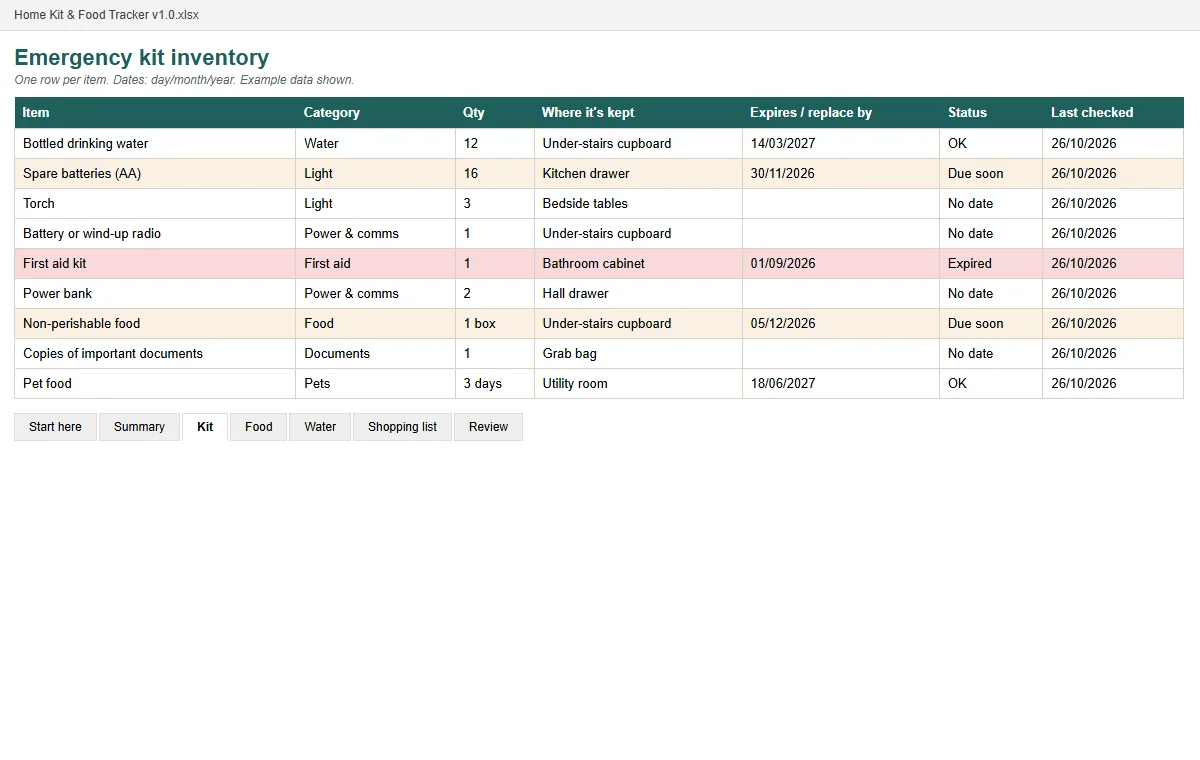 Bundle · £15.97 separatelyPrepared, Not Panicked bundle£9.99
Real pages shown before you buy · instant PDF · one-off price · 30-day refund.
Get the free 72-hour UK household checklist
Tick-box lists for each part of a UK home emergency kit, plus the key numbers on one page. Enter your email and we'll take you straight to the download.
That email address doesn't look right — please check it and try again.
We'll also email you when we publish new guides — occasional, never daily. Unsubscribe any time. See our privacy notice.
Frequently asked questions
When can I go back into my home after a fire?
Only when the fire and rescue service confirms it's safe. London Fire Brigade says access may be restricted for safety reasons, and a council building inspector may need to advise on badly damaged buildings.
Where will I stay if I can't go home?
The British Red Cross says insured homeowners should have a hotel or similar arranged by their insurer. Renters should contact their landlord, letting agent or housing association first, then the council. Uninsured owners should contact the council's emergency housing team (or the Housing Executive in Northern Ireland).
Will the council help if I'm homeless after a fire?
It may. GOV.UK says councils may offer emergency housing, and that you may be in priority need if you're homeless after a flood, fire or other disaster. This guidance is for England; Scotland and Northern Ireland have their own routes.
Can I use food and medicine from the house?
London Fire Brigade says to throw out damaged or contaminated food and return medicines to a pharmacy for safe disposal. The British Red Cross says to check with a pharmacist before using any medication that has been exposed to heat.
Someone says they're from my insurer. How do I know?
The British Red Cross says anyone genuinely working with your insurer will have your details, including your policy number. If you're unsure, call your insurer on the number in your policy documents.
Sources
- London Fire Brigade: After we leave (booklet, May 2024) (checked 29 Oct 2026)
- British Red Cross: After a house fire (checked 29 Oct 2026)
- GOV.UK: House fires: financial help and fire safety (checked 29 Oct 2026)
- GOV.UK: Help if you're homeless or about to become homeless (checked 29 Oct 2026)
- Association of British Insurers: Making a claim on your home insurance (checked 29 Oct 2026)
- Citizens Advice: Making a claim on your insurance policy (checked 29 Oct 2026)
- GOV.UK Be Ready: Fires in the home (checked 29 Oct 2026)