In short: GOV.UK Be Ready advises fitting smoke alarms on every floor, testing them at least monthly, and planning and practising an escape route so everyone knows what to do. Fire and rescue services suggest using your normal way out, with a second route in case it's blocked, keeping exits clear, keeping keys where everyone can find them and agreeing a meeting place outside. If you can't get out, get everyone into one room with a window, close the door, put bedding along the bottom of the door, call 999, then open the window and shout 'HELP FIRE'. Get out, stay out, call 999.
Key facts
- Be Ready advises fitting smoke alarms on every floor of your home and testing them at least monthly. Source
- Be Ready says to plan and practise an escape route and make sure everyone knows what to do in an emergency. Source
- Be Ready's message in a fire is: don't tackle fires yourself. Get out, stay out, call 999. Source
- Hampshire & Isle of Wight Fire and Rescue Service says the best route is your normal way out, with a plan B, clear exits and keys everyone can find. Source
- If you can't get out, Be Ready says to get everyone into one room, ideally with a window and a phone, put bedding around the bottom of the door, call 999, then open the window and shout 'HELP FIRE'. Source
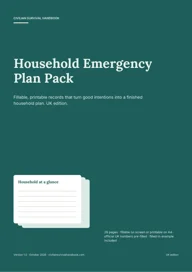 Want this written down for your home? Household Emergency Plan Pack — printable, £6.99.
A fire escape plan is one of the simplest parts of household preparedness, and one of the most useful. It costs nothing, and it means that if an alarm goes off in the night, everyone already knows what to do. This guide follows GOV.UK Be Ready, the GOV.UK Fire Kills campaign and UK fire and rescue service advice.
Start with smoke alarms
An escape plan only works if you get early warning. Be Ready advises:
- a smoke alarm on every floor of your home
- testing them at least monthly
In Scotland the law on smoke alarms changed in 2022, so check the standard that applies to your home.
Be Ready also says not to assume that everyone has heard the smoke alarm, particularly at night. Part of your plan is deciding who wakes whom.
Make your plan: six decisions
Sit down together and agree these. Write them down and put them somewhere everyone sees.
1. Your main way out
Hampshire & Isle of Wight Fire and Rescue Service says the best route is your normal way out. Fire Kills suggests walking through your home and planning the quickest way out of each room.
2. A second way out
Agree a "plan B" route in case the first is blocked.
3. Clear routes and findable keys
Keep exits and hallways clear. Make sure everyone knows where the door and window keys are kept. Fire Kills suggests keeping keys in a safe but easy-to-reach place near the exit they fit, and never leaving them in locks where they could fall out or be hard to find in the dark.
4. Who helps whom
Name the adult who gets each child, and who helps anyone with mobility, hearing or sight needs. Hampshire & Isle of Wight Fire and Rescue Service suggests keeping a mobility aid easy to reach along with your phone, and using indicators along the escape route for someone with a visual impairment. Fire Kills says specialist alarms and equipment can help people with a sensory disability, and that your local fire and rescue service can give advice. If you care for someone, our older people and carers guide covers their wider plan.
5. A room to go to if you can't get out
Choose a room, ideally with a window and a phone, where everyone can gather if your routes are blocked. Hampshire & Isle of Wight Fire and Rescue Service suggests a room at the front of the property.
6. A meeting place outside
Fire Kills suggests agreeing a safe meeting place outside, such as a front garden, lamp post or neighbour's house, so you can check everyone is out.
If there is a fire
Be Ready's advice is short: get out, stay out, call 999.
- Don't tackle the fire yourself.
- Act quickly and get everyone out as soon as possible.
- Don't stop to investigate or rescue valuables.
- Keep low if there's smoke. The air is clearer lower down.
- Check doors before opening them. Fire Kills says to feel them with the back of your hand. If a door is warm, don't open it. Fire is on the other side.
- Close doors behind you if you can. Be Ready says even an ordinary door can slow the spread of fire.
- Call 999 once you're out. Fire Kills says never assume someone else has called. If your home is close to other properties, alert your neighbours too.
- Stay out. Fire Kills says never go back in for possessions, pets or people. Tell firefighters straight away if anyone is missing.
If you can't get out
If your escape route is blocked, Be Ready advises:
- Get everyone into one room, ideally with a window and a phone, and close the door.
- Put bedding around the bottom of the door to block out the smoke.
- Call 999.
- Then open the window and shout "HELP FIRE".
Flats and shared buildings
London Fire Brigade says your building's advice may be to stay put or to leave, and that your landlord, housing provider or managing agent needs to tell you about the fire safety arrangements for your building. Hampshire & Isle of Wight Fire and Rescue Service also advises learning your building's emergency plan and practising your escape route. If you don't know the plan, ask, and write the answer into your household plan. Fire Kills says never to use lifts in a fire.
Practise it
A plan nobody has walked through is a guess. Fire Kills suggests practising at different times, including at night. Our suggestion for an easy routine, twice a year:
- walk both routes, including in the dark with a torch
- check keys are where they should be
- test every smoke alarm (the monthly test can be a calendar reminder)
- update the plan if someone has moved in, a room has changed or you've had a baby
The weekends the clocks change are easy to remember. For more help, Be Ready links to an online home fire safety check, and your local fire and rescue service can arrange a free home fire safety visit.
Limitations
This is general information based on GOV.UK Be Ready, GOV.UK Fire Kills and fire and rescue service advice, checked on 28 October 2026. It isn't a substitute for advice from your local fire and rescue service or your building's own fire safety arrangements. In an emergency call 999.
To write your routes, meeting place and "who helps whom" alongside the rest of your household's emergency details, the Household Emergency Plan Pack has fillable pages for meeting points, household needs and contacts.
Turn this guide into a written plan
Reading helps. Writing it down is what makes it work when the phones are flat. Start with the free plan builder, or get the full printable version:
Your whole household planHousehold Emergency Plan Pack£6.99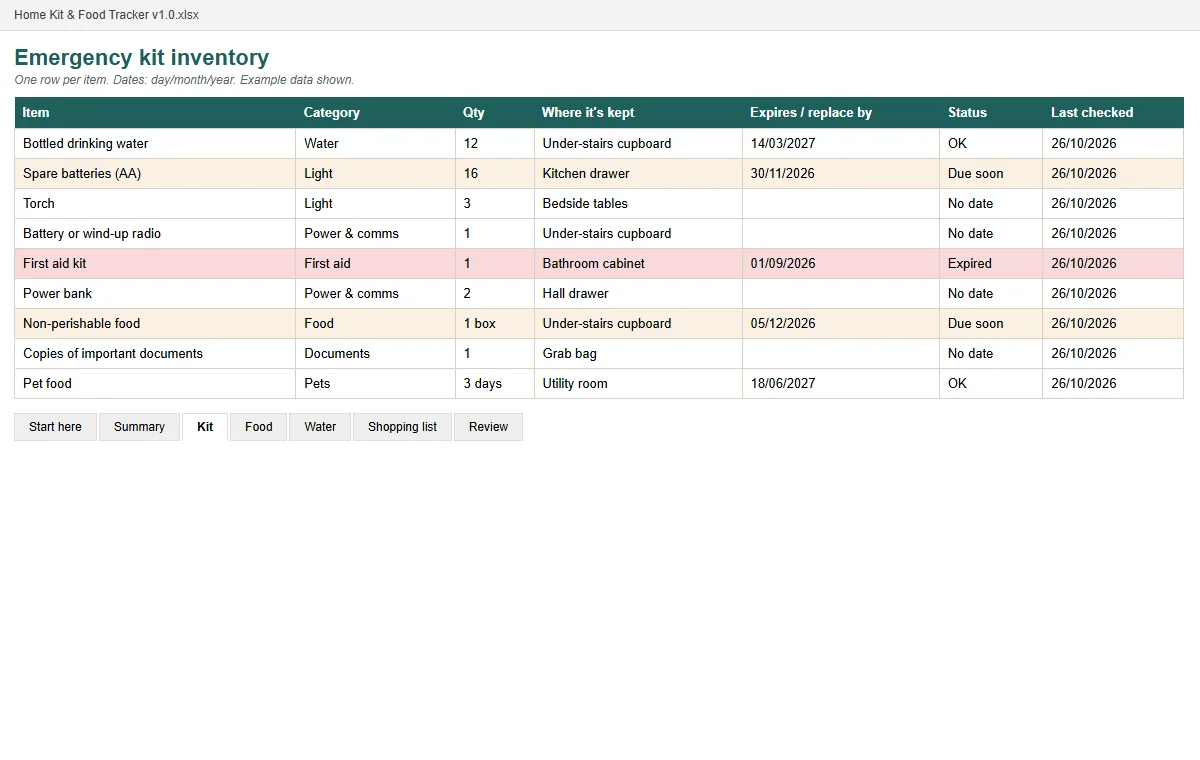 Bundle · £15.97 separatelyPrepared, Not Panicked bundle£9.99
Real pages shown before you buy · instant PDF · one-off price · 30-day refund.
Get the free 72-hour UK household checklist
Tick-box lists for each part of a UK home emergency kit, plus the key numbers on one page. Enter your email and we'll take you straight to the download.
That email address doesn't look right — please check it and try again.
We'll also email you when we publish new guides — occasional, never daily. Unsubscribe any time. See our privacy notice.
Frequently asked questions
How often should I test my smoke alarms?
GOV.UK Be Ready says at least monthly. Pressing the test button on the first of the month is an easy habit.
What should a fire escape plan include?
Your usual way out, a second route in case it's blocked, where door and window keys are kept, who helps whom (children, older relatives, anyone with extra needs), a room to go to if you can't get out, and a meeting place outside.
Should I go back in for a pet or valuables?
No. Be Ready says get out, stay out, and don't waste time rescuing valuables. The GOV.UK Fire Kills campaign says never to go back for possessions, pets or people, and to tell firefighters straight away if anyone is missing.
I live in a flat. Is the plan different?
It can be. London Fire Brigade says your building's plan may be to stay put or to leave, and your landlord, housing provider or managing agent needs to tell you the fire safety arrangements. If you're not sure, ask them.
Can the fire service help me make a plan?
Be Ready links to an online home fire safety check, and Fire Kills says you can arrange a free home fire safety visit through your local fire and rescue service.
Sources
- GOV.UK Be Ready: Fires in the home (checked 28 Oct 2026)
- GOV.UK Fire Kills: Plan your fire escape (checked 28 Oct 2026)
- Hampshire & Isle of Wight Fire and Rescue Service: How to make an escape plan (checked 28 Oct 2026)
- London Fire Brigade: Escape plan for purpose-built blocks of flats (checked 28 Oct 2026)