In short: The Cabinet Office publishes a free community emergency plan toolkit and template on GOV.UK. The toolkit walks a group through three steps: planning, what to do in an emergency, and practising and reviewing the plan. It says to share the finished plan with your council's emergency planning officer and your Local Resilience Forum.
Key facts
- The Cabinet Office's 'Community resilience: resources and tools' collection includes a community emergency plan toolkit and a template, in PDF and Word versions. Source
- The toolkit suggests building on existing groups, for example parish councils, Neighbourhood Watch groups, residents associations and youth groups, and says your local authority emergency planning team may be able to help. Source
- The toolkit says having an emergency plan is not a substitute for calling 999 if there is a risk to life, and asks groups not to put themselves or others at risk. Source
- It says to share your plan with your local authority's emergency planning officer, local emergency responders and your Local Resilience Forum, and to keep personal details safe, sharing them only with those who need them. Source
- GOV.UK says local resilience forums are multi-agency partnerships of local public services that identify potential risks and produce emergency plans, covering areas based on police areas. Source
 Want this written down for your home? Household Emergency Plan Pack — printable, £6.99.
A community emergency plan is a short document that helps a village, parish or neighbourhood support each other during floods, snow or long power cuts, while the emergency services help those in greatest need. You don't need to start from a blank page. The Cabinet Office publishes a free toolkit and template on GOV.UK, and GOV.UK Be Ready encourages groups to build networks that support their community before, during and after an emergency. This guide sits with our household plan guides.
The official toolkit in three steps
The Community Emergency Plan Toolkit (dated September 2016) is an 18-page guide that goes with a fill-in template. It works in three steps.
Step 1: Planning - Decide who your community is, and start from groups you already have, such as the parish council, Neighbourhood Watch, residents association or youth groups. - Form a Community Emergency Group, and consider a co-ordinator as the contact point with local responders. - Think about who might need extra help, and which local organisations already support them. - List the risks that matter locally, such as flooding, snow or loss of power, and what you could do about each. - Record skills, tools, transport and supplies people are willing to offer. - Agree key locations, such as a hall that could be a place of safety, with the owner's permission. - Build an emergency contact list or phone tree.
Step 2: What to do in an emergency - Agree how responders will ask you to start the plan, and set your own simple triggers if they can't reach you. - The toolkit is clear: a plan is not a substitute for calling 999 if there is a risk to life.
Step 3: Practise and review - Share the plan, practise it, and update it, keeping a record of who holds a copy.
Who to talk to
The toolkit says to share your finished plan with your council's emergency planning officer (reach them through your local council), local emergency responders and your Local Resilience Forum. GOV.UK describes local resilience forums as partnerships of local public services that identify risks and produce emergency plans; its contact page lists them. In Scotland, Ready Scotland suggests planning with your council's emergency planning team.
Looking after people's details
The toolkit asks groups to keep personal details safe and share them only with those who need them. Ask before you add anyone to a list, and keep the list short.
Getting started tick-list
- Download the toolkit and template from GOV.UK
- Book a short open meeting at the hall or online
- Contact your council's emergency planning team
- Agree a co-ordinator and a deputy
- Fill in the risks and contacts pages first
- Set a review date and a practice date
For a smaller start, see our street emergency plan. If your parish or group would like a ready-made session, our free 20-minute talk kit has slides, speaker notes and a handout, and our organisation licences let you share a co-branded household plan pack with residents.
Limitations
This page points to official guidance. The Cabinet Office toolkit is an older document, so your council may have a newer local version, and its advice comes first. Community groups support the emergency services; they don't replace them. In an emergency, call 999.
Turn this guide into a written plan
Reading helps. Writing it down is what makes it work when the phones are flat. Start with the free plan builder, or get the full printable version:
Your whole household planHousehold Emergency Plan Pack£6.99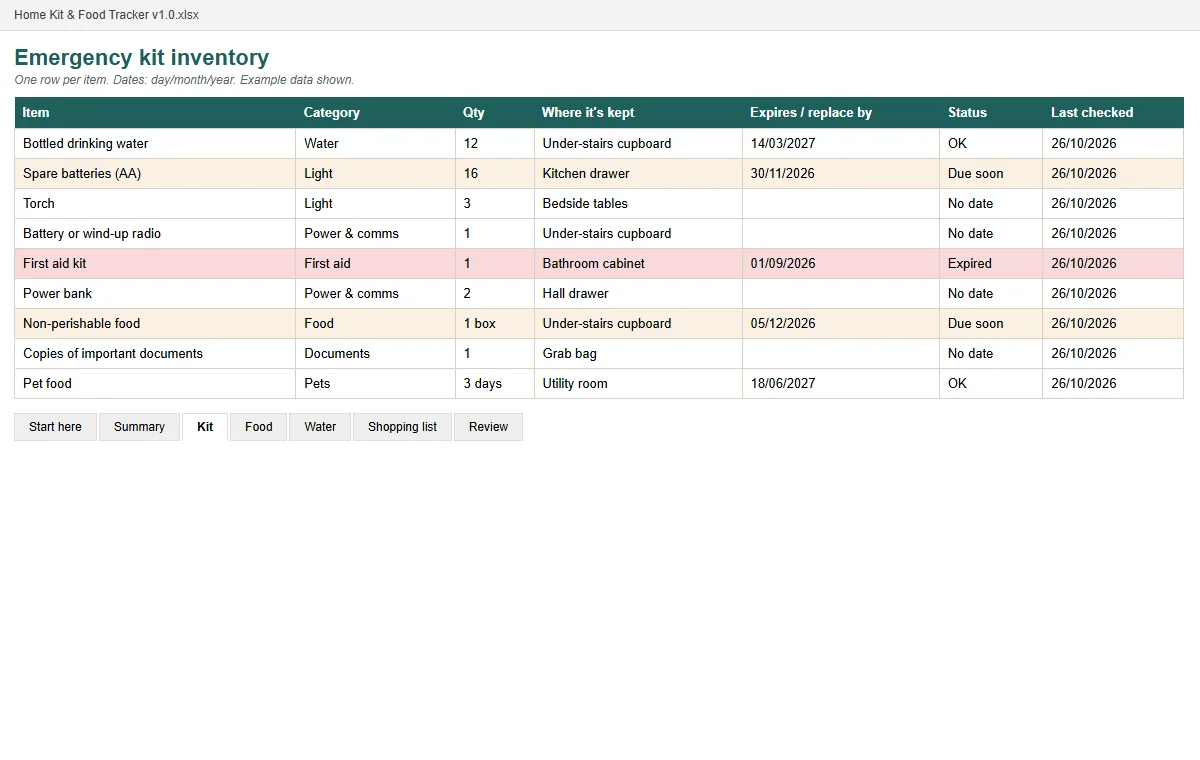 Bundle · £15.97 separatelyPrepared, Not Panicked bundle£9.99
Real pages shown before you buy · instant PDF · one-off price · 30-day refund.
Get the free 72-hour UK household checklist
Tick-box lists for each part of a UK home emergency kit, plus the key numbers on one page. Enter your email and we'll take you straight to the download.
That email address doesn't look right — please check it and try again.
We'll also email you when we publish new guides — occasional, never daily. Unsubscribe any time. See our privacy notice.
Frequently asked questions
Is there an official community emergency plan template?
Yes. The Cabinet Office's 'Community resilience: resources and tools' collection on GOV.UK has a community emergency plan toolkit and a template you can fill in, in PDF and Word versions. They are older documents, so check with your council for any local version.
Does a parish council have to have an emergency plan?
The official toolkit presents a community plan as something communities choose to do. It suggests parish councils and other existing groups are a good place to start, and that your council's emergency planning team may help.
Who should we share our community plan with?
The toolkit says to share it with your community, your local authority's emergency planning officer, local emergency responders and your Local Resilience Forum, and to record who has a copy.
Sources
- Cabinet Office (GOV.UK): Community resilience, resources and tools (checked 30 Oct 2026)
- Cabinet Office (GOV.UK): Community Emergency Plan Toolkit, September 2016 (checked 30 Oct 2026)
- GOV.UK: Local resilience forums, contact details (checked 30 Oct 2026)
- Ready Scotland: Emergency planning for communities (checked 30 Oct 2026)
- GOV.UK Be Ready: Play your part in your community (checked 30 Oct 2026)