In short: A street emergency plan is a short agreement between neighbours about how you'll keep in touch and check on each other in storms, snow or power cuts. GOV.UK Be Ready encourages networks that support communities before, during and after an emergency, and asks people not to turn up at the scene of an emergency.
Key facts
- GOV.UK Be Ready says groups can play their part by volunteering safely and building networks to support communities before, during and after an emergency. Source
- Be Ready asks people not to turn up at the scene of an emergency and try to help. Source
- For an amber warning, the Met Office says to consider the impact of the weather on your family and your community, and think about changing your plans. Source
- The Cabinet Office community emergency plan toolkit says to keep personal details safe and share them only with those who need the information. Source
 Want this written down for your home? Household Emergency Plan Pack — printable, £6.99.
Most help in a storm or long power cut comes from the people next door: a torch lent, a phone charged, a quick knock to check someone is warm. A street plan just makes that easier. GOV.UK Be Ready encourages people to build networks that support their community before, during and after an emergency, and the Met Office asks you to think about your family and community when an amber warning is issued. This guide sits with our household plan guides.
Start small: one street, one page
You don't need a committee. A street plan can be one page agreed over a cup of tea:
- Who's in. Only neighbours who say yes. Ask, don't assume.
- How you'll keep in touch. A group chat for those who want it, plus a phone call or door knock for anyone who doesn't use one.
- Who checks on whom. Pair up households, so no one has to check the whole street.
- What people can offer. A spare room heater, a car, a ladder, first aid training, a camping kettle for use outdoors.
- When you'll use it. For example, when the Met Office issues an amber warning for your area, during a power cut, or when the water is off.
Setting up the group chat
- Ask each neighbour before adding them, and let people leave without fuss.
- Pin a short message with the basics: 105 for power cuts, 999 in an emergency, and a link to your council's page.
- Keep it practical. Updates, offers and questions; no rumours or unchecked forwarded posts.
- Two or three admins, so it doesn't depend on one person's phone battery.
Privacy and consent: what not to share
The Cabinet Office community toolkit asks groups to keep personal details safe and share them only with those who need them. For a street group, that means:
- No health details in the group. If a neighbour uses medical equipment or needs extra help, they can tell their check-in partner privately, if they want to.
- No "away" messages. Don't post when a house will be empty.
- Let people choose. Some neighbours won't want to be on a list, and that's fine.
People who rely on power for medical equipment or need extra help can also join the free Priority Services Register.
When something happens
- Check on your pair, by message first, then a knock if you hear nothing.
- Share official updates only, with the link.
- Be Ready asks people not to turn up at the scene of an emergency and try to help. Stay back and follow the emergency services.
- If anyone is in danger, call 999 first, then tell the group.
Street plan tick-list
- Neighbours asked; only those who agreed are added
- Pairs agreed, including someone without a smartphone
- Pinned message with 105, 999 and the council link
- Offers list written (skills and kit)
- One person signed up to Met Office warnings for the area
- Review date set for next autumn
For a bigger group, such as a village or parish, see our community emergency plan guide.
Limitations
This page offers general ideas for neighbours. It isn't official guidance, and a street group doesn't replace the emergency services or your council. In an emergency, call 999.
Turn this guide into a written plan
Reading helps. Writing it down is what makes it work when the phones are flat. Start with the free plan builder, or get the full printable version:
Your whole household planHousehold Emergency Plan Pack£6.99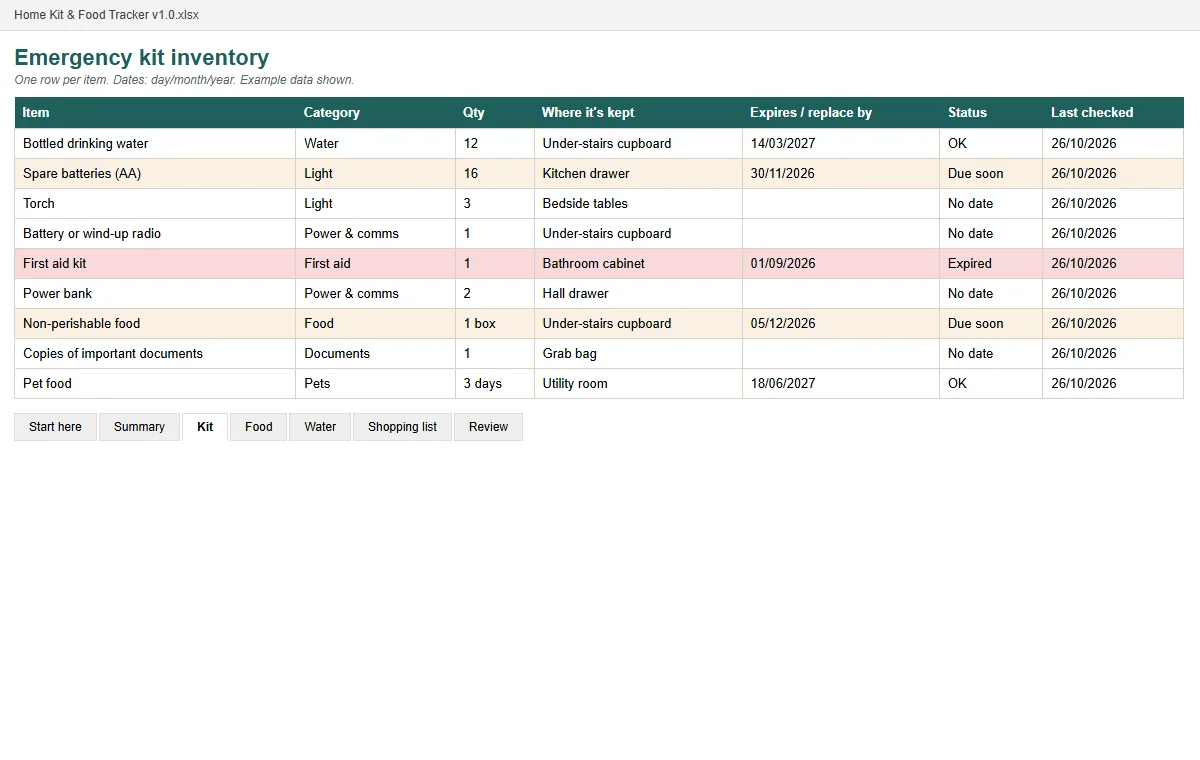 Bundle · £15.97 separatelyPrepared, Not Panicked bundle£9.99
Real pages shown before you buy · instant PDF · one-off price · 30-day refund.
Get the free 72-hour UK household checklist
Tick-box lists for each part of a UK home emergency kit, plus the key numbers on one page. Enter your email and we'll take you straight to the download.
That email address doesn't look right — please check it and try again.
We'll also email you when we publish new guides — occasional, never daily. Unsubscribe any time. See our privacy notice.
Frequently asked questions
Should our street have a WhatsApp group for emergencies?
A group chat is a simple way to share updates, as long as everyone has agreed to join. Keep it for practical messages, and remember not everyone uses a smartphone, so agree a door-knock or phone call for those who don't.
What should we not share in a street group?
Don't post anyone's health details, medical needs or when their home is empty. Ask each person what they'd like to share, and keep anything private between the neighbours who need it.
Should we go to help if something happens on the next street?
GOV.UK Be Ready asks people not to turn up at the scene of an emergency and try to help. Follow the emergency services' instructions and offer help through your council or local groups.
Sources
- GOV.UK Be Ready: Play your part in your community (checked 30 Oct 2026)
- Met Office: Weather warnings guide (checked 30 Oct 2026)
- Cabinet Office (GOV.UK): Community Emergency Plan Toolkit, September 2016 (checked 30 Oct 2026)