In short: A grab bag is a spare bag of essentials you can pick up if you have to leave home quickly, for example because of flooding. The government's Be Ready advice is to keep essential items in a spare bag. Useful contents include medicines, copies of documents in a waterproof bag, a torch, a power bank, cash and warm clothes.
Key facts
- GOV.UK's Be Ready suggests keeping essential items you might need to take with you if asked to leave your home quickly in a spare bag, which some people call a grab bag. Source
- Be Ready's flooding advice suggests packing a grab bag in advance and storing it where you can reach it easily, with important documents in resealable, watertight bags. Source
- Be Ready says to always follow advice from your local council or the emergency services if you are asked to evacuate. Source
- GOV.UK's personal flood plan says many evacuation centres will allow you to bring your pet. Source
- Floodline is 0345 988 1188 (textphone 0345 602 6340). Source
 Want this written down for your home? Grab Bag Planner — printable, £3.99.
Most UK emergencies are best handled at home. Very occasionally — usually because of flooding — people are asked to leave for a while. A grab bag means that if it happens, you can walk out calmly in a few minutes with the things that matter: medicine, documents, phone power and something warm. You may have seen the term "bug out bag" online; the UK version is simpler and more practical, and this list is based on GOV.UK's Be Ready campaign, the British Red Cross and GOV.UK flood guidance.
What is a grab bag?
GOV.UK's Be Ready advice is that you could keep essential items you might need to take with you if asked to leave your home quickly in a spare bag — what some people call a grab bag. Its flooding page goes further and suggests packing a grab bag of essentials in advance and storing it where you can reach it easily.
A grab bag is different from your home emergency kit:
| Home emergency kit | Grab bag | |
|---|---|---|
| Purpose | Staying at home for around 3 days | Leaving home quickly |
| Size | Can be a box or cupboard shelf | One bag you can carry |
| Water | Around 3 litres per person per day | Some drinking water to carry |
| Key items | Food, water, light, radio, warmth | Medication, documents, charger, clothes |
If you haven't built a home kit yet, start with our 72-hour kit guide or the tick-box emergency kit checklist. Many items overlap, so you can build both at once.
Grab bag checklist: essentials for the household
These come from the British Red Cross emergency kit list and Be Ready's flooding advice.
- Essential medication, and copies of prescriptions if needed
- Basic first aid kit
- Copies of important documents in a waterproof bag
- Paper copy of important contact numbers
- Mobile phone charger and a charged power bank
- Cash for essentials such as food or fuel
- Torch and spare batteries
- Battery-powered or wind-up radio
- Drinking water
- Long-life or ready-to-eat snacks
- Hand sanitiser and wet wipes
- Spare home and car keys
- Pen and paper
Be Ready says to keep important documents in resealable, watertight plastic bags. Our important documents checklist covers which papers to copy — for example ID, insurance details and your household emergency plan.
Per person: what each person needs
Pack a small set for each person, or a labelled pouch inside a shared bag:
- Warm, waterproof clothing and sturdy footwear
- A change of clothes and underwear
- Toiletries and hygiene products
- Spare glasses or contact lenses
- Any personal medication
- A blanket or foil blanket
The warm and waterproof clothing comes from both Be Ready and the GOV.UK personal flood plan; the other items are on the British Red Cross list of useful extras.
Children and babies
The British Red Cross suggests:
- Nappies and wipes
- Formula milk or baby food
- Bottles and feeding equipment
- Children's medication
- A comfort item such as a favourite toy or blanket
- Something to keep children busy — a book, colouring, cards
Being away from home is unsettling for children. A familiar toy and a simple explanation ("we're going to stay somewhere dry for a bit") help.
Pets
GOV.UK's personal flood plan says many evacuation centres will allow you to bring your pet. It suggests putting cats or small animals in a carrier or small box. The British Red Cross list for pets:
- Pet food and drinking water
- Leads, harnesses or carriers
- Pet medication
- Bedding or a blanket
- Waste bags or litter supplies
Medication, health and access needs
Medication is the one thing you'll most regret leaving behind. The British Red Cross suggests also packing:
- Prescription medication
- Medical information or care plans
- Spare chargers or batteries for essential equipment
- Spare hearing aid batteries
- Instructions for any medical equipment you rely on
- Mobility or accessibility aids you use regularly (or a note to grab them)
Be Ready advises requesting repeat prescriptions up to 5 working days before you run out. If you need extra help with flood warnings, Be Ready says you can ask Floodline to send warnings to a friend or relative on your behalf.
Where to keep your grab bag
Be Ready's advice is simply to store it where you can reach it easily. Practical choices:
- near the front or back door, or in a hall cupboard
- off the floor or upstairs if your home is at risk of flooding
- somewhere every adult in the home knows about
The British Red Cross notes that some people keep a dedicated kit, while others know where key items are around the home. If you can't keep medication or chargers in the bag, put a "last-minute" list on top: phone, charger, medication, glasses, keys.
If you're asked to leave home
Be Ready's flooding advice is to always follow advice from your local council or the emergency services if you are asked to evacuate, and it warns that not evacuating or delaying can put your life at risk.
Before you go, if it's safe to do so:
- Pick up your grab bag and last-minute items
- Turn off gas, electricity and water — Be Ready says only if it's safe, and never touch an electrical switch while standing in water
- Take pets with you in carriers or on leads
- Lock up and take your keys
- Let family or friends know where you're going
The GOV.UK personal flood plan says to take your flood kit with you if you're directed to an evacuation centre. If your home is damaged and you can't stay there, Be Ready says to contact your local council for help with emergency accommodation.
To get flood warnings, call Floodline on 0345 988 1188 (textphone 0345 602 6340). See our storms and flooding guide for more on flood warnings.
Checking and updating your grab bag
GOV.UK's Be Ready checklist suggests setting a reminder every six months to check your supplies. At each check:
- Replace water and snacks before their dates
- Check medication dates and update copies of prescriptions
- Recharge the power bank and test the torch
- Update document copies and contact numbers
- Swap clothes for the season and for children who have grown
- Check pet food and medication
Limitations
This is general information based on GOV.UK Be Ready, the British Red Cross and GOV.UK flood guidance, not professional advice. In an emergency, follow instructions from the emergency services and your local council, and call 999 if life is at risk. Flood warning and emergency arrangements differ between England, Scotland, Wales and Northern Ireland, so check your nation's official guidance.
Turn this guide into a written plan
Reading helps. Writing it down is what makes it work when the phones are flat. Start with the free plan builder, or get the full printable version:
For this topicGrab Bag Planner£3.99 Your whole household planHousehold Emergency Plan Pack£6.99
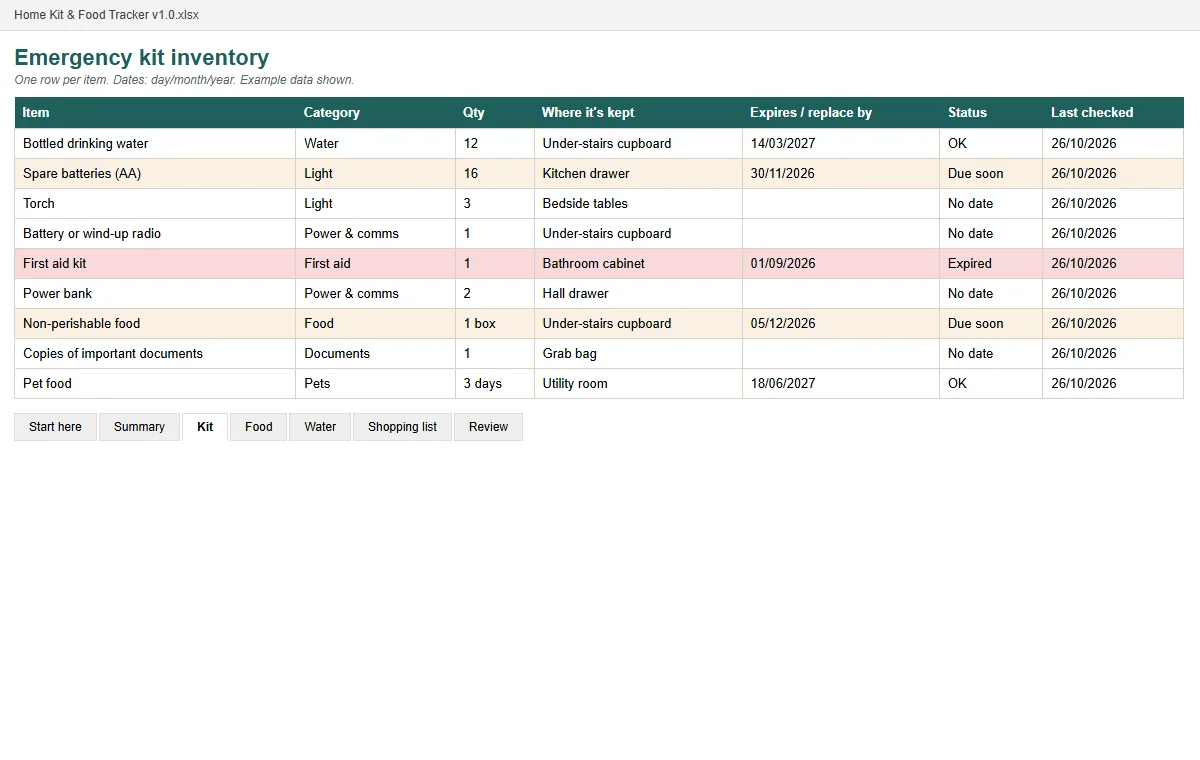 Bundle · £15.97 separatelyPrepared, Not Panicked bundle£9.99
Real pages shown before you buy · instant PDF · one-off price · 30-day refund.
Get the free 72-hour UK household checklist
Tick-box lists for each part of a UK home emergency kit, plus the key numbers on one page. Enter your email and we'll take you straight to the download.
That email address doesn't look right — please check it and try again.
We'll also email you when we publish new guides — occasional, never daily. Unsubscribe any time. See our privacy notice.
Frequently asked questions
What is a grab bag?
It's a spare bag of essential items you can pick up if you're asked to leave your home quickly. GOV.UK's Be Ready campaign uses the term, and it is most often talked about for flooding.
Is a grab bag the same as a bug out bag?
They cover similar ground. In the UK, official advice talks about a household grab bag: essentials, medication and documents you can pick up quickly if you're asked to leave home.
What should go in a grab bag?
Be Ready's flooding advice lists medication, a first aid kit, important documents, a torch, bottled water, warm waterproof clothing and baby care items. The British Red Cross adds a phone charger and power bank, cash, contact numbers on paper, snacks, and spare keys.
Where should I keep my grab bag?
Be Ready says to store it where you can reach it easily. Choose a spot near the main exit, out of the way of floodwater if you can, and make sure everyone at home knows where it is.
Can I take my pet if I'm evacuated?
GOV.UK's personal flood plan says many evacuation centres will allow you to bring your pet. Plan for carriers, food and medicines, and put cats or small animals in a carrier or small box.
How often should I check my grab bag?
GOV.UK's Be Ready checklist suggests setting a reminder every six months to check your emergency supplies. Use the same reminder for your grab bag: swap out food and water, and update documents and medication.
Sources
- GOV.UK Be Ready — Be ready for emergencies
- GOV.UK Be Ready — Flooding
- GOV.UK Be Ready — Checklist (PDF)
- British Red Cross — Prepare an emergency kit
- GOV.UK — Personal flood plan