In short: An 'if something happens to me' file is a written record of where your important documents, accounts, policies and bills are, who should be told, and what you'd want. It isn't a will. GOV.UK explains that a will must be formally witnessed and signed to be legally valid, and that a lasting power of attorney (England and Wales) lets you appoint people you trust to make decisions for you; it costs £92 to register unless you qualify for a reduction or exemption. GOV.UK's Tell Us Once service reports a death to most government organisations in one go, but banks, insurers, utilities and landlords must be contacted separately, which is exactly what a good file lists.
Key facts
- Tell Us Once lets you report a death to most government organisations in one go. It can be used if the person lived in England, Scotland or Wales. Source
- Banks, mortgage providers, insurers, companies the person had contracts with (such as utility companies, landlords or housing associations) and personal or workplace pension schemes must be contacted separately. Source
- A lasting power of attorney is legally binding only in England and Wales, and costs £92 to register unless you qualify for a reduction or exemption. Source
- There are two types of LPA: health and welfare, and property and financial affairs. Source
- GOV.UK says a will must be formally witnessed and signed to be legally valid, and there are different rules in Scotland and Northern Ireland. Source
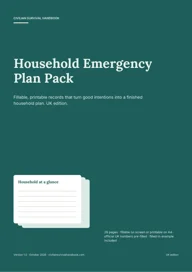 Want this written down for your home? Household Emergency Plan Pack — printable, £6.99.
Most of us carry our household's admin in our heads: which bank, which energy supplier, where the insurance documents are, which subscriptions come out on the 3rd. If you were in hospital for a while, or died, the people you love would have to piece it together. An "if something happens to me" file is simply that knowledge written down. It's a calm, practical job: do it properly once, then keep it up to date.
GOV.UK Be Ready already advises keeping printed copies of important documents and writing down the contact details of people you'd need to contact in an emergency. This file takes that one step further.
What the file is, and isn't
- It is a record of where things are, who to contact and what you'd want.
- It isn't a will, a lasting power of attorney or legal advice. Those are separate legal documents, covered below.
- It isn't a list of passwords. Never write passwords or PINs in it.
What to include
1. People
- Who should be told first, and their numbers
- Your GP, solicitor (if any), accountant (if any) and employer contact
- Who has a spare key
- Who looks after children or pets at short notice (our pet emergency plan guide covers this)
2. Where your documents are
- Passport, driving licence, birth and marriage or civil partnership certificates
- Will and any lasting power of attorney: where the originals are kept
- Property deeds or tenancy agreement, mortgage documents
- Insurance policies (home, life, car, pet)
Our important documents checklist goes through these in detail.
3. Money and bills
GOV.UK's Tell Us Once service handles most government organisations, but GOV.UK lists others that must be contacted separately: banks, mortgage providers, insurance providers, companies the person had contracts with (such as utility companies, landlords or housing associations), and personal or workplace pension schemes. Your file should list each one:
- Bank and building society accounts (provider and account type, not full numbers or PINs)
- Pensions: workplace and personal
- Energy, water, council tax, phone and broadband suppliers
- Regular payments and subscriptions to cancel
- Any loans, credit cards or finance agreements
4. Digital life
- Email accounts, and which one gets password resets
- Phone: who should get it, and where the unlock arrangements are kept (not the code itself)
- Social media: memorialise or close?
- Photos and files: where they're stored
Some providers have their own process for bereavement or for nominating a trusted contact. Note which ones you've set up.
5. Your wishes
- Any wishes about care, funeral or organ donation, and where they're recorded
- Anything sentimental you want someone to have, noting that a will is the legal place for this
The legal documents: will and lasting power of attorney
A will. GOV.UK explains that a will lets you decide what happens to your money, property and possessions after your death. You need to get it formally witnessed and signed to make it legally valid. You can write one yourself, but GOV.UK suggests getting advice if your will isn't straightforward. There are different rules in Scotland and in Northern Ireland.
A lasting power of attorney (LPA). In England and Wales, an LPA is a legal document that lets you appoint one or more people you trust to help you make decisions, or to make them for you, if you can no longer make your own decisions. GOV.UK lists two types: health and welfare, and property and financial affairs. You can make one or both. You must be 18 or over and have mental capacity (the ability to make your own decisions) when you make one. Registration costs £92 unless you qualify for a reduction or exemption, and GOV.UK says it takes 8 to 10 weeks if there are no mistakes in the application. An LPA is legally binding only in England and Wales. Scotland and Northern Ireland have their own arrangements.
Your file should note whether you have each document, who the attorneys or executors are, and where the originals are kept.
Tell Us Once: what it does
After a death, Tell Us Once lets the family report it to most government organisations in one go, including HMRC, DWP, the Passport Office, DVLA, the local council and some public sector pension schemes. It can be used if the person lived in England, Scotland or Wales, but not if they lived in Northern Ireland. Everything else (banks, insurers, utilities and so on) is what your file makes easy.
Keeping it safe and up to date
- Keep it somewhere safe and tell one or two trusted people where it is.
- Keep sensitive details to a minimum: provider names, not account numbers or passwords.
- Review it once a year, and whenever something changes: a move, a new bank, a new baby, a new pet.
Limitations
This is general information based on GOV.UK pages checked on 28 October 2026. It isn't legal, financial or tax advice. For wills, lasting powers of attorney and estates, take advice from a solicitor or another qualified professional, especially in Scotland or Northern Ireland, where the rules differ.
If you'd rather fill in a ready-made version, the Life Admin File has 12 fillable pages for documents, accounts, policies, bills, who to tell, subscriptions, digital accounts and your wishes. No passwords needed.
Turn this guide into a written plan
Reading helps. Writing it down is what makes it work when the phones are flat. Start with the free plan builder, or get the full printable version:
Your whole household planHousehold Emergency Plan Pack£6.99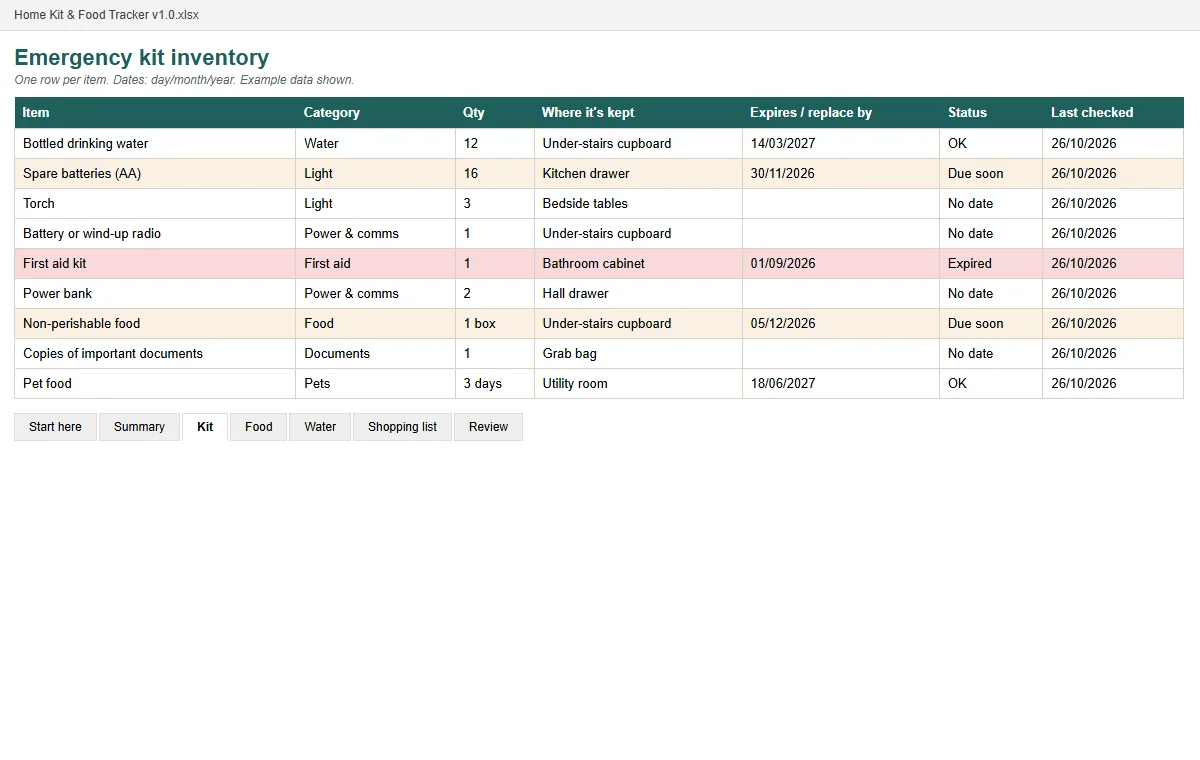 Bundle · £15.97 separatelyPrepared, Not Panicked bundle£9.99
Real pages shown before you buy · instant PDF · one-off price · 30-day refund.
Get the free 72-hour UK household checklist
Tick-box lists for each part of a UK home emergency kit, plus the key numbers on one page. Enter your email and we'll take you straight to the download.
That email address doesn't look right — please check it and try again.
We'll also email you when we publish new guides — occasional, never daily. Unsubscribe any time. See our privacy notice.
Frequently asked questions
Is an 'if something happens to me' file the same as a will?
No. A will is a legal document that must be formally witnessed and signed. The file is a practical record of where things are and who to contact. It works alongside a will, not instead of one.
Should I write my passwords in it?
No. Don't write passwords or PINs in a paper file. List which accounts exist and who should be told. Some providers have their own process for bereavement or for nominating someone.
What is a lasting power of attorney?
In England and Wales, a legal document that lets you appoint one or more people to help you make decisions, or make them for you, if you can no longer make your own decisions. GOV.UK lists two types (health and welfare; property and financial affairs), and registration costs £92 unless you qualify for a reduction or exemption. Scotland and Northern Ireland have their own arrangements.
What is Tell Us Once?
A GOV.UK service that reports a death to most government organisations in one go, including HMRC, DWP, the Passport Office, DVLA and the local council. It can be used if the person lived in England, Scotland or Wales, but not Northern Ireland.
Where should I keep the file?
Somewhere safe that one or two trusted people know about. Tell them where it is, and keep originals of legal documents where your solicitor or the document itself advises.
Sources
- GOV.UK: Organisations you need to contact and Tell Us Once (checked 28 Oct 2026)
- GOV.UK: Lasting power of attorney (checked 28 Oct 2026)
- GOV.UK: Making a will (checked 28 Oct 2026)
- GOV.UK Be Ready: Be ready for emergencies (checked 28 Oct 2026)