In short: For most UK homes, a power bank and torch cover a typical power cut. Ofgem says network operators should restore power within 12 hours outside severe weather, or 24 to 48 hours in severe storms. A portable power station may help if someone relies on powered equipment. The UK Chief Medical Officers say fuel generators must never be used indoors.
Key facts
- Ofgem lists restoration times of 12 hours for interruptions outside severe weather, 24 hours in severe storm category 1 weather and 48 hours in severe storm category 2 weather, depending also on how many homes and businesses are affected. Source
- Ofgem says you will automatically be paid by your local network operator if you do not have power for a certain number of hours, and that you can call 105 for free. Source
- The UK Chief Medical Officers say do not use petrol or diesel generators indoors, and to place a generator outside at least 6 metres (20 feet) away, with the exhaust away from windows and doors. Source
- Electrical Safety First advises buying power banks and chargers from a reputable retailer, not charging them overnight or while you're out, and unplugging straight away if you notice odd smells, sparking, smoke, swelling or damage. Source
- GOV.UK Be Ready advises people who rely on medical equipment to make a plan with their care provider or clinical care team now. Source
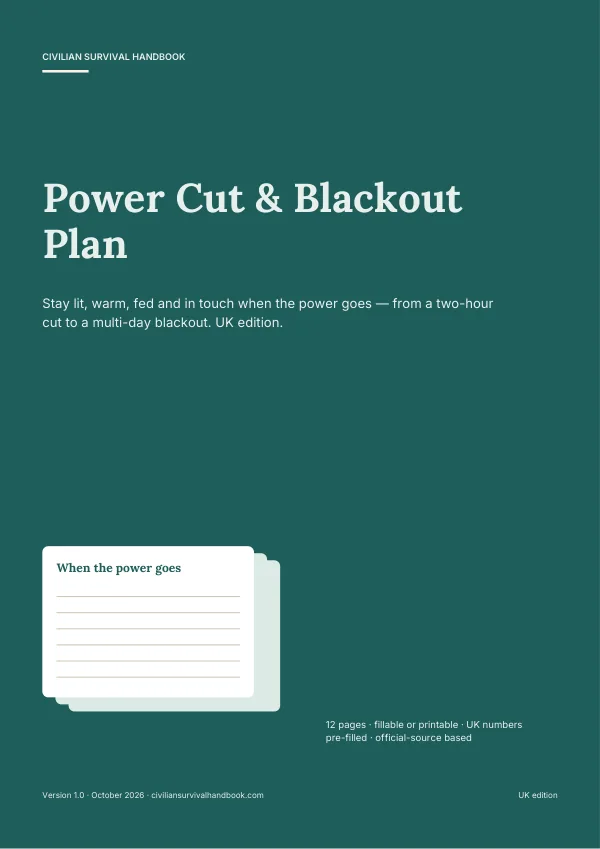 Want this written down for your home? Power Cut & Blackout Plan — printable, £4.99.
A portable power station is a large rechargeable battery with plug sockets and USB ports. They're well advertised, and they can be useful, but many households don't need one. This guide helps you decide, using Ofgem's restoration times, safety advice from the UK Chief Medical Officers and Electrical Safety First, and GOV.UK Be Ready. It's part of our power cuts hub. We don't recommend any brand, and there are no affiliate links on this page.
Start with how long cuts last
Ofgem lists restoration times of 12 hours for interruptions outside severe weather, 24 hours in severe storm category 1 weather and 48 hours in severe storm category 2 weather, depending on how many homes are affected. If your power isn't back in time, Ofgem says your network operator pays you automatically. In a power cut, call 105 for free.
For a cut of a few hours, a charged power bank, a torch and a battery or wind-up radio usually cover it.
When a power station might make sense
- Someone relies on powered equipment. Be Ready says to make a plan with your care provider or clinical care team now. Ask them what back-up they recommend before buying anything, and join the Priority Services Register.
- You work from home and need a laptop and router for a few hours.
- You live somewhere with frequent longer cuts, such as a rural area at the end of a line.
If none of these apply, the money may be better spent on warm layers, a torch and a power bank.
Watts and watt-hours, made simple
- Watts (W): how much power a device uses while it's on. It's usually on the label or the plug.
- Watt-hours (Wh): how much energy a battery holds.
A rough way to estimate what you need: watts × hours of use = watt-hours. For example, a device using 10 W for 5 hours needs about 50 Wh, and one using 60 W for 3 hours needs about 180 Wh. Add the devices together, then allow extra, because some energy is lost converting battery power to mains power. These sums are our estimates, not official figures; check your own devices' labels and the maker's stated capacity.
Also check the maximum output in watts. A device that needs more watts than the power station can supply won't run, however much charge is left.
Safety lines
- Fuel generators stay outdoors. The UK Chief Medical Officers say never use petrol or diesel generators indoors, and to place them outside at least 6 metres (20 feet) away, with the exhaust away from windows and doors.
- Treat it as a big lithium battery. Electrical Safety First's power bank advice applies: buy from a reputable retailer, don't charge overnight or while you're out, keep it ventilated while charging, and unplug straight away if you notice odd smells, sparking, smoke, swelling or damage.
- Follow the maker's instructions for charging and storage.
Before you buy: tick-list
- Checked how often and how long your cuts usually last
- Listed the devices you'd really need, with their watts
- Worked out an estimated watt-hour total, with extra allowed
- Spoken to your care team, if it's for medical equipment
- Planned where it will charge safely, not on an escape route
- Set a reminder to recharge it with your six-monthly kit check
Limitations
This page is general guidance, not a product review or electrical advice. Running medical equipment from any back-up power should only follow advice from your care team or the equipment supplier.
Turn this guide into a written plan
Reading helps. Writing it down is what makes it work when the phones are flat. Start with the free plan builder, or get the full printable version:
For this topicPower Cut & Blackout Plan£4.99 Your whole household planHousehold Emergency Plan Pack£6.99
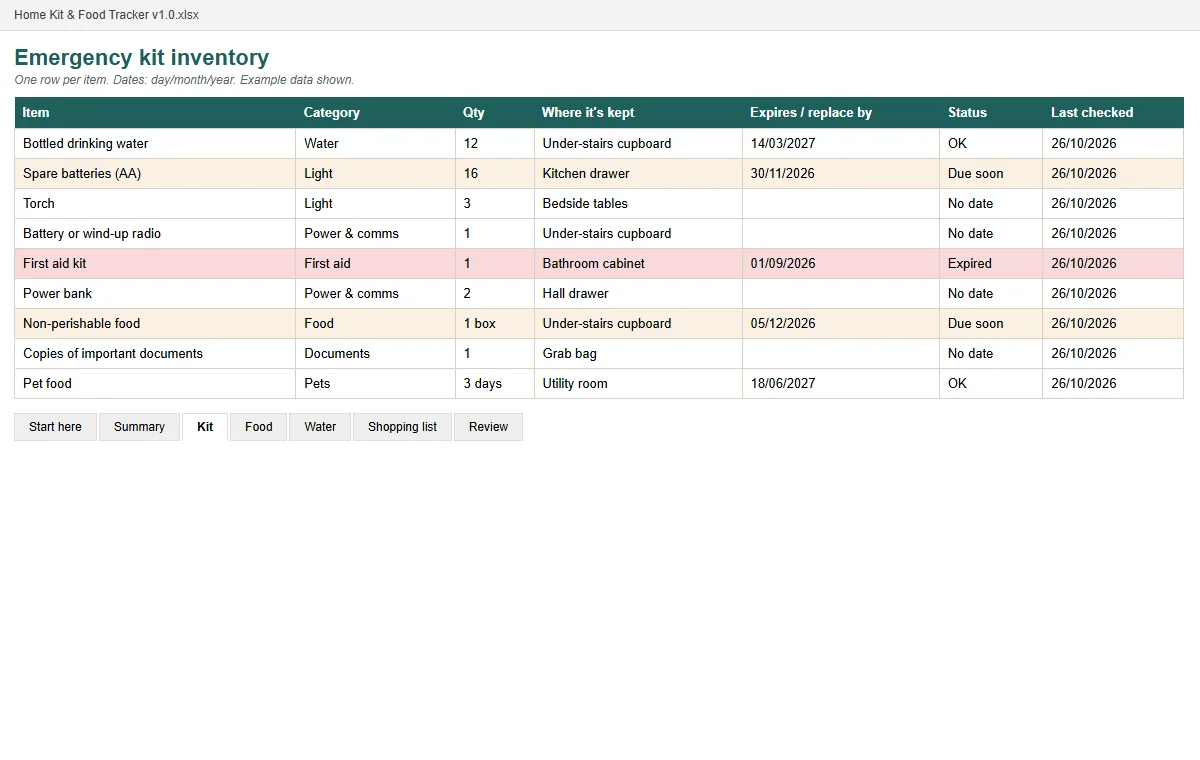 Bundle · £15.97 separatelyPrepared, Not Panicked bundle£9.99
Real pages shown before you buy · instant PDF · one-off price · 30-day refund.
The Power Cut Card for your fridge
Who to call, what to switch off, how long the fridge and freezer stay cold, and how to keep warm. One calm page from official UK advice. Enter your email and we'll take you straight to the download.
We'll also email you when we publish new guides — occasional, never daily. Unsubscribe any time. See our privacy notice.
Frequently asked questions
Is a portable power station worth it for UK power cuts?
For many homes, no: a power bank, torch and battery radio cover a typical cut. It may be worth considering if someone relies on powered equipment, you work from home, or you live somewhere with frequent long cuts. Talk to your care team first if it's for medical equipment.
What's the difference between watts and watt-hours?
Watts (W) is how much power a device uses at one moment. Watt-hours (Wh) is how much energy a battery stores. A rough guide: watts multiplied by hours of use gives the watt-hours you need. That's an estimate; real devices vary.
Is a power station safer than a generator indoors?
A petrol or diesel generator must never be used indoors; the UK Chief Medical Officers say its exhaust contains carbon monoxide. A battery power station has no exhaust, but it's still a large lithium battery, so follow the maker's instructions and Electrical Safety First's charging advice.
Sources
- Ofgem: Plan for a power cut (checked 30 Oct 2026)
- UK Chief Medical Officers (GOV.UK): Keeping warm or cool in extreme weather, scripts for broadcast media (checked 30 Oct 2026)
- Electrical Safety First: Power banks (checked 30 Oct 2026)
- GOV.UK Be Ready: Power cuts (checked 30 Oct 2026)