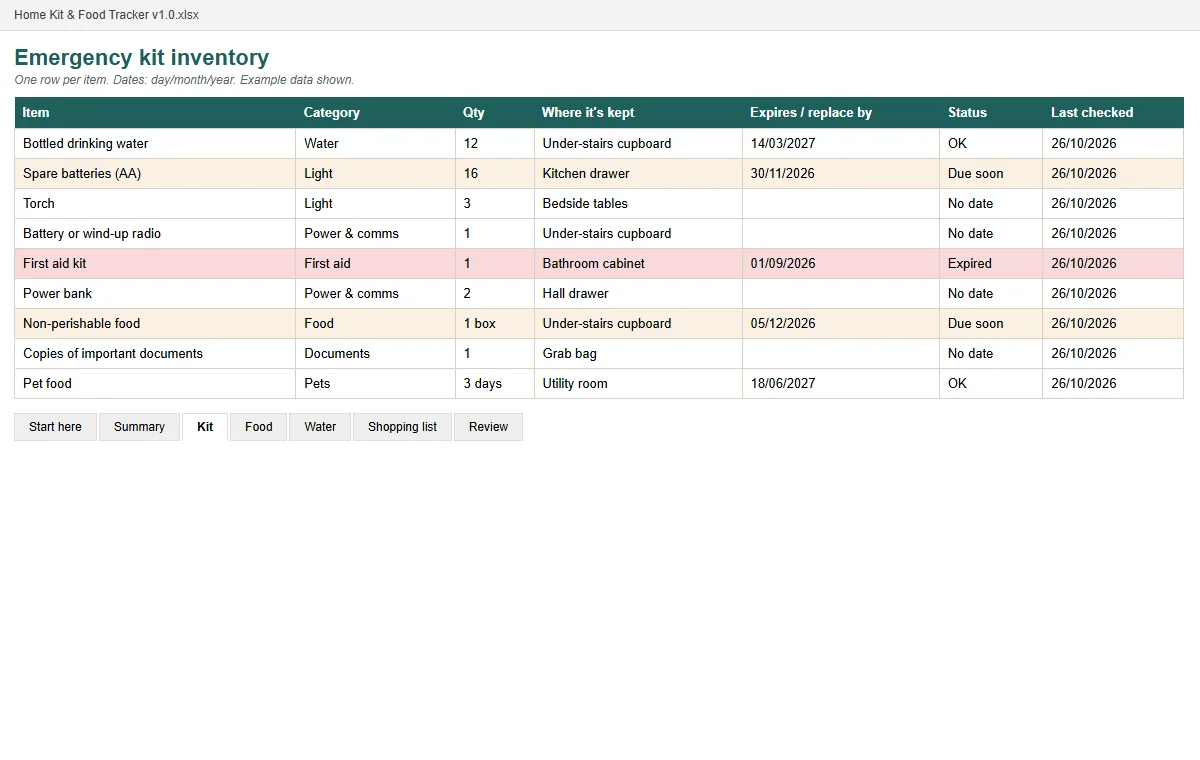
In short: First in, first out means you eat the oldest food first and put new shopping behind it. The Food Standards Agency says a use-by date is about safety and a best before date is about quality. GOV.UK Be Ready suggests supplies for 3 days and checking expiry dates every six months.
Key facts
- The Food Standards Agency says a use-by date is about safety: you can eat food until and on the use-by date, but not after. Source
- The Food Standards Agency says the best before date is about quality, not safety: the food will be safe to eat after this date but may not be at its best. Source
- The FSA says you can freeze food right up until midnight on the use-by date, your fridge should be set between 0 and 5°C, and your freezer should be around -18°C. Source
- GOV.UK Be Ready suggests food with a long shelf life that doesn't need refrigeration or cooking, and setting a reminder every six months to check expiry dates and swap out items that need replacing. Source
- In a power cut, the FSA says to use foods that need refrigeration first and room-temperature canned, bottled and dried food last. Source
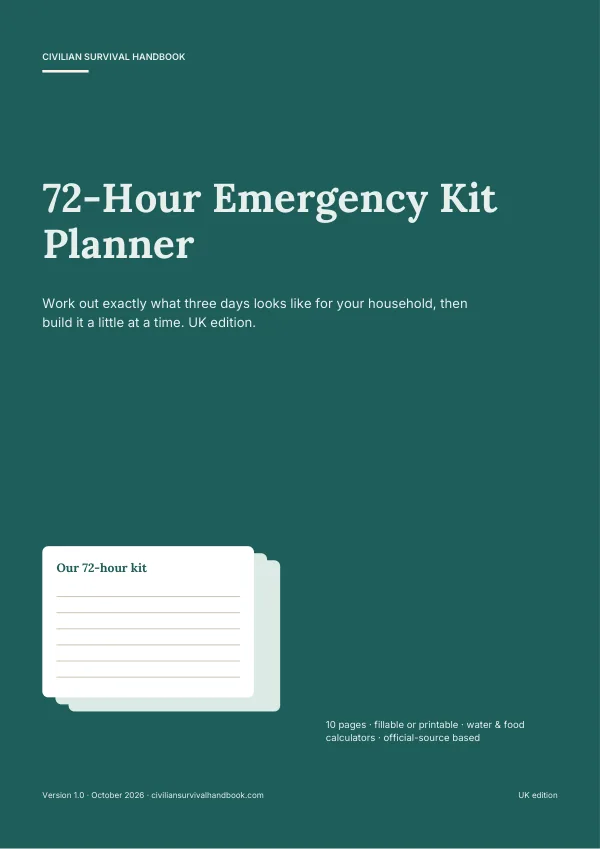 Want this written down for your home? 72-Hour Emergency Kit Planner — printable, £3.99.
A cupboard of spare food only helps if it's still good when you reach for it. The simplest way to keep it fresh is first in, first out: eat the oldest first, and put new shopping behind it. This guide explains how to do that at home, using date advice from the Food Standards Agency and the 3-day supplies idea from GOV.UK Be Ready. It sits with our food guides and household plan guides.
Use-by and best before: the two dates that matter
| Date | What the FSA says | What it means for rotation |
|---|---|---|
| Use-by | About safety. Eat until and on the date, but not after. Don't trust the sniff test. | Mostly fridge food. Eat or freeze it in time; it doesn't belong in a long-term store. |
| Best before | About quality, not safety. Safe after the date but may not be at its best. | Tins, dried food and packets. Rotate these so they're used while still at their best. |
The FSA also says you can freeze food right up until midnight on the use-by date. Its guidance is to keep the fridge between 0 and 5°C and the freezer at around -18°C. GOV.UK adds that food not stored as the label says can become unsafe before its use-by date, so follow the storage instructions.
How to rotate, step by step
- Pick foods you already eat. Be Ready suggests food with a long shelf life that doesn't need a fridge or cooking. If it's food your household likes, it gets used naturally.
- New at the back, old at the front. Each time you shop, slide older tins forward and put new ones behind.
- Write the date big. A marker pen on the lid makes dates easy to read at a glance.
- Keep one shelf or box for spare supplies. Take from the front of it in normal weeks and replace what you use on your next shop.
- Check twice a year. Be Ready suggests a six-monthly reminder to check expiry dates and swap out items that need replacing.
How this fits with a power cut
The FSA's power cut advice gives an order for using food: things that need the fridge first, then defrosted frozen food that doesn't need cooking, then perishable cupboard food, and finally canned, bottled and dried food. Rotation means that last group, your cupboard stock, is always in date when you get to it. Our cooking in a power cut guide covers the rest.
Six-monthly rotation tick-list
- Cupboard stock checked: oldest moved to the front
- Anything near its best before date put on this week's meal plan
- Bottled water dates checked
- Freezer labels read; older items used first
- Gaps filled on the next shop
- Next check date set in your phone
Our emergency food list suggests what to keep, and the supplies calculator helps with amounts.
Limitations
This page summarises Food Standards Agency and GOV.UK advice for households. It isn't advice for food businesses. If you're unsure whether something is safe to eat, follow the label, and if in doubt, leave it out.
Turn this guide into a written plan
Reading helps. Writing it down is what makes it work when the phones are flat. Start with the free plan builder, or get the full printable version:
For this topic72-Hour Emergency Kit Planner£3.99 Your whole household planHousehold Emergency Plan Pack£6.99
 Bundle · £15.97 separatelyPrepared, Not Panicked bundle£9.99
Real pages shown before you buy · instant PDF · one-off price · 30-day refund.
Get the free 72-hour UK household checklist
Tick-box lists for each part of a UK home emergency kit, plus the key numbers on one page. Enter your email and we'll take you straight to the download.
That email address doesn't look right — please check it and try again.
We'll also email you when we publish new guides — occasional, never daily. Unsubscribe any time. See our privacy notice.
Frequently asked questions
What does first in, first out mean for food at home?
It means you use the oldest item first. When you unpack shopping, put new tins and packets at the back and move older ones to the front, so nothing sits forgotten until it's past its date.
Can I eat food after the best before date?
The Food Standards Agency says food will be safe to eat after the best before date but may not be at its best. Use-by dates are different: the FSA says not to eat food after its use-by date, even if it looks and smells fine.
How often should I check my emergency food?
GOV.UK Be Ready suggests setting a reminder every six months to check expiry dates and swap out items that need replacing.
Sources
- Food Standards Agency (GOV.UK): Student guide to food safety and hygiene (checked 30 Oct 2026)
- Food Standards Agency (GOV.UK): How to chill, freeze and defrost food safely (checked 30 Oct 2026)
- Food Standards Agency (GOV.UK): Food safety in a power cut (checked 30 Oct 2026)
- GOV.UK: Best before and use-by dates (checked 30 Oct 2026)
- GOV.UK Be Ready: Be ready for emergencies (checked 30 Oct 2026)