In short: If a storm damages your home, stay indoors and don't try repairs while it is still blowing. The Met Office says not to go outside to repair damage during a storm. Afterwards, the Association of British Insurers says to contact your insurer as soon as possible, keep receipts for emergency repairs and don't rush to throw damaged items away.
Key facts
- The Met Office says to stay indoors as much as possible during a storm, and not to go outside to repair damage while the storm is in progress. Source
- After a storm, the Met Office says not to touch electrical or telephone cables that have been blown down or are still hanging, and not to walk too close to walls, buildings and trees, as they could have been weakened. Source
- The ABI says to contact your insurer as soon as possible; most have 24-hour emergency helplines. Source
- The ABI says to arrange temporary emergency repairs if necessary to stop damage getting worse, but to speak to your insurer first, and to keep any receipts as they will form part of your claim. Source
- The ABI says that if your home cannot be lived in during repairs, your insurer will arrange and pay for alternative temporary accommodation in line with your policy, and that fences and garden furniture may not be covered as standard. Source
 Want this written down for your home? Storm & Flood Plan — printable, £4.99.
A slipped tile, a leak through the ceiling or a fallen fence is stressful, but the first steps are simple: keep everyone safe, stop the water spreading indoors, and call your insurer. This guide follows the Met Office and the Association of British Insurers (ABI). It sits with our storm and flood preparation guide.
While the storm is still blowing
- Stay indoors. The Met Office says to stay indoors as much as possible during a storm.
- Don't climb up or go outside to fix things. The Met Office says not to go outside to repair damage while the storm is in progress. Roofs, ladders and loose tiles can wait.
- Deal with water from the inside. Move furniture and valuables away from the leak, put down buckets, bowls and old towels, and keep children and pets out of the room.
- Keep water away from electrics. If water is coming through near lights or sockets, keep clear. If it is safe to reach your fuse box, switch off that circuit. If not, leave it and get advice.
If you lose power, Be Ready says you can call 105 for free in England, Scotland and Wales (03457 643643 in Northern Ireland).
When the storm has passed
The Met Office says:
- don't touch electrical or telephone cables that have been blown down or are still hanging
- don't walk too close to walls, buildings and trees, as they could have been weakened
- check that vulnerable neighbours or relatives are safe
Look at your roof from the ground only. If you can see slipped tiles, a damaged chimney or a loose aerial, leave it for a professional.
Calling your insurer
The ABI's advice for storm damage:
- Contact your insurer as soon as possible. Most have 24-hour emergency helplines and can arrange repairs.
- Temporary repairs: if needed, arrange emergency repairs to stop damage getting worse, such as covering a hole in the roof, but speak to your insurer first.
- Keep receipts for anything you pay for. The ABI says they form part of your claim.
- Don't rush to throw things away. The ABI says damaged items may be repairable, unless they are a danger to health. Your insurer can advise.
- If your home can't be lived in, the ABI says your insurer will arrange and pay for temporary accommodation in line with your policy.
Take photos and videos of the damage before you tidy up. GOV.UK's after a flood advice gives the same tip for flood damage: take photos of any damage first.
Check your policy for what is covered. The ABI says fences and garden furniture may not be included as standard.
Your storm damage checklist
- Everyone safe and away from the leak
- Buckets and towels down, belongings moved
- Electrics near the water switched off, if safe
- Photos and videos taken
- Insurer called, claim number written down
- Temporary repairs agreed with the insurer first
- Receipts kept in one envelope
- Neighbours and older relatives checked on
Limitations
This page summarises Met Office and ABI advice. It is not a structural survey or insurance advice; your policy wording decides what is covered. If someone is hurt or a building looks unsafe, call 999. If you smell gas, see our gas guide.
Turn this guide into a written plan
Reading helps. Writing it down is what makes it work when the phones are flat. Start with the free plan builder, or get the full printable version:
For this topicStorm & Flood Plan£4.99 Your whole household planHousehold Emergency Plan Pack£6.99
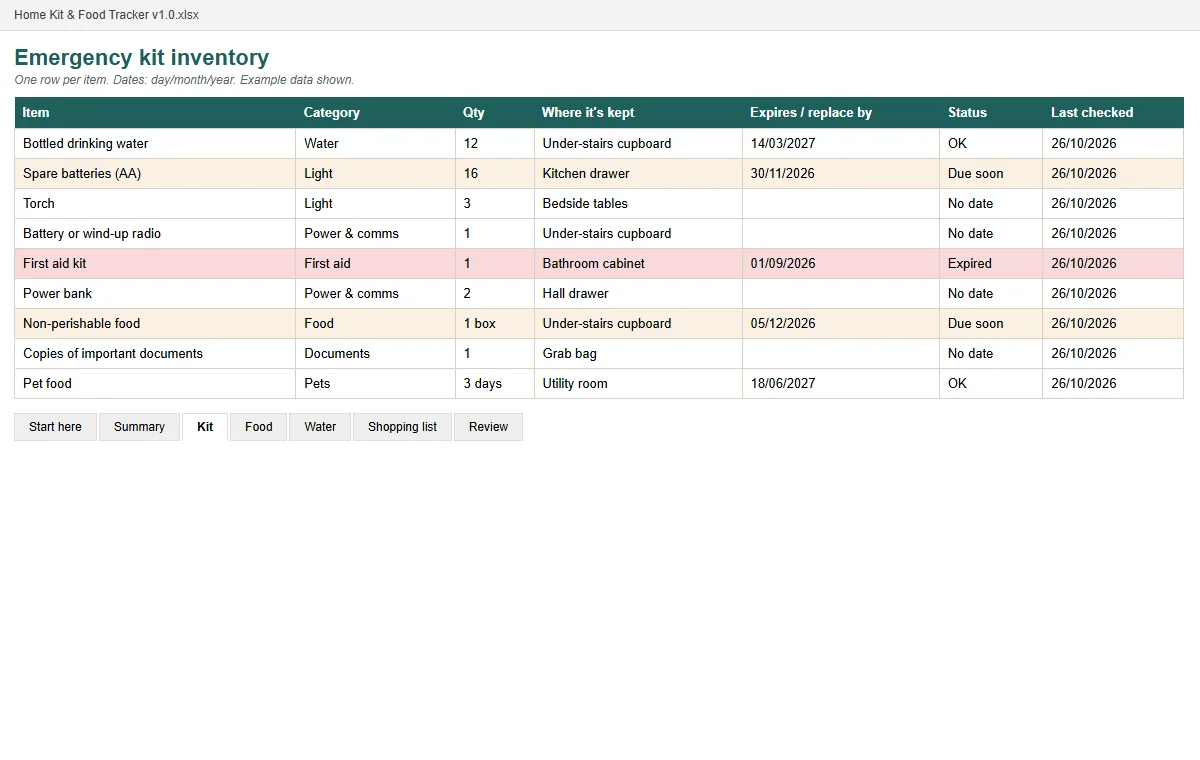 Bundle · £15.97 separatelyPrepared, Not Panicked bundle£9.99
Real pages shown before you buy · instant PDF · one-off price · 30-day refund.
Get the free 72-hour UK household checklist
Tick-box lists for each part of a UK home emergency kit, plus the key numbers on one page. Enter your email and we'll take you straight to the download.
That email address doesn't look right — please check it and try again.
We'll also email you when we publish new guides — occasional, never daily. Unsubscribe any time. See our privacy notice.
Frequently asked questions
What should I do if my roof leaks in a storm?
Stay inside and deal with the water indoors: move belongings, put down buckets and towels, and switch off electrics in that area if water is near them and it is safe to do so. The Met Office says not to go outside to repair damage while the storm is in progress. Call your insurer, who can advise on emergency repairs.
Can I get my roof fixed before the insurer visits?
The ABI says to arrange temporary emergency repairs if needed to stop damage getting worse, but to speak to your insurer first, and to keep the receipts.
Does home insurance cover storm damage to fences?
Not always. The ABI says fences and garden furniture may not be included as standard in most policies, so check your policy wording.
Sources
- Met Office: Stay safe in a storm (checked 30 Oct 2026)
- Association of British Insurers: Insurance advice ahead of Storm Chandra (26 Jan 2026; checked 30 Oct 2026)
- GOV.UK: What to do after a flood (checked 30 Oct 2026)
- GOV.UK Be Ready: Power cuts (checked 30 Oct 2026)