In short: If you smell gas in Great Britain, the National Gas Emergency Service advises: don't smoke or light matches, don't turn electrical switches on or off, open doors and windows, turn off the meter at the control handle (unless the meter is in the cellar), and call 0800 111 999. The line is free and open 24 hours. In Northern Ireland, the gas emergency number is 0800 002 001. If anyone is hurt or there's a fire, call 999.
Key facts
- The National Gas Emergency Service number in Great Britain is 0800 111 999. It is free to call and open 24 hours a day. Source
- If you smell gas, National Gas advises not smoking or lighting matches, not turning electrical switches on or off, opening doors and windows, and turning off the meter at the control handle unless the meter is in the cellar. Source
- National Gas lists the HSE Gas Safety Advice Line as 0800 300 363. Source
- The gas emergency number in Northern Ireland is 0800 002 001. Source
- For suspected carbon monoxide, National Gas says going outside into fresh air won't treat any exposure by itself, so get medical help. Source
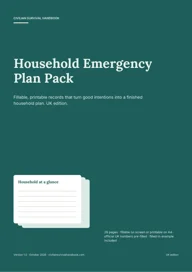 Want this written down for your home? Household Emergency Plan Pack — printable, £6.99.
If you smell gas, the steps are simple, and it helps to have read them once on a calm day. This guide follows the National Gas Emergency Service advice for Great Britain and HSE guidance, with the Northern Ireland number from HSENI.
The number to know
| Where | Gas emergency number |
|---|---|
| England, Scotland, Wales | 0800 111 999 (free, 24 hours) |
| Northern Ireland | 0800 002 001 (24 hours) |
| Anyone hurt, or a fire | 999 |
National Gas also lists the HSE Gas Safety Advice Line, 0800 300 363, which you can call about suspected carbon monoxide. British Sign Language users can contact the emergency service free through SignLive, and Relay UK offers support for people with hearing or speech difficulties.
Write the number for your nation on your fridge card and your household contacts list now.
If you smell gas indoors
National Gas advises these steps:
- Don't smoke, and don't light matches.
- Don't turn electrical switches on or off. SGN, one of the gas networks, explains that turning a switch on or off could ignite a gas leak.
- Open doors and windows.
- Turn off the meter at the control handle, unless the meter is in the cellar.
- Call 0800 111 999 (0800 002 001 in Northern Ireland).
HSE's gas safety advice also says: don't use any gas appliance you think is unsafe. Turn it off and leave it off until a Gas Safe registered engineer has checked it.
When you call, an adviser will take your details, tell you what to do and send an emergency engineer. SGN says the engineer will carry ID and will need to get into the property to make it safe.
Find your meter handle today
The step people struggle with is the meter. Take two minutes now:
- Find your gas meter. It may be in a cupboard, in an outside box or in a cellar.
- Find the control handle on the pipe next to it.
- Ask your Gas Safe engineer to show you which position is "off" at your next service.
- Write the meter location on your household plan, next to the stop tap and fuse box.
If the meter is in a cellar, don't turn it off there. SGN says not to go into a cellar, even if your gas meter is located in it.
If you smell gas outside
Don't smoke or light any flames in the area. Call 0800 111 999 (0800 002 001 in Northern Ireland) and give the location as precisely as you can: street, nearest house number, landmark.
Gas or carbon monoxide?
A gas smell and carbon monoxide are different problems:
- Gas leak: you may smell it, and a spark could ignite it.
- Carbon monoxide (CO): HSE says you can't see it, taste it or smell it.
If you suspect CO, National Gas advises: stop using all appliances and switch them off, open doors and windows, leave the property straight away and stay calm, call 0800 111 999 or the HSE line on 0800 300 363, and don't go back in until the emergency services say so. It also points out that going outside into fresh air won't treat any exposure by itself, so get medical help straight away. Our carbon monoxide guide covers symptoms, alarms and the rules for rented homes.
Afterwards: getting appliances checked
The emergency engineer makes the situation safe. Any repair to your own appliances or pipework needs a Gas Safe registered engineer, and you can look one up on the Gas Safe Register. HSE says gas appliances, flues and pipework should be serviced at least once a year by a Gas Safe registered engineer.
If you rent
HSE says landlords must arrange a gas safety check every 12 months by a Gas Safe registered engineer, and give existing tenants a copy of the record within 28 days of the check. New tenants should get a copy before they move in. If you rent and haven't seen yours, ask your landlord. If you smell gas, call the emergency line first, then tell your landlord or housing provider.
Put it in your household plan
Life-safety numbers work best when nobody has to look them up. Five minutes now:
- Gas emergency number for your nation, on the fridge and in every adult's phone
- Where the gas meter and its control handle are
- Where the stop tap and fuse box are (our frozen and burst pipes guide covers the stop tap)
- Your boiler's make and the date of its last service
- Your Gas Safe engineer's number
Go over it with older children too. "If you smell gas: no switches, no flames, tell a grown-up straight away" is easy to remember.
Help for people who need it
If someone in your home is older, disabled, has a long-term condition or relies on medical equipment, see our Priority Services Register guide for the extra help energy companies offer and who qualifies.
Limitations
This is general information based on National Gas, SGN, HSE and HSENI advice, checked on 28 October 2026. It isn't a substitute for instructions from the gas emergency call handler, the emergency engineer or the emergency services. Never try to repair gas appliances or pipework yourself. If anyone is hurt or there's a fire, call 999.
To keep the gas emergency number, meter location and your other shut-offs in one place everyone can find, the Household Emergency Plan Pack has the official UK numbers already filled in, plus a cut-out fridge card.
Turn this guide into a written plan
Reading helps. Writing it down is what makes it work when the phones are flat. Start with the free plan builder, or get the full printable version:
Your whole household planHousehold Emergency Plan Pack£6.99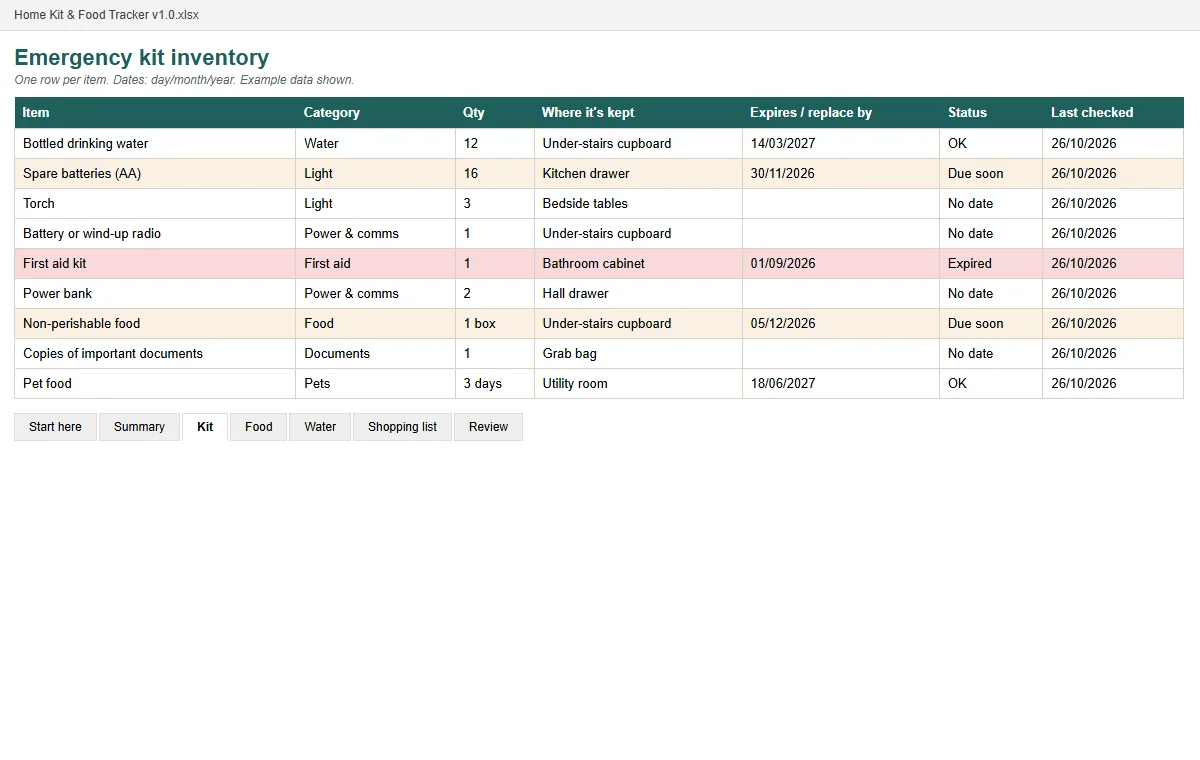 Bundle · £15.97 separatelyPrepared, Not Panicked bundle£9.99
Real pages shown before you buy · instant PDF · one-off price · 30-day refund.
Get the free 72-hour UK household checklist
Tick-box lists for each part of a UK home emergency kit, plus the key numbers on one page. Enter your email and we'll take you straight to the download.
That email address doesn't look right — please check it and try again.
We'll also email you when we publish new guides — occasional, never daily. Unsubscribe any time. See our privacy notice.
Frequently asked questions
What is the gas emergency number?
In Great Britain, 0800 111 999 (National Gas Emergency Service, free, 24 hours). In Northern Ireland, 0800 002 001. If anyone is hurt or there's a fire, call 999.
Should I turn off the gas at the meter?
National Gas says to turn off the meter at the control handle, unless the meter is in the cellar. SGN, a gas network, says not to go into a cellar even if your meter is there. Find your meter now so you're not searching for it later.
Can I use my phone if I smell gas?
National Gas says not to turn any electrical switches on or off, and SGN explains that turning a switch on or off could ignite a gas leak. When you call 0800 111 999, the call handler will tell you what to do next.
Who pays for the gas emergency call-out?
The 0800 111 999 line is free to call. An emergency engineer will come to make the situation safe. Any repair to your own appliances or pipework should then be done by a Gas Safe registered engineer.
I smell gas outside in the street. What should I do?
Don't smoke or light any flames nearby. Call 0800 111 999 (0800 002 001 in Northern Ireland) and tell them where the smell is.
Sources
- National Gas: Emergency contacts (checked 28 Oct 2026)
- SGN: What to do if you smell gas (checked 28 Oct 2026)
- HSENI: Carbon monoxide (NI gas emergency number, checked 28 Oct 2026)
- HSE: Carbon monoxide, domestic gas (checked 28 Oct 2026)
- HSE: Domestic gas FAQs (checked 28 Oct 2026)
- Gas Safe Register