In short: GOV.UK says to check with the emergency services that it's safe to return home, and not to turn on your water, gas or electricity until your utility company or a qualified engineer has checked them. Photograph the damage and the flood water line before cleaning, contact your insurer to start a claim, and ask which items you can throw away. Don't eat food that has touched flood water. Wear rubber boots and waterproof gloves to clean up, wash your hands after each session, and never run petrol or diesel generators indoors (UKHSA). If you rent, your landlord must handle flood repairs.
Key facts
- GOV.UK says not to turn on your water, gas or electricity after a flood until your utilities company or a qualified engineer has checked them. Source
- GOV.UK says to take photos of the damage and the flood water line before cleaning, and to ask your insurer which items you can move or throw away. Source
- GOV.UK says to throw away fridge food if the power has been off for more than 4 hours, and freezer food if it has been off for more than 24 hours. Source
- UKHSA advises rubber boots, protective overalls or a waterproof apron, and waterproof gloves for flood clean-up, and washing textiles such as clothing, bedding and toys on a 60°C cycle. Source
- The Association of British Insurers says it may take up to one year or longer for a flooded home to be restored and become habitable again. Source
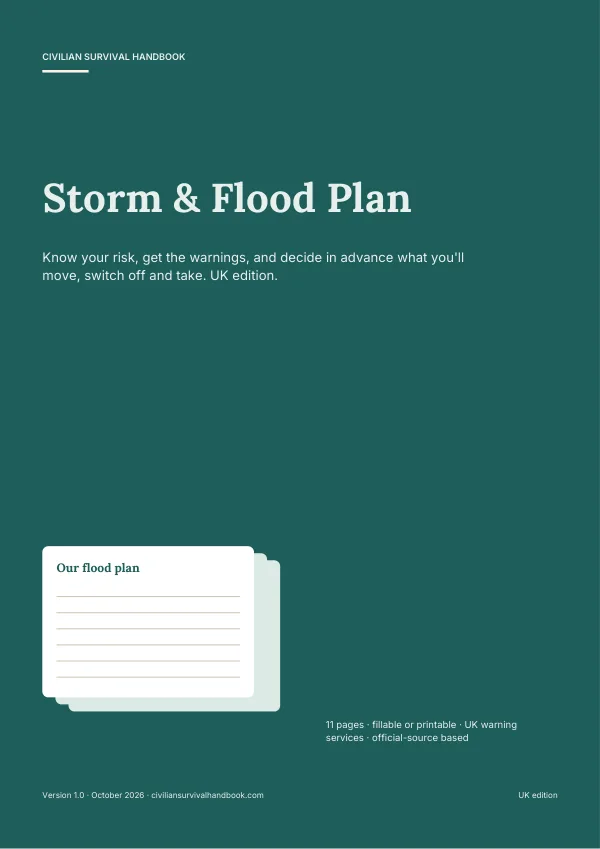 Want this written down for your home? Storm & Flood Plan — printable, £4.99.
A flooded home is a hard thing to deal with, and there is a lot to do in the days after. It helps to take things one step at a time. This guide follows GOV.UK's after-a-flood advice, UKHSA's flooding and health guidance, the GOV.UK Be Ready flooding page and the Association of British Insurers (ABI). It covers recovery. To prepare before a flood, see our storm and flood preparation guide.
1. Check it's safe to go back
GOV.UK says to check with the emergency services that it's safe to return to your property. Be Ready notes that water levels may rise and fall for several weeks, depending on drainage and further rain, so keep checking for warnings at gov.uk/check-flooding.
Stay out of flood water if you can. GOV.UK warns it can contain sewage and hide rubbish, uneven ground and broken drain or manhole covers.
2. Leave the utilities off
GOV.UK is clear: don't turn on your water, gas or electricity until your utilities company or a qualified engineer has checked them. UKHSA adds that gas or oil central heating should be checked by a qualified engineer before you switch it on.
3. Photograph everything first
Before you clean anything:
- Photograph or film the damage, room by room.
- Photograph the flood water line on the walls. Be Ready suggests marking water levels on a wall before they go down.
- Contact your insurer to start a claim. The ABI says to put your personal safety first and then contact your insurer immediately.
- Ask your insurer which items you can move or throw away. Be Ready says to get your insurer's approval before starting repairs.
The ABI says you may be able to keep a record of damaged items by photographing them on your phone, and that your insurer won't expect you to keep anything that is a health hazard. It also says your insurer may appoint a loss adjuster to assess the damage and oversee the repairs. Be Ready notes some insurers may pay for temporary accommodation and clean-up, so check your policy.
4. Clean up safely
UKHSA's advice for cleaning a flooded home:
- Wear protective clothing: rubber boots, protective overalls or a waterproof apron, and waterproof gloves. Wear goggles, and a face mask if the cleaning splashes a lot of water.
- Cover cuts and sores with waterproof plasters.
- Wash your hands with warm water and soap after each cleaning session. Be Ready calls hand-washing the most important way of removing harmful bugs and chemicals found in flood water. If there's no running water, use bottled water.
- Wash clothing, bedding and toys on a 60°C cycle with detergent.
- Clean and disinfect kitchen surfaces and cookware before using them, and throw away wooden boards and utensils that touched flood water.
GOV.UK says most items can go in the bin unless sewage or chemicals have contaminated them. Contact your council about skips, extra rubbish collections and used sandbags. For items contaminated with chemicals or sewage, ask your council's environmental health team how to dispose of them.
5. Dry the home without risking carbon monoxide
UKHSA suggests drying the home with heating, dehumidifiers and ventilation, with the thermostat between 20°C and 22°C for steady drying. It also warns:
- make sure heaters, dryers and fires are well ventilated, to avoid carbon monoxide poisoning
- never use petrol or diesel generators or similar fuel-driven equipment indoors
- unblock air bricks to underfloor spaces to help air move
UKHSA says mould should disappear as the home dries out. If it doesn't, contact a specialist cleaner. Our carbon monoxide guide lists the warning signs.
Drying out can take a long time. The ABI says it may take up to one year or longer for a home to be restored and become habitable again after a major flood.
6. Food and water
GOV.UK's food and water rules after a flood:
- don't eat any food that has touched flood water
- throw away fridge food if the power was off for more than 4 hours, and freezer food if it was off for more than 24 hours
- don't use tap water if its colour, taste or smell has changed, and contact your water company
If your water company issues a notice, our boil water notice guide explains what to do.
If you rent, or have no insurance
GOV.UK says if you rent, your landlord must handle repairs for flood damage. Citizens Advice and Shelter have guides for renters.
If you have no insurance, GOV.UK says to contact your local council for emergency housing. The council may also know of grants or charities that can help with repairs.
Look after yourself
A flood is upsetting, and that feeling can last. GOV.UK suggests talking to friends, family or your doctor. UKHSA says to contact your GP or NHS 111 if distress continues, and the Samaritans are free on 116 123, 24 hours a day.
Useful numbers
| Need | Number |
|---|---|
| Floodline (24 hours) | 0345 988 1188 (textphone 0345 602 6340) |
| Health concerns | NHS 111 |
| Emotional support | Samaritans: 116 123 |
| Anyone in danger | 999 |
Before the next flood
Once things settle, sign up for free flood warnings and read our guides to flood warnings and checking your flood risk. GOV.UK's insurance page explains Flood Re, which Be Ready describes as a scheme to help people who have been flooded find more affordable insurance.
Limitations
This is general information based on GOV.UK, UKHSA, GOV.UK Be Ready and ABI advice, checked on 29 October 2026. It isn't insurance, legal or medical advice. GOV.UK has separate pages for Scotland, Wales and Northern Ireland. Always follow your insurer's instructions and the emergency services. If anyone is in danger, call 999.
If you'd like one place to keep your insurer's details, a damage log and your flood plan, the Storm & Flood Plan has fillable pages for each.
Turn this guide into a written plan
Reading helps. Writing it down is what makes it work when the phones are flat. Start with the free plan builder, or get the full printable version:
For this topicStorm & Flood Plan£4.99 Your whole household planHousehold Emergency Plan Pack£6.99
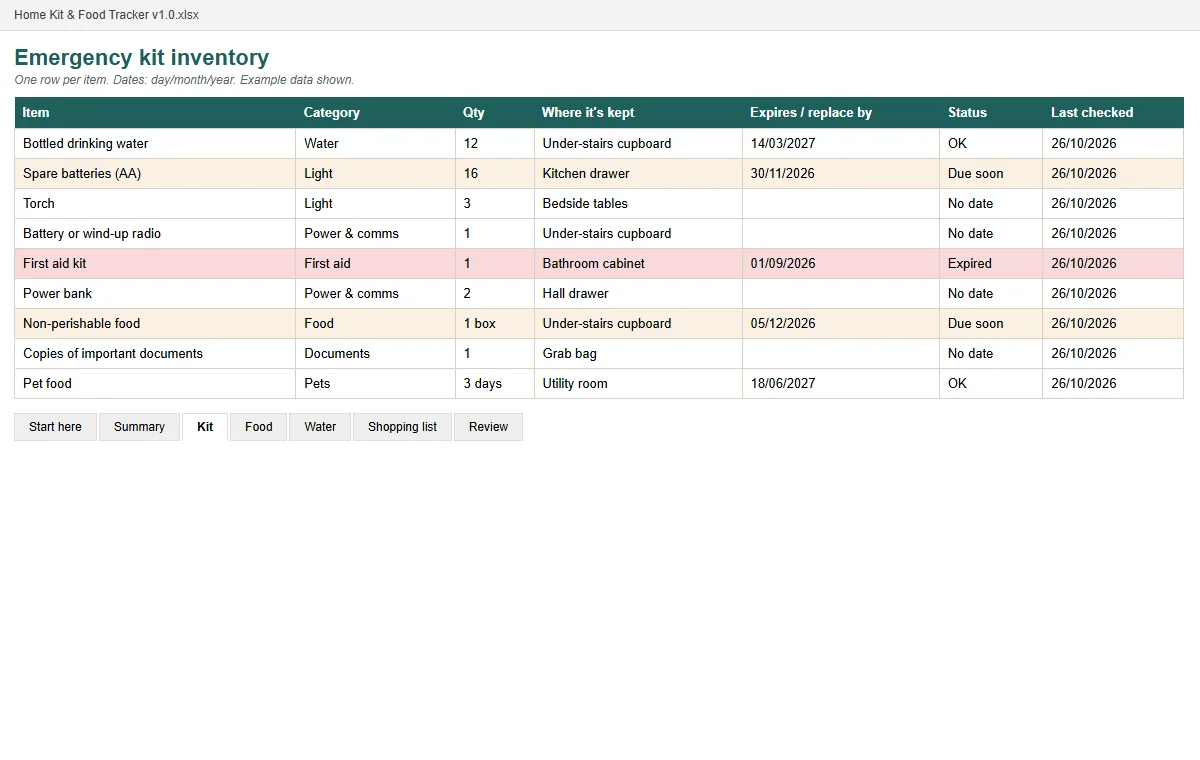 Bundle · £15.97 separatelyPrepared, Not Panicked bundle£9.99
Real pages shown before you buy · instant PDF · one-off price · 30-day refund.
Get the free 72-hour UK household checklist
Tick-box lists for each part of a UK home emergency kit, plus the key numbers on one page. Enter your email and we'll take you straight to the download.
That email address doesn't look right — please check it and try again.
We'll also email you when we publish new guides — occasional, never daily. Unsubscribe any time. See our privacy notice.
Frequently asked questions
When is it safe to go back into my home after a flood?
GOV.UK says to check with the emergency services that it's safe to return. Be Ready notes water levels may rise and fall for several weeks, so keep checking flood warnings.
Can I turn the electricity back on myself?
No. GOV.UK says not to turn on your water, gas or electricity until your utility company or a qualified engineer has checked they're safe.
Should I throw things away straight away?
Not yet. GOV.UK says to photograph the damage and the flood water line first, and to ask your insurer which items you can move or throw away. Be Ready says not to dispose of anything until you're told to.
What if I don't have insurance?
GOV.UK says to contact your local council for emergency housing. The council may also know of grants or charities that can help with repairs.
I rent my home. Who pays for repairs?
GOV.UK says your landlord must handle repairs for flood damage. Citizens Advice and Shelter have advice for renters after a flood.
Sources
- GOV.UK: What to do after a flood (checked 29 Oct 2026)
- UKHSA: Flooding and health, advice for the public (checked 29 Oct 2026)
- GOV.UK Be Ready: Flooding (checked 29 Oct 2026)
- Association of British Insurers: Recovering from a flood (checked 29 Oct 2026)
- GOV.UK: Check for flooding (checked 29 Oct 2026)