In short: The UK government launched Be Ready on 22 October 2026. The Cabinet Office says severe weather can sometimes disrupt power, water, phone and internet services, pointing to last winter's storms and this summer's wildfires, and that the advice brings the UK in line with countries such as France, Ireland and the Netherlands. It asks households to be ready for about 3 days, keep some food and bottled water, and join the Priority Services Register if they need extra help.
Key facts
- Be Ready was announced by the Cabinet Office on 22 October 2026 as the first stage of a three-year campaign. Source
- The Cabinet Office says recent storms and this summer's wildfires showed how severe weather can disrupt everyday life, and that the 3-day advice is also used in France, Ireland and the Netherlands. Source
- More than 500 organisations across the UK have signed up to share the campaign's messages. Source
- In the 2026 UK public survey, 14% of people said their household had a written emergency plan. Source
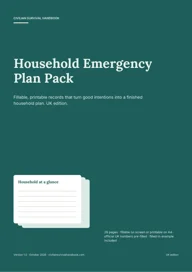 Want this written down for your home? Household Emergency Plan Pack — printable, £6.99.
If you've seen the Be Ready adverts or news stories and wondered why the government is suddenly talking about emergency kits, here is what it has actually said, in its own words. We're an independent UK site, not part of the government; every point below links to the official source.
What the government says
The Cabinet Office announced Be Ready on 22 October 2026. The announcement gives three reasons:
- Severe weather happens. It says severe weather can occasionally disrupt power, water, phone and internet services, and that last winter's storms and this summer's wildfires showed how this affects everyday life.
- Other countries already do it. It says the advice to be ready for about 3 days brings the UK in line with similar campaigns in countries including France, Ireland and the Netherlands.
- It frees up help for others. The Security Minister, Dan Jarvis, says that if households who can take simple steps do so, emergency services can focus on people who need more support.
The announcement describes this as the first stage of a three-year campaign that will build gradually, and says more than 500 organisations, including charities and businesses, have signed up to share the messages.
What it actually asks you to do
Three things:
- Be ready for about 3 days of disruption to power, water, phones or the internet.
- Keep a small stock of food that keeps and bottled water. The Be Ready checklist suggests 3 litres of drinking water per person per day, and says you don't need to buy everything at once.
- Join the Priority Services Register if you or someone at home needs extra help — see our PSR guide for how to join with each big supplier.
That's it. It isn't asking anyone to buy specialist gear or fill a spare room. Our Be Ready checklist guide goes through each item and what most homes already have.
Should I be worried?
The campaign is framed around ordinary disruption: storms, floods, wildfires and power cuts. Most of us will live through a power cut or a burst main at some point, and a few days of water, a torch and a written list of numbers make that much easier. Being ready is about staying calm and organised when it happens.
The one step most people haven't done
In the government's 2026 public survey, 14% of people said their household had a written emergency plan. Writing one down takes about 10 minutes: who to call, where the stopcock and fuse box are, who checks on whom, and where you'd meet.
- Make one free with our plan builder — no sign-up, nothing sent to us.
- Or print the Household Emergency Plan Pack (£6.99), fill-in pages for the whole household. You can see every page before you buy.
Turn this guide into a written plan
Reading helps. Writing it down is what makes it work when the phones are flat. Start with the free plan builder, or get the full printable version:
Your whole household planHousehold Emergency Plan Pack£6.99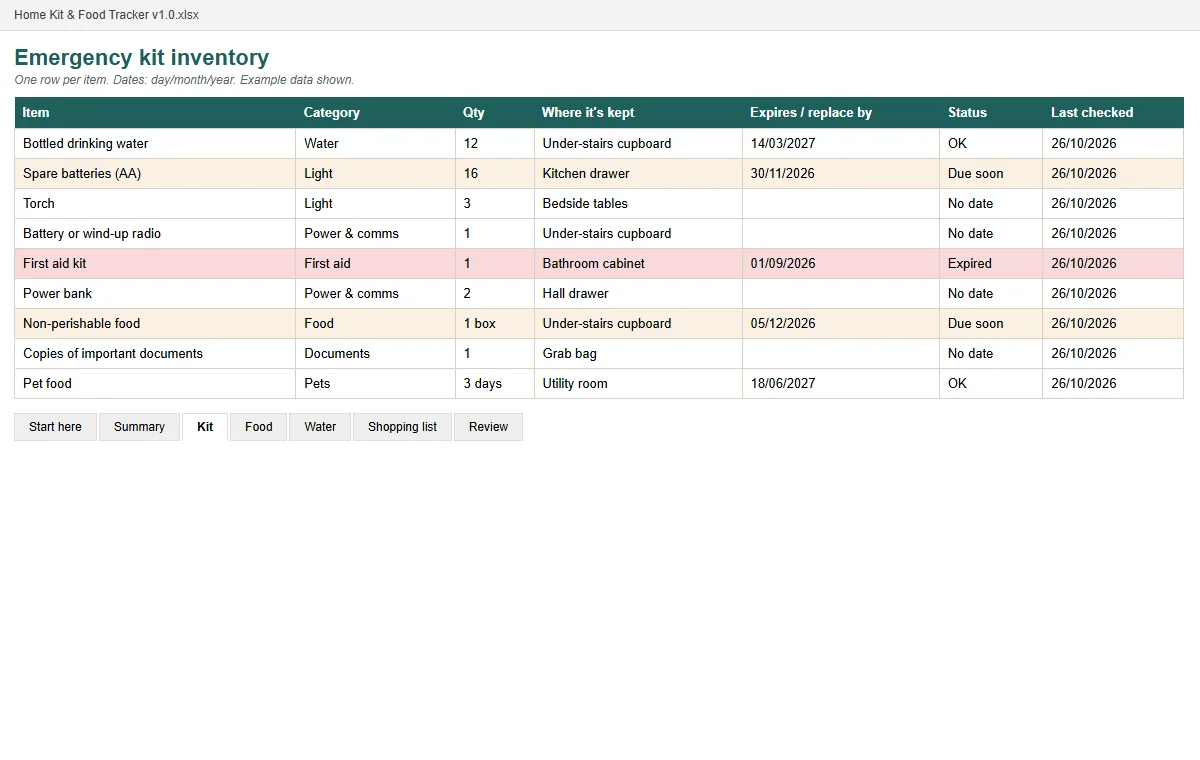 Bundle · £15.97 separatelyPrepared, Not Panicked bundle£9.99
Real pages shown before you buy · instant PDF · one-off price · 30-day refund.
Get the free 72-hour UK household checklist
Tick-box lists for each part of a UK home emergency kit, plus the key numbers on one page. Enter your email and we'll take you straight to the download.
That email address doesn't look right — please check it and try again.
We'll also email you when we publish new guides — occasional, never daily. Unsubscribe any time. See our privacy notice.
Frequently asked questions
Why is the UK government telling people to prepare?
The Cabinet Office says severe weather can sometimes disrupt power, water, phone and internet services, citing last winter's storms and this summer's wildfires. Its Be Ready advice, launched on 22 October 2026, asks households to be ready for about 3 days so emergency services can focus on people who need more help.
Is Be Ready about one particular event?
The government's announcement doesn't link it to any single event. It talks about everyday disruption such as storms, wildfires and loss of power, water, phone signal or internet, and says the 3-day advice matches countries such as France, Ireland and the Netherlands.
Is the government telling people to stockpile?
No. It asks households to keep a small stock of food that keeps and bottled water for about 3 days. The official checklist says you don't need to buy everything at once.
What does Be Ready ask me to do?
Be ready for about 3 days of disruption; keep some food that keeps and bottled water (the checklist suggests 3 litres per person per day for drinking); and join the Priority Services Register if you or someone at home needs extra help.
How long will the Be Ready campaign run?
The Cabinet Office describes the October 2026 advice as the first stage of a three-year campaign that will build gradually.
Sources
- GOV.UK — Households encouraged to take small, simple steps to stay prepared in an emergency (22 October 2026; read 31 Oct 2026)
- GOV.UK Be Ready — Be ready for emergencies
- Be Ready checklist (PDF)
- GOV.UK — UK public survey of risk perception, resilience and preparedness 2026: headline findings