In short: In England, use GOV.UK's Check your long term flood risk service to see the risk from rivers, the sea, surface water, reservoirs and groundwater for any address. In Scotland use SEPA's flood maps, in Wales the Natural Resources Wales flood risk map, and in Northern Ireland the nidirect flooding advice. You can also sign up for free flood warnings.
Key facts
- In England, the GOV.UK long-term flood risk service checks risk from rivers and the sea, surface water, reservoirs and, where data is available, groundwater. Source
- Be Ready links separate flood risk checks for England, Wales (Natural Resources Wales), Scotland (SEPA) and Northern Ireland (nidirect). Source
- Local Resilience Forums are partnerships of local public services, such as emergency services, councils, the NHS, the Environment Agency and utilities, and each publishes a Community Risk Register. Source
- GOV.UK lists 42 Local Resilience Forums: 38 in England and 4 in Wales (page updated 11 February 2026). Source
- In Scotland the equivalent bodies are Regional Resilience Partnerships, and in Northern Ireland they are Emergency Preparedness Groups. Source
 Want this written down for your home? Household Emergency Plan Pack — printable, £6.99.
Every area has its own mix of risks. A home near a river has different things to plan for than a flat in a city centre. The GOV.UK Be Ready campaign suggests finding out which emergencies are more likely where you live, work or travel. It takes a few minutes, and it tells you which parts of your plan matter most.
Step 1: check your flood risk
Flood risk is the check most people search for, and there is a free official service for each part of the UK.
| Where | Service |
|---|---|
| England | GOV.UK: check your long term flood risk |
| Wales | Natural Resources Wales: check your flood risk by postcode |
| Scotland | SEPA flood maps |
| Northern Ireland | nidirect: check the risk of flooding in your area |
These links come from Be Ready's check the risks page.
In England, the GOV.UK service shows long-term risk from four sources:
- rivers and the sea
- surface water (flooding from heavy rain)
- reservoirs
- groundwater, where data is available
What to do with the answer:
- Write your flood risk on your household plan.
- If any risk shows up, sign up for flood warnings. In England this is free on GOV.UK, or call Floodline on 0345 988 1188.
- Check the homes of people you look after, such as an older parent, too.
A long-term check tells you about likelihood, not about this week. For what's happening now, see our guide to flood alerts and warnings.
Step 2: find your Community Risk Register
Beyond flooding, your area has a public list of the risks most likely to affect it. Be Ready explains that in England, Local Resilience Forums (LRFs) are partnerships of local public services, such as the emergency services, councils, the NHS, the Environment Agency and utilities. They identify risks and make plans to prevent or reduce their impact. Each LRF publishes a Community Risk Register.
GOV.UK lists 42 Local Resilience Forums, 38 in England and 4 in Wales, with a link to each one's register (page updated 11 February 2026).
| Where | Local body | Where to find the register |
|---|---|---|
| England | Local Resilience Forum | GOV.UK LRF contact details |
| Wales | Local Resilience Forum | Welsh Government: Community Risk Registers |
| Scotland | Regional Resilience Partnership | Ready Scotland; registers on Scottish Fire and Rescue |
| Northern Ireland | Emergency Preparedness Group | NI Civil Contingencies Policy Branch |
How to read it: look for the few risks your register puts at the top for your area, then check that your household plan has an answer for each. You don't need to read every page.
Step 3: other quick checks
Be Ready also suggests:
- Weather: the Met Office forecast and its weather warnings.
- Air pollution: the Defra pollution forecast, useful if someone at home has asthma or a lung condition.
- Travel abroad: the FCDO's country travel advice before a trip.
Turn what you found into a plan
Checking risks is only useful if it changes something at home. A simple way to do it:
- Pick your top three. For many homes this will be things like flooding, power cuts and storms. Use what your own checks showed.
- Write one line for each: what you would do, who you would call, and where you would go.
- Fill the gaps in your kit. Be Ready's kit list covers water, food, light, a radio, cash, documents and medicines. You don't have to buy it all at once; Be Ready suggests adding an item or two on normal shopping trips.
- Share it. Tell everyone at home, and give a copy to a relative or neighbour.
Our household plan guide walks through each part, and the free make-a-plan tool builds a printable page from your answers.
Keep it up to date
Your plan should keep up with your life. Re-check your flood risk and local risks when:
- you move home, or start working or studying somewhere new
- someone you look after moves, for example into sheltered housing
- you renew your home insurance, so your plan and your policy match
Be Ready suggests setting a reminder every six months to check your kit, replace anything out of date and update it if your household's needs change. That's a good moment to look at your local risks again too.
Talk to your neighbours
Neighbours can help each other. Be Ready suggests talking to neighbours about what support you could share during an outage, and swapping contact details. If your check shows a flood risk, ask whether neighbours have signed up for warnings, and offer to help anyone who isn't online to do it by phone through Floodline.
Limitations
This is general information based on GOV.UK Be Ready and GOV.UK pages, checked on 28 October 2026. Flood risk services show long-term likelihood, not forecasts, and they don't replace a survey or insurance advice. Local risks and services can change, so check your own area's pages. If anyone is in danger, call 999.
If you'd like one place to record your local risks, contacts, meeting points and shut-offs, the Household Emergency Plan Pack has fillable pages with official UK numbers already filled in. If flooding is on your list, the Storm & Flood Plan helps you sign up for the right warning service for your part of the UK and plan what to move and switch off.
Turn this guide into a written plan
Reading helps. Writing it down is what makes it work when the phones are flat. Start with the free plan builder, or get the full printable version:
Your whole household planHousehold Emergency Plan Pack£6.99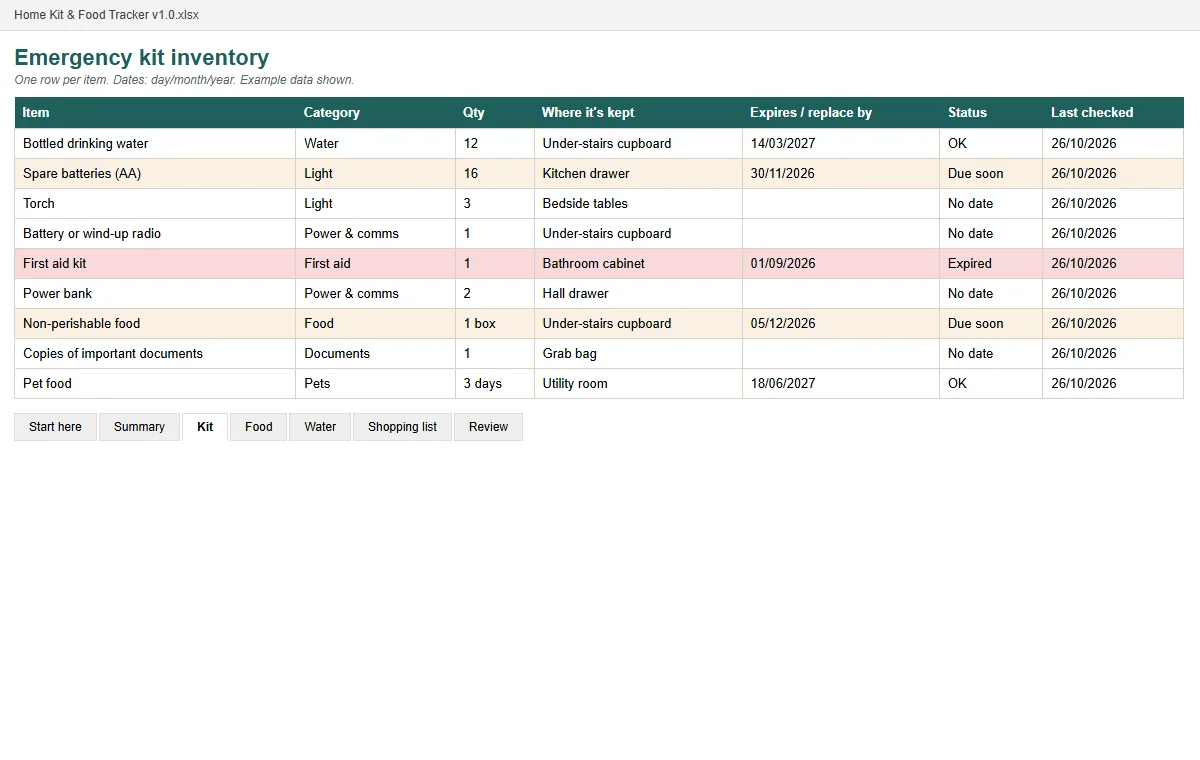 Bundle · £15.97 separatelyPrepared, Not Panicked bundle£9.99
Real pages shown before you buy · instant PDF · one-off price · 30-day refund.
Get the free 72-hour UK household checklist
Tick-box lists for each part of a UK home emergency kit, plus the key numbers on one page. Enter your email and we'll take you straight to the download.
That email address doesn't look right — please check it and try again.
We'll also email you when we publish new guides — occasional, never daily. Unsubscribe any time. See our privacy notice.
Frequently asked questions
How do I check flood risk by postcode?
In England, use the GOV.UK long-term flood risk service. In Wales, use Natural Resources Wales; in Scotland, SEPA's flood maps; in Northern Ireland, nidirect. Be Ready links all four.
What is a Community Risk Register?
A list, published by your Local Resilience Forum, of the risks most likely to disrupt your region. Be Ready links the registers for England, Wales, Scotland and Northern Ireland.
What is a Local Resilience Forum?
A partnership of local public services, such as the emergency services, councils, the NHS, the Environment Agency and utilities. They identify local risks and plan to prevent or reduce their impact.
Does a flood risk check tell me if it will flood this week?
No. The GOV.UK service shows long-term risk. For flooding expected in the next few days, sign up for flood warnings and check the flood forecast and Met Office weather warnings.
Does the flood risk check include flash flooding?
The England service includes surface water, which is the type of flooding caused by heavy rain. Note that you cannot get flood warnings for surface water flooding, so keep an eye on rain warnings too.
Sources
- GOV.UK Be Ready: Check the risks where you are (checked 28 Oct 2026)
- GOV.UK: Check your long term flood risk (checked 28 Oct 2026)
- GOV.UK: Local resilience forums contact details (checked 28 Oct 2026)
- GOV.UK: Sign up for flood warnings (checked 28 Oct 2026)