In short: In England, the Environment Agency uses three levels. A flood alert means flooding is possible and is usually issued 2 to 12 hours ahead. A flood warning means flooding is expected, usually 30 minutes to 2 hours ahead. A severe flood warning means there could be a risk to life. Floodline is 0345 988 1188, open 24 hours.
Key facts
- The Environment Agency says a flood alert means flooding is possible and is usually issued 2 to 12 hours before flooding. Source
- A flood warning means flooding is expected and is usually issued 30 minutes to 2 hours before flooding. Source
- A severe flood warning means flooding could cause danger to life and significant disruption to communities. Source
- The GOV.UK flood warning service is free and covers rivers, the sea or groundwater in England, but you cannot get warnings for surface water (flash) flooding. Source
- Floodline is 0345 988 1188 (textphone 0345 602 6340), open 24 hours, and covers England, Scotland and Wales. Source
 Want this written down for your home? Storm & Flood Plan — printable, £4.99.
When rain is heavy or a storm is coming, you may see the words "flood alert" or "flood warning" in the news or on your phone. They are not the same thing. The Environment Agency (EA) uses three levels in England, and each one asks you to do something different. This guide explains them in plain English and shows how to get them sent to you for free.
The three levels at a glance
| Level | What it means | Usually issued | What to do |
|---|---|---|---|
| Flood alert | Flooding is possible | 2 to 12 hours before flooding | Get ready |
| Flood warning | Flooding is expected | 30 minutes to 2 hours before flooding | Protect your household and belongings now |
| Severe flood warning | Danger to life and significant disruption | Before, during or after flooding | Stay safe, be ready to leave, follow the emergency services |
The timings and meanings above come from the GOV.UK flood alerts and warnings page. The EA says it tries to issue alerts during waking hours where possible.
Flood alert: flooding is possible
A flood alert is your early nudge. The EA issues one when forecasts show flooding is possible from rivers, or from high tides, surges or strong winds at sea.
What the EA suggests you do:
- Check regularly for updates on alerts in your area.
- Be ready to follow your flood plan.
- Put your insurance documents and medicines where you can grab them.
- Don't walk, cycle or drive through floodwater.
- If you keep animals or farm equipment, move them away from places likely to flood.
This is a good moment to charge phones and power banks and check your grab bag. Our grab bag list has a flood section.
Flood warning: flooding is expected
A flood warning means the EA expects flooding. It issues one when forecasts show flooding from rivers, flash floods from heavy rain, or high tides and surges with strong winds.
The EA's advice for a flood warning:
- Protect yourself and your household first.
- Move people, pets and valuables to a safe place, such as higher ground or an upper floor.
- Turn off gas, electricity and water, but only if it is safe to do so.
- Put flood protection equipment in place if you have it.
- Follow the instructions of the emergency services, and help others if it is safe.
If you don't know where your stop tap, fuse box or gas meter is, find them on a dry day. Our frozen and burst pipes guide shows how to find the stop tap.
Severe flood warning: danger to life
This is the highest level. The EA uses it when flooding could cause danger to life and significant disruption to communities. It can be issued before, during or after flooding.
- Stay in a safe place and be ready to leave your home if you are told to.
- Follow the instructions of the emergency services.
- Call 999 if you are in immediate danger.
- If you are caught in a flash flood, move to higher ground or an upper floor if it is safe.
Knowing what the top level asks of you means you won't have to work it out on the day.
Get warnings sent to you, free
In England, the GOV.UK flood warning service is free. You can choose a phone call, a text or an email, and you can sign up for your home or an organisation. You need an email address and a way to be contacted at any time.
| Where you live | How to get warnings |
|---|---|
| England | Sign up on GOV.UK or call Floodline |
| Scotland | Register with SEPA's Floodline (myfloodline.sepa.scot) |
| Wales | Natural Resources Wales flood warning service |
| Northern Ireland | No GOV.UK sign-up; check flood maps on nidirect |
Floodline: 0345 988 1188 (textphone 0345 602 6340), open 24 hours. GOV.UK says it covers England, Scotland and Wales.
One limit to know: GOV.UK says you cannot get flood warnings for surface water flooding, also called flash flooding. The service covers rivers, the sea or groundwater, depending on where you live. So during heavy rain, also check Met Office weather warnings.
- Sign up for warnings for your home.
- Sign up for an older relative's home too, with your number as a contact, if they agree.
- Save Floodline in your phone and write it on your household plan.
Is your home at risk at all?
Many people only learn about flood risk when a warning arrives. You can check before. In England, the GOV.UK long-term flood risk service shows risk from rivers and the sea, surface water, reservoirs and, where data exists, groundwater. Be Ready lists the matching services for Wales, Scotland and Northern Ireland.
A simple flood plan
You don't need a lot. Write down:
- Where your stop tap, fuse box and gas meter are.
- Which room upstairs (or which neighbour or relative) you would go to.
- Who takes the pets, and who checks on an older neighbour.
- Your insurer's phone number and policy number.
- Floodline, 999 and your electricity network's number, 105.
Our storm and flood preparation guide has a full kit list, and the free make-a-plan tool turns these answers into a printable page.
Limitations
This is general information based on GOV.UK and Environment Agency pages, checked on 28 October 2026. The three levels described are those used in England; Scotland, Wales and Northern Ireland have their own services. Timings are the EA's usual ranges, not promises. Always follow the instructions of the emergency services. If anyone is in danger, call 999.
If you'd like one place for your flood plan, contacts and a damage log for insurance, the Storm & Flood Plan has fillable pages for each, and the Household Emergency Plan Pack covers the whole home.
Turn this guide into a written plan
Reading helps. Writing it down is what makes it work when the phones are flat. Start with the free plan builder, or get the full printable version:
For this topicStorm & Flood Plan£4.99 Your whole household planHousehold Emergency Plan Pack£6.99
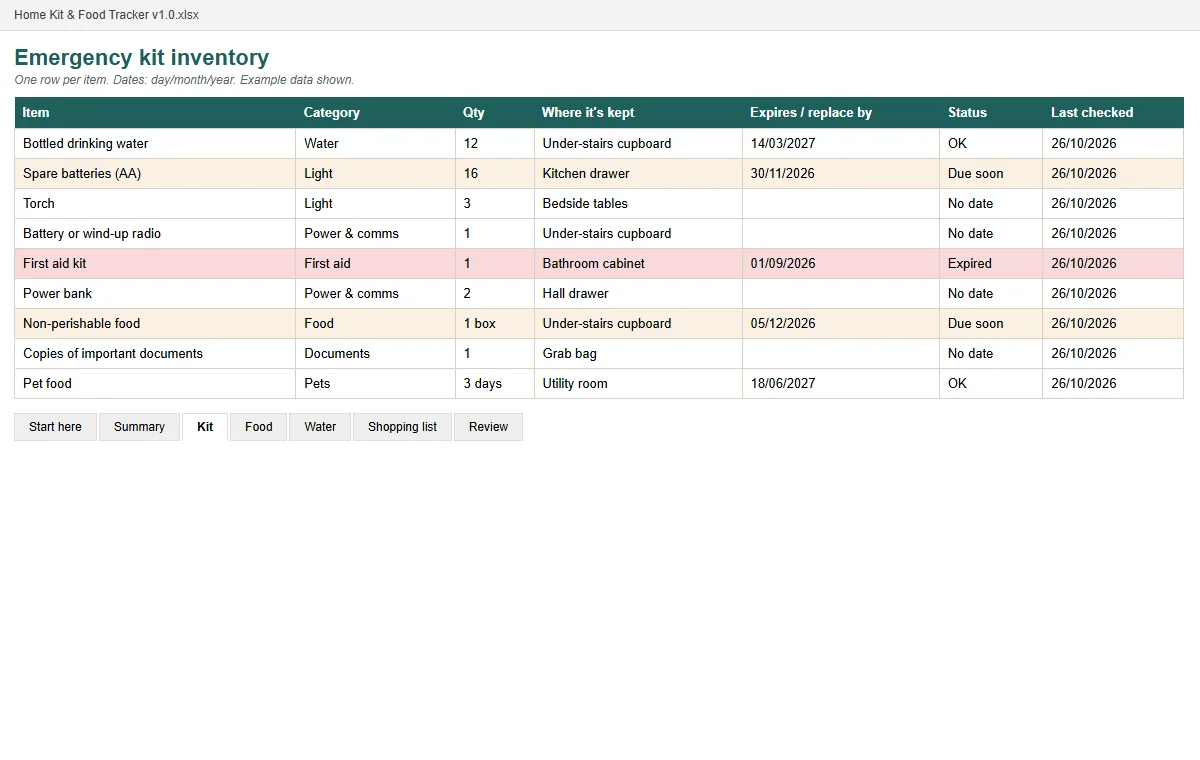 Bundle · £15.97 separatelyPrepared, Not Panicked bundle£9.99
Real pages shown before you buy · instant PDF · one-off price · 30-day refund.
Get the free 72-hour UK household checklist
Tick-box lists for each part of a UK home emergency kit, plus the key numbers on one page. Enter your email and we'll take you straight to the download.
That email address doesn't look right — please check it and try again.
We'll also email you when we publish new guides — occasional, never daily. Unsubscribe any time. See our privacy notice.
Frequently asked questions
What is the difference between a flood alert and a flood warning?
A flood alert means flooding is possible, so get ready. A flood warning means flooding is expected, so protect yourself, your household and your belongings now. The Environment Agency usually issues alerts 2 to 12 hours ahead and warnings 30 minutes to 2 hours ahead.
What does a severe flood warning mean?
The Environment Agency uses it when flooding could cause danger to life and significant disruption to communities. Stay somewhere safe, be ready to leave if told to, follow the emergency services and call 999 if you are in immediate danger.
How do I sign up for flood warnings?
In England, sign up free on GOV.UK or by calling Floodline on 0345 988 1188. You choose to be contacted by phone call, text or email. In Scotland, register with SEPA's Floodline; in Wales, use Natural Resources Wales.
Do flood warnings cover flash flooding?
No. GOV.UK says you cannot get flood warnings for surface water flooding, also called flash flooding. Keep an eye on Met Office weather warnings for heavy rain as well.
Is there a flood warning service in Northern Ireland?
GOV.UK does not offer a sign-up for Northern Ireland. It points to nidirect, where you can check flood risk using flood maps.
Sources
- GOV.UK: Flood alerts and warnings, what they are and what to do (checked 28 Oct 2026)
- GOV.UK: Sign up for flood warnings (checked 28 Oct 2026)
- GOV.UK: Check your long term flood risk (checked 28 Oct 2026)
- GOV.UK Be Ready: Check the risks where you are (checked 28 Oct 2026)