How long does a freezer stay frozen in a power cut?
48 hours if full, about 24 hours if half full
The Food Standards Agency says a full freezer should stay frozen for up to 48 hours and a fridge should stay cold for up to 4 hours, if you keep the doors closed. These are estimates; the make and model matter.
Source: Food Standards Agency: Food safety in a power cut (checked 31 October 2026)
In short: The Food Standards Agency says a power cut of less than 4 hours is unlikely to affect chilled or frozen food. Keep the doors shut: a fridge should stay cold for up to 4 hours, a full freezer should stay frozen for up to 48 hours and a half-full one about 24 hours. If the fridge reaches 8°C or above, eat or throw away chilled food such as meat, fish, dairy-based ready meals and leftovers within 4 hours.
Key facts
- The Food Standards Agency says a power cut of less than 4 hours is unlikely to affect the safety of chilled or frozen food. Source
- A fridge should stay cold for up to 4 hours; a full freezer should stay frozen for up to 48 hours and a half-full freezer for about 24 hours (FSA estimates). Source
- Fridges should normally be at 5°C or below; in a power cut, chilled food can be kept in a fridge below 8°C. Source
- If the fridge reaches 8°C or above, chilled foods with a use-by date, foods labelled keep refrigerated and leftovers should be thrown away after 4 hours unless the power comes back within that time. Source
- Be Ready says keep fridge and freezer doors closed, as this will keep them cold for several hours. Source
When the power goes off, the first worry in most kitchens is the fridge and freezer. The good news is that most power cuts are short, and the official advice is calm: if you keep the doors shut, your food is usually fine. This guide puts the Food Standards Agency's power cut advice into plain steps.
How long does food stay safe in a power cut?
The Food Standards Agency (FSA) says a power cut of less than 4 hours is unlikely to affect chilled or frozen food. For longer cuts, these are its estimates, with the doors kept closed:
| Appliance | How long it stays cold | Notes |
|---|---|---|
| Fridge | Up to 4 hours | Normally 5°C or below; during a power cut, below 8°C is fine |
| Full freezer | Up to 48 hours | A full freezer holds the cold longer |
| Half-full freezer | About 24 hours |
The FSA says these are estimates: the make, model and age of your fridge or freezer, and how warm the room is, all make a difference.
What to do as soon as the power goes off
- Keep the doors shut. Be Ready says this will keep them cold for several hours. Every opening lets cold air out.
- Report the power cut on 105 (England, Scotland and Wales) or 03457 643643 (Northern Ireland), and ask how long it's expected to last.
- Note the time the power went off. It helps you work out the 4-hour point later.
- Turn off irons, ovens and electric fires, and unplug the TV and computer, as Be Ready advises, so nothing is damaged when the power comes back.
A fridge thermometer takes the guesswork out. It tells you whether you're still below 8°C. Many households keep one in the fridge all year.
If the power cut goes on: what to eat first
The FSA suggests eating in this order, so less goes to waste:
- Food that needs a fridge.
- Defrosted frozen food that doesn't need cooking.
- Perishable food kept at room temperature, such as bread and fruit.
- Tins, jars and dried food, which keep, so save them for last.
Tinned food can be eaten without heating. If you have food you can't eat in time and it has been kept properly, the FSA says you can share it with neighbours.
If you need to cook, see cooking safely in a power cut. The FSA says most camping stoves and barbecues are for outdoor use only, so check the maker's instructions.
When should food be thrown away?
If the fridge has reached 8°C or above, the FSA says these should be thrown away after 4 hours, unless the power came back within that time:
- food with a use-by date, such as meat, poultry, fish, ready-to-eat sandwiches, salads and deli meats
- anything labelled keep refrigerated
- leftovers
Food normally kept in the cupboard is still safe to eat.
People at higher risk
The FSA says young children, pregnant women, older people and people with long-term health conditions are more at risk from food poisoning. For them, take extra care: wash hands and surfaces often, be careful with deli meats and smoked fish, make sure hot food is steaming hot, and don't eat anything past its use-by date.
Can I store food outside in winter?
Only if it is below 8°C outside. The FSA says keep it clean and dry, out of direct sunlight, protected from animals, and in a sealed box.
Medicines and baby formula
Some medicines need a fridge. Our guide to medicines that need a fridge in a power cut explains what to do and who to ask. For babies, the FSA says making up powdered formula needs boiled water; if you can't boil water, ready-to-use formula is an option.
Before the next power cut
- Put a fridge thermometer in the fridge
- Keep the freezer reasonably full (the FSA's 48-hour estimate is for a full freezer)
- Keep 3 days of no-cook food in the cupboard (Be Ready); see our emergency food guide
- Write the power cut number on paper by the fridge
- Keep a torch where you can find it; see choosing a torch for a power cut
Limitations
This is general information based on the Food Standards Agency's advice for homes, not professional advice. Businesses should contact their local council's food safety team, as the FSA says. If you're unsure whether food is safe, throw it away. For medical questions, ask a pharmacist or call NHS 111; in an emergency, call 999.
Turn this guide into a written plan
Reading helps. Writing it down is what makes it work when the phones are flat. Start with the free plan builder, or get the full printable version:
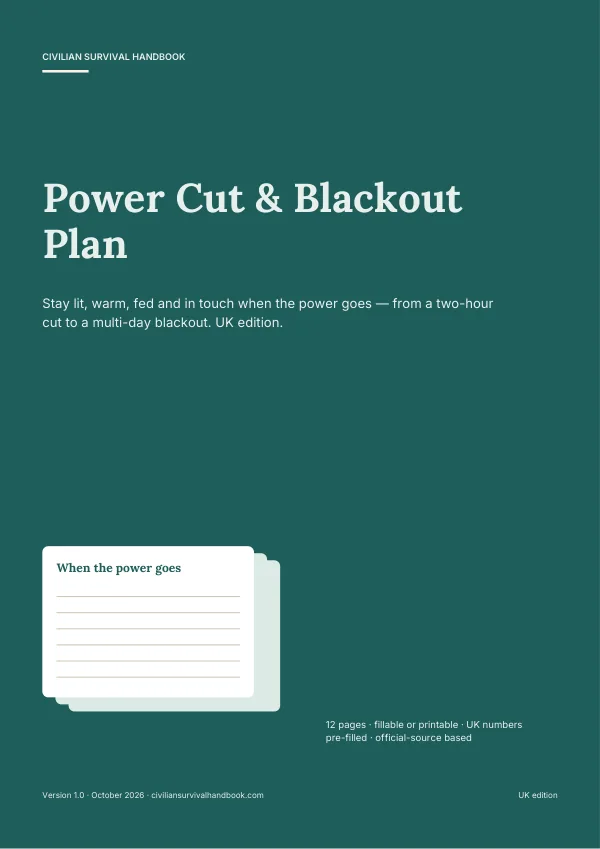 For this topicPower Cut & Blackout Plan£4.99
 Your whole household planHousehold Emergency Plan Pack£6.99
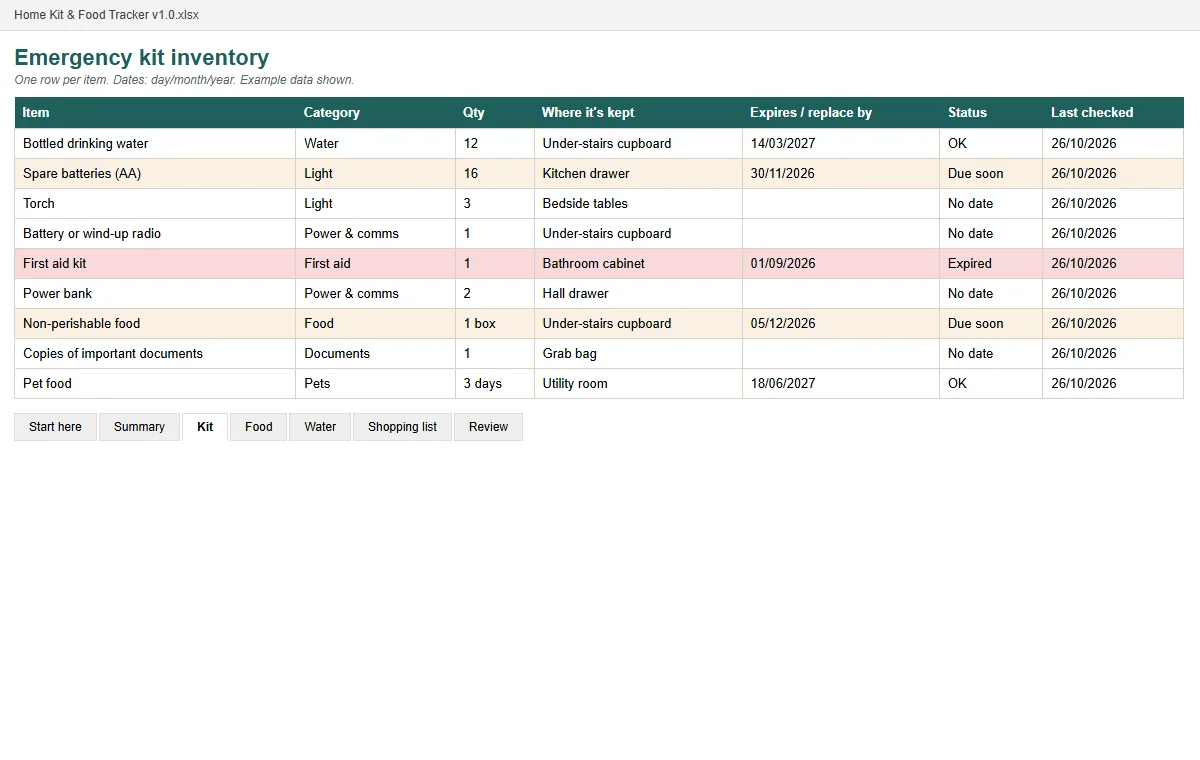 Bundle · £15.97 separatelyPrepared, Not Panicked bundle£9.99
Real pages shown before you buy · instant PDF · one-off price · 30-day refund.
The Power Cut Card for your fridge
Who to call, what to switch off, how long the fridge and freezer stay cold, and how to keep warm. One calm page from official UK advice. Enter your email and we'll take you straight to the download.
We'll also email you when we publish new guides — occasional, never daily. Unsubscribe any time. See our privacy notice.
Frequently asked questions
How long does a fridge stay cold without power?
Up to about 4 hours with the door kept shut, according to the Food Standards Agency. A fridge thermometer tells you for sure: chilled food is fine below 8°C during a power cut.
How long will my freezer stay frozen in a power cut?
The FSA estimates up to 48 hours for a full freezer and about 24 hours for a half-full one, if the door stays shut. The make, model and room temperature make a difference.
What food should I throw away after a power cut?
If the fridge reached 8°C or above for more than 4 hours: food with a use-by date (meat, poultry, fish, sandwiches, salads, deli meats), anything labelled keep refrigerated, and leftovers. If you're not sure, the safe choice is to throw it away.
Can I put food outside to keep it cold?
Only if it is colder than 8°C outside. The FSA says keep it clean and dry, out of direct sun, away from animals, and in a sealed box.
What should I eat first in a power cut?
The FSA's order: food that needs a fridge first, then defrosted frozen food that doesn't need cooking, then perishable food kept at room temperature, and tins, jars and dried food last.
Sources
- Food Standards Agency (GOV.UK): Food safety in a power cut, advice for consumers (checked 31 Oct 2026)
- GOV.UK Be Ready: Power cuts (checked 31 Oct 2026)