What light should I keep for a power cut?
1 torch per adult, plus spare batteries
Be Ready says keep a battery or wind-up torch with spare batteries, because torches are safer than candles, and avoid using your phone's torch, as it drains the battery. One per adult means nobody has to share in the dark.
Source: GOV.UK Be Ready: Power cuts (checked 31 October 2026)
In short: GOV.UK's Be Ready advice is to keep a battery or wind-up torch at home with spare batteries, because torches are safer than candles, and not to rely on your phone's torch, which drains the battery you may need for calls. A sensible set-up is one torch for each adult, a head torch for hands-free jobs, spare batteries stored with them, and a known place to find them in the dark.
Key facts
- Be Ready says to keep a battery or wind-up torch with spare batteries at home, and that torches are safer than candles. Source
- Be Ready says you probably won't want to use your mobile phone's torch in a power cut, because it drains the phone's battery more quickly. Source
- The Be Ready checklist asks households to review their supplies every six months and replace items as needed. Source
- London Fire Brigade calls battery-operated (LED) candles a much safer alternative to real candles and tea lights, and says never leave a lit candle unattended. Source
Since the government's Be Ready campaign started on 22 October 2026, torches have been one of the first things people go out and buy. That's a good instinct: a torch is the single most useful thing to have in your hand when the lights go off. You don't need anything special. This guide explains what the official advice says, what to look for when you choose one, and how to keep it ready.
We're an independent site and we don't sell torches or earn anything from any shop. There are no brand recommendations here, just plain buying points.
What does the official advice say about torches?
GOV.UK Be Ready's power cut page gives three clear points:
- Keep a battery or wind-up torch at home, with spare batteries.
- Torches are safer than candles.
- You probably won't want to use your phone's torch, because it drains the battery more quickly, and you may need your phone for calls and updates.
The Be Ready checklist lists a torch and spare batteries under "light and warmth", next to blankets and warm clothes.
Torch or candles?
A torch. Candles are a fire risk, and in a power cut people tend to carry them around, put them down in odd places and fall asleep with them lit. London Fire Brigade says never leave a candle unattended, keep it away from curtains, paper and furniture, and keep naked flames out of reach of children and pets. Tea lights get very hot and can melt through plastic without a proper holder.
If you like a soft light in the living room, London Fire Brigade suggests battery-operated LED candles as a much safer alternative to real candles and tea lights.
How many torches do you need?
Be Ready doesn't give a number. A practical rule:
| Who | What works well |
|---|---|
| Each adult | One hand torch, so nobody has to share in the dark |
| The person who cooks or checks the fuse box | A head torch, which leaves both hands free |
| Children | A small torch of their own can make a power cut feel like an adventure rather than a worry |
| Living room | One LED lantern or LED candle for general light |
What to look for when you choose a torch
These are general buying points, not a test of any product. Check the box or product page for each one.
Power source
- Ordinary batteries (AA or AAA): simple, and you can keep spares in a drawer. If your other gadgets (radio, smoke alarm tester, remote) use the same size, one stock of spares covers them all.
- Wind-up or hand-crank: never needs batteries. Usually less bright, and you'll wind it now and then. Some combine a torch, radio and phone charger. See our wind-up radio guide.
- Rechargeable (USB): handy day to day, but only useful in a power cut if it was charged before. Keep it topped up, and keep a charged power bank too.
Brightness and run time
Brightness is usually given in lumens. A very bright torch isn't always better at home: it runs down its batteries faster and can dazzle people. A torch with a low setting is useful, because a low light lasts much longer. Look for a stated run time, ideally for each setting.
Easy to use in the dark
- A switch you can find by touch.
- A shape that won't roll off a table, or a stand or magnet.
- A wrist strap or clip.
- For older relatives: a large, simple switch and a light weight. Our guide to an emergency kit for an elderly parent has more ideas.
Other useful features
- Water resistance, if you might use it outside in rain (for example checking a meter box or the car).
- A lantern or diffuser mode, which spreads light round a room.
- A red light setting on some head torches, which is gentler on the eyes at night.
Where to keep it
A torch only helps if you can find it in the dark. Pick one place everyone knows: a kitchen drawer, the hallway cupboard or by the bed. Many households keep one torch by the bed and one with the main kit.
Store spare batteries in their packet, in a cool, dry place, and not loose in a drawer where the ends can touch metal.
How to keep it working
- Test it every six months, when you check the rest of your kit. The Be Ready checklist asks you to review supplies every six months. The clock changes in spring and autumn are an easy reminder.
- Replace weak batteries, and take batteries out of torches you rarely use, following the maker's instructions.
- Don't mix old and new batteries in the same torch.
- Recycle used batteries at a shop or tip collection point, not in the household bin.
Your power cut light checklist
- One torch per adult, battery or wind-up
- A head torch for hands-free jobs
- Spare batteries in the right sizes, in their packet
- An LED lantern or LED candles for the room (not real candles)
- One agreed place, known to everyone at home
- A six-monthly test in your diary
A torch is one part of a power cut kit. The rest is a radio, a power bank, warm layers, some cash, water and no-cook food, and the power cut number written down: 105 in England, Scotland and Wales, 03457 643643 in Northern Ireland (Be Ready).
Limitations
This is general information, not a product test or professional advice. We haven't tested any torch and don't recommend brands. Always follow the maker's instructions for batteries and charging. In an emergency, call 999. Power cut numbers differ in Northern Ireland, as shown above.
Turn this guide into a written plan
Reading helps. Writing it down is what makes it work when the phones are flat. Start with the free plan builder, or get the full printable version:
 For this topicPower Cut & Blackout Plan£4.99
 Your whole household planHousehold Emergency Plan Pack£6.99
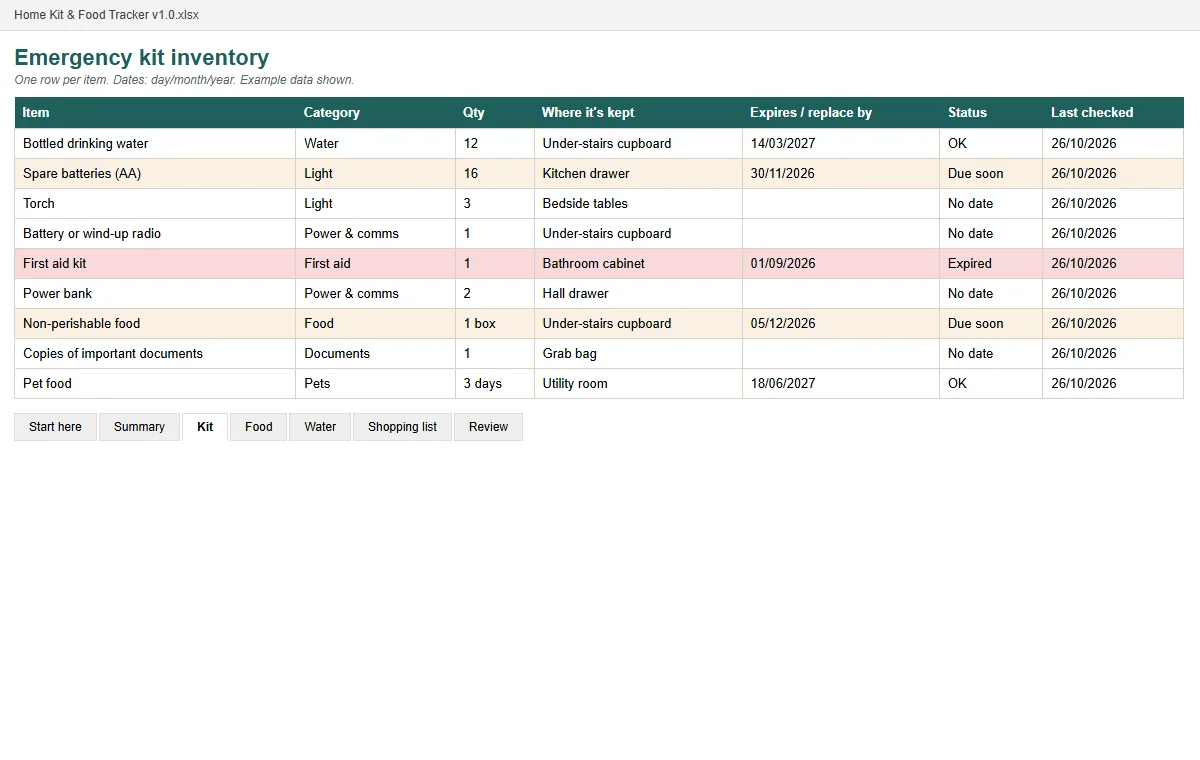 Bundle · £15.97 separatelyPrepared, Not Panicked bundle£9.99
Real pages shown before you buy · instant PDF · one-off price · 30-day refund.
The Power Cut Card for your fridge
Who to call, what to switch off, how long the fridge and freezer stay cold, and how to keep warm. One calm page from official UK advice. Enter your email and we'll take you straight to the download.
We'll also email you when we publish new guides — occasional, never daily. Unsubscribe any time. See our privacy notice.
Frequently asked questions
Is a torch or candles better in a power cut?
A torch. GOV.UK Be Ready says torches are safer than candles. If you want soft room light, London Fire Brigade suggests battery-operated LED candles as a much safer alternative to real ones.
How many torches should I have?
Be Ready does not give a number. One per adult is a practical rule, so nobody has to share, plus a head torch for jobs that need both hands, such as cooking or checking a fuse box.
Should I get a wind-up torch or a battery torch?
Be Ready says either is fine. A battery torch is usually brighter and simpler; a wind-up one never runs out of batteries. Many households keep one of each.
Can I just use my phone torch?
Be Ready advises against relying on it, because it drains your phone's battery, and you may need the phone for calls and updates during a power cut.
How do I keep a torch ready?
Keep it, with spare batteries, in one agreed place you can find in the dark, test it when you change the clocks or every six months, and replace batteries that are low or near their date.
Sources
- GOV.UK Be Ready: Power cuts (checked 31 Oct 2026)
- GOV.UK Be Ready: Be ready for emergencies, checklist (checked 31 Oct 2026)
- London Fire Brigade: Candles (checked 31 Oct 2026)