In short: Medicines that need a fridge, such as insulins, some injections, liquid antibiotics and eye drops, are kept at 2°C to 8°C. NHS trust advice says warming to room temperature does not make them harmful, but they may work less well. Keep the fridge shut, read the patient leaflet, and ask your pharmacist.
Key facts
- North Cumbria Integrated Care NHS Foundation Trust says medicines that need refrigerating must be kept between 2°C and 8°C, and include insulins, antibiotic liquids, injections, eye drops and some creams. Source
- The same trust says letting these medicines reach room temperature does not make them harmful, but they may become less effective, depending on how warm they got and for how long. Source
- United Lincolnshire Hospitals NHS Trust says that after a power cut or fridge breakdown you should contact your local pharmacy, and that the manufacturer's details are in the patient information leaflet. Source
- For biphasic insulin, the NHS says a pen or cartridge you have started can be kept out of the fridge at room temperature for up to 4 weeks, and insulin that freezes must be thrown away. Source
- GOV.UK Be Ready says to keep fridge and freezer doors closed in a power cut so they stay cold for several hours. Source
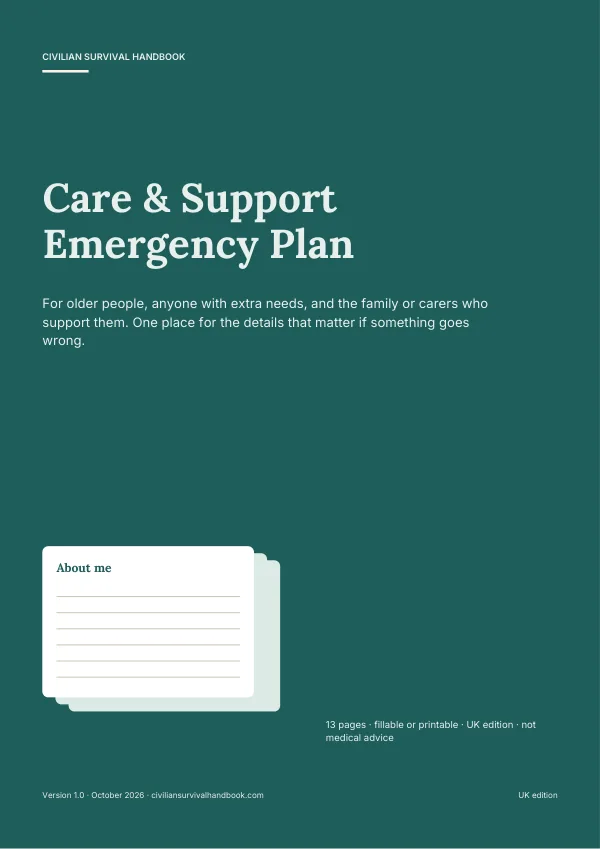 Want this written down for your home? Care & Support Emergency Plan — printable, £4.99.
Some medicines are kept in the fridge, and a power cut can leave people unsure whether they are still fine to use. The short answer from NHS advice is: keep the fridge shut, read the leaflet that came with the medicine, and ask your pharmacist. This page brings together advice from North Cumbria Integrated Care NHS Foundation Trust, United Lincolnshire Hospitals NHS Trust, the NHS and GOV.UK Be Ready. It sits with our household plan guides and our power cuts hub.
Which medicines need a fridge?
North Cumbria Integrated Care NHS Foundation Trust gives these examples of medicines that need refrigerating:
- insulins
- antibiotic liquids
- injections
- eye drops
- some creams
United Lincolnshire Hospitals NHS Trust says medicines that need the fridge are clearly marked on their packaging, and should be kept between 2°C and 8°C. If you are not sure about yours, check the box or ask at the pharmacy.
During the power cut
- Keep the fridge door shut. Be Ready says closed fridges and freezers stay cold for several hours.
- Don't move medicines around unless you have another working fridge to put them in.
- Keep medicines away from the freezer section and the back and sides of the fridge, where they could freeze. NHS advice for biphasic insulin says insulin that freezes must be thrown away.
- Note the time the power went off and when it came back. Your pharmacist may ask.
After the power comes back
North Cumbria Integrated Care NHS Foundation Trust says that letting these medicines reach room temperature does not make them harmful, but they may become less effective. How much depends on how warm they got and for how long.
So the next steps are:
- Read the patient information leaflet in the box. It explains how the medicine should be stored.
- Ask your local pharmacist. United Lincolnshire Hospitals NHS Trust says to contact your local pharmacy after a power cut or fridge breakdown. The manufacturer's contact details are also in the leaflet. You can use the NHS pharmacy finder.
- Out of hours, contact NHS 111.
Insulin rules differ by type. For example, NHS advice for biphasic insulin says a pen or cartridge you have started can be kept at room temperature for up to 4 weeks. Other insulins may be different, so always check your own leaflet or ask your diabetes team.
Plan ahead on a calm day
- List every fridge medicine in the house, and who it is for.
- Keep the patient leaflets in one place, or take a photo of each.
- Save your pharmacy's phone number in your phone and on your written plan.
- Ask your pharmacist what to do with each medicine if the power goes off.
- If someone relies on medicine or equipment that needs power, ask your energy supplier about the Priority Services Register.
- Order repeat prescriptions in good time. Our emergency prescription guide explains what to do if you run out.
Limitations
This page explains general NHS storage advice. It is not medical advice and does not cover doses or individual medicines. Never stop or change a medicine without speaking to your pharmacist, GP or care team. For urgent medical advice, contact NHS 111, or call 999 in an emergency.
Turn this guide into a written plan
Reading helps. Writing it down is what makes it work when the phones are flat. Start with the free plan builder, or get the full printable version:
For this topicCare & Support Emergency Plan£4.99 Your whole household planHousehold Emergency Plan Pack£6.99
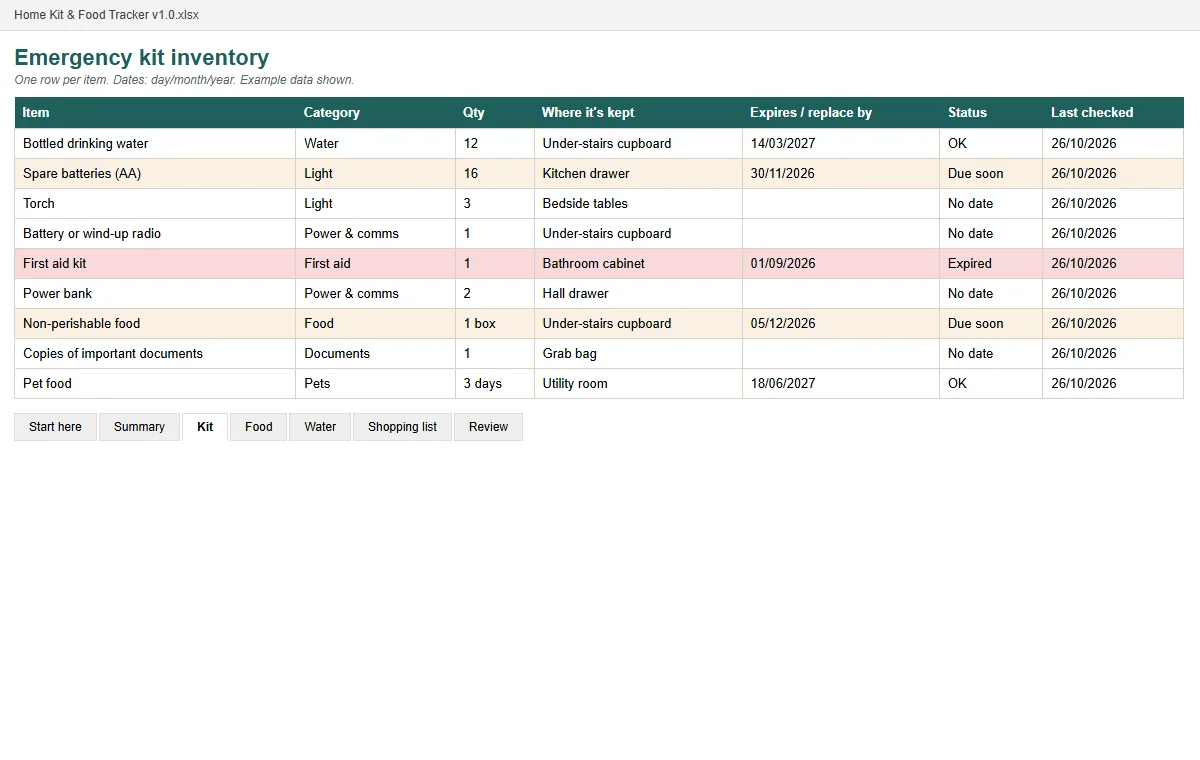 Bundle · £15.97 separatelyPrepared, Not Panicked bundle£9.99
Real pages shown before you buy · instant PDF · one-off price · 30-day refund.
The Power Cut Card for your fridge
Who to call, what to switch off, how long the fridge and freezer stay cold, and how to keep warm. One calm page from official UK advice. Enter your email and we'll take you straight to the download.
We'll also email you when we publish new guides — occasional, never daily. Unsubscribe any time. See our privacy notice.
Frequently asked questions
Is my insulin still safe after a power cut?
It depends on the type of insulin, how warm it got and for how long. Read the patient information leaflet and ask your pharmacist or diabetes team before using it. NHS advice says insulin that has frozen must be thrown away.
Should I take my fridge medicines out of the fridge in a power cut?
Keep the fridge door shut. A closed fridge stays cold for several hours, as GOV.UK Be Ready notes. Only move medicines if you have another working fridge.
Who do I ask if I'm not sure a medicine is still OK?
Your local pharmacist. NHS trust advice says to contact your local pharmacy after a power cut or fridge breakdown. Out of hours, NHS 111 can help.
Sources
- North Cumbria Integrated Care NHS Foundation Trust: Advice for those who take medications that need refrigerating (14 Dec 2021; checked 30 Oct 2026)
- United Lincolnshire Hospitals NHS Trust: Storing medicines at home (checked 30 Oct 2026)
- NHS: Storing and travelling with biphasic insulin (checked 30 Oct 2026)
- GOV.UK Be Ready: Power cuts (checked 30 Oct 2026)
- NHS: Find a pharmacy (checked 30 Oct 2026)