In short: Fit a smoke alarm on every floor, ideally in a hallway or landing, and a heat alarm in the kitchen, where steam and cooking fumes set smoke alarms off. Greater Manchester Fire and Rescue Service gives this advice and says to test alarms at least monthly. In Scotland every home must have interlinked alarms, including a kitchen heat alarm.
Key facts
- Greater Manchester Fire and Rescue Service advises at least one working smoke alarm on every floor, preferably in a hallway or landing, and a heat alarm in the kitchen. Source
- It says heat alarms suit kitchens because steam, fumes or moisture could cause nuisance alarms in smoke alarms, and to test alarms at least monthly by pressing the test button until the alarm sounds. Source
- In Scotland every home must have interlinked fire alarms: a smoke alarm in the living room or the room you use most, one in every hallway and landing, and a heat alarm in the kitchen. Source
- In England, landlords must fit at least one smoke alarm on each storey used as living accommodation, and a carbon monoxide alarm in rooms with a fixed combustion appliance (gas cookers excluded), from 1 October 2022 for both private and social landlords. Source
- GOV.UK's landlord guidance says heat detectors are not a replacement for smoke alarms. Source
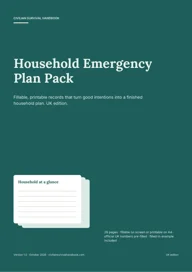 Want this written down for your home? Household Emergency Plan Pack — printable, £6.99.
Two kinds of alarm do two different jobs. A smoke alarm reacts to smoke, so it gives the earliest warning in hallways, landings and living rooms. A heat alarm reacts to a rise in temperature, so it suits the kitchen, where steam and cooking fumes set smoke alarms off. This guide follows Greater Manchester Fire and Rescue Service, the Scottish Government and GOV.UK. It sits with our household plan guides.
Which alarm goes where
| Where | Alarm | Why |
|---|---|---|
| Every floor, in a hallway or landing | Smoke alarm | Earliest warning on your way out |
| Living room (or the room you use most) | Smoke alarm | Required in Scotland; a common place for fires to start |
| Kitchen | Heat alarm | Steam and fumes cause nuisance alarms in smoke alarms |
| Room with a boiler, log burner or other fuel-burning appliance | Carbon monoxide alarm | CO has no smell; see our carbon monoxide guide |
A heat alarm is not a replacement for smoke alarms, as GOV.UK's landlord guidance puts it. You need both kinds.
The rules, by where you live
- Scotland: every home must have interlinked alarms: a smoke alarm in the living room or the room you use most, one in every hallway and landing, and a heat alarm in the kitchen. Where there's a carbon-fuelled appliance, a CO detector is needed in the same room (it doesn't have to be linked). The Scottish Government says meeting the standard is the property owner's responsibility.
- England, rented homes: since 1 October 2022, private and social landlords must fit at least one smoke alarm on each storey used as living accommodation, and a CO alarm in any room with a fixed combustion appliance (gas cookers are excluded).
- Owner-occupiers in England, and Wales and Northern Ireland: fire services give the advice in the table above. Check your own council's or fire service's page for the rules that apply to you.
Testing and looking after them
- Test monthly: press the test button until the alarm sounds (Greater Manchester Fire and Rescue Service).
- Sealed ten-year alarms: replace the whole unit after 10 years.
- Alarms with replaceable batteries: change the batteries once a year.
- Put the test date on your household plan's review calendar, so it happens with your six-monthly kit check.
Many fire services offer free home fire safety visits, sometimes with alarms fitted. Search your fire and rescue service's name and "safe and well visit".
Limitations
This page summarises official and fire service advice for households. It isn't a fire risk assessment. In a fire, get out, stay out and call 999.
Turn this guide into a written plan
Reading helps. Writing it down is what makes it work when the phones are flat. Start with the free plan builder, or get the full printable version:
Your whole household planHousehold Emergency Plan Pack£6.99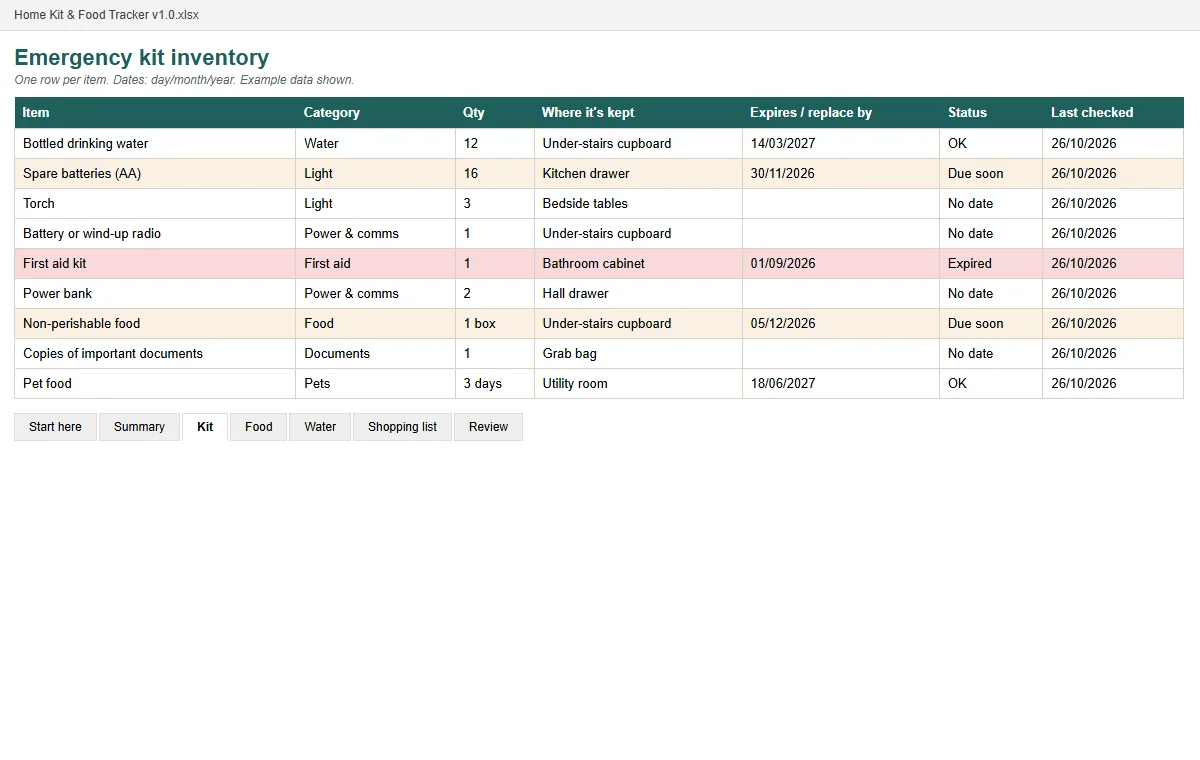 Bundle · £15.97 separatelyPrepared, Not Panicked bundle£9.99
Real pages shown before you buy · instant PDF · one-off price · 30-day refund.
Get the free 72-hour UK household checklist
Tick-box lists for each part of a UK home emergency kit, plus the key numbers on one page. Enter your email and we'll take you straight to the download.
That email address doesn't look right — please check it and try again.
We'll also email you when we publish new guides — occasional, never daily. Unsubscribe any time. See our privacy notice.
Frequently asked questions
Should I put a smoke alarm in the kitchen?
Fire services advise a heat alarm in the kitchen instead. Greater Manchester Fire and Rescue Service says steam, fumes or moisture can cause nuisance alarms in smoke alarms. A heat alarm reacts to a rise in temperature.
Does a heat alarm replace a smoke alarm?
No. GOV.UK's landlord guidance says heat detectors are not a replacement for smoke alarms. Use heat alarms where smoke alarms would go off by mistake, such as the kitchen, and smoke alarms in hallways, landings and living areas.
How often should I test my alarms?
Greater Manchester Fire and Rescue Service says to test alarms at least monthly by pressing the test button until the alarm sounds, and to replace sealed ten-year alarms after 10 years.
Do my alarms have to be linked?
In Scotland, yes: every home must have interlinked fire alarms. Elsewhere in the UK, check the current rules for your nation and tenure; linked alarms mean an alarm in one room sounds in the others.
Sources
- Greater Manchester Fire and Rescue Service: Smoke and heat alarms (checked 30 Oct 2026)
- Scottish Government: Fire and smoke alarms in Scottish homes (last updated 14 Aug 2024; checked 30 Oct 2026)
- GOV.UK: Smoke and carbon monoxide alarm regulations, Q&A for landlords and tenants (last updated 29 Jul 2022; checked 30 Oct 2026)