In short: Practical gifts for older parents help at home when the lights go out or something goes wrong: a torch, a battery or wind-up radio, a power bank, a carbon monoxide alarm and a written plan. GOV.UK Be Ready recommends a torch and a battery or wind-up radio, and the NHS advises a carbon monoxide alarm in rooms with fuel-burning appliances.
Key facts
- GOV.UK Be Ready says to keep a battery or wind-up torch with spare batteries, and that torches are safer than candles. Source
- Be Ready says to keep a battery or wind-up radio (and spare batteries) at home, because radio can carry updates when TV and internet are down. Source
- The NHS advises fitting a carbon monoxide alarm that makes a loud sound, with one for each room of your home that has appliances burning gas, oil, coal or wood. Source
- Ofgem says people who have reached State Pension age can ask to join their energy supplier's Priority Services Register, which offers priority support in an emergency and advance notice of scheduled power cuts wherever possible. Source
- Be Ready says using your phone as a torch drains its battery faster. Source
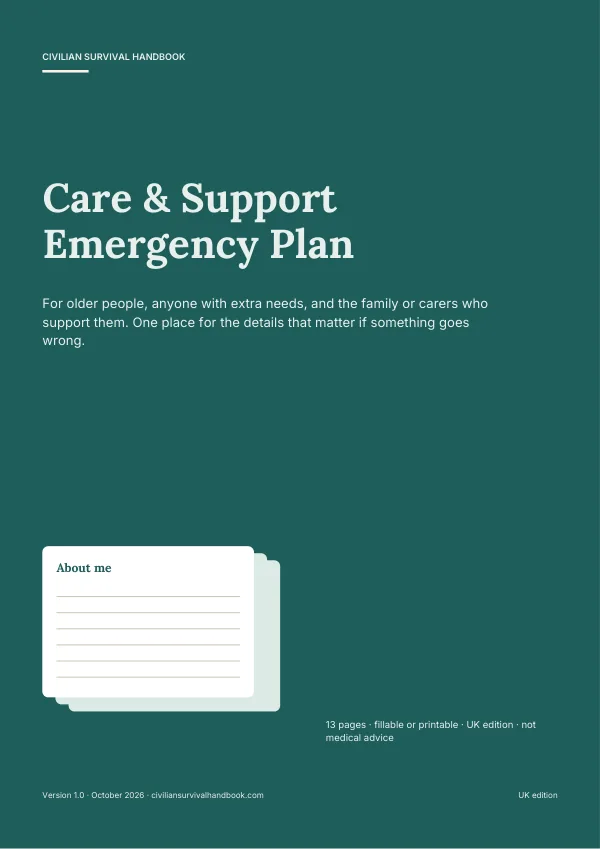 Want this written down for your home? Care & Support Emergency Plan — printable, £4.99.
If your parents already have everything, a practical gift can still be the one they use most. The ideas below are small, useful things that help on an ordinary winter evening and in a power cut. Each one is backed by official advice from GOV.UK Be Ready, the NHS or Ofgem. This guide sits with our household plan guides.
1. A good torch, with spare batteries
Be Ready says to keep a battery or wind-up torch with spare batteries, and that torches are safer than candles. Choose one that is light, easy to switch on and bright enough to read by. A torch by the bed and one in the kitchen drawer means nobody has to look for one in the dark.
2. A battery or wind-up radio
Be Ready recommends keeping a battery or wind-up radio (and spare batteries) at home, because radio can carry updates when TV and the internet are down. Pick one with large, clear buttons. Our wind-up radio guide explains what to look for.
3. A power bank for the phone
Be Ready notes that using your phone as a torch drains its battery faster. A charged power bank keeps a mobile going so your parents can call family, check updates and report a power cut. Show them how to plug it in, and remind them to recharge it every few months. Our power bank guide has more.
4. A carbon monoxide alarm
The NHS advises fitting an alarm that makes a loud sound, with one for each room that has appliances burning gas, oil, coal or wood. If your parents have a boiler, gas fire or log burner, an alarm is a thoughtful gift. Offer to fit it and test it with them. See our carbon monoxide guide.
5. Plug-in night lights
Simple plug-in lights on the landing and in the hallway make night-time trips easier. This is a comfort gift rather than an official recommendation, but it is one many families find useful.
6. A written plan they can see
The gift that ties everything together is a short written plan: who to call, where the torch is, the power cut number, medicines, and who checks in on them. Be Ready suggests a written household plan, and writing down the power cut number (105 in England, Scotland and Wales; 03457 643643 in Northern Ireland). You can send a plan as a gift with your own message, or use our Care and Support plan to fill it in together over the holidays.
7. Help with the Priority Services Register
This one costs nothing. Ofgem says people who have reached State Pension age can ask to join their energy supplier's Priority Services Register. Members can get priority support in an emergency and advance notice of scheduled power cuts wherever possible. Ofgem says you can also nominate someone, such as a family member, to receive communications. Sit down with your parents and do it together. Our Priority Services Register guide walks through it.
A simple gift checklist
- Torch with spare batteries, by the bed
- Battery or wind-up radio, with spare batteries
- Charged power bank and the right cable
- Carbon monoxide alarm, fitted and tested
- Night lights on the landing and hallway
- A written plan on the fridge, with 105 on it
- Priority Services Register: joined with their supplier
Limitations
This page gives general gift ideas based on official UK advice. It does not recommend any brand or shop. Follow the maker's instructions for fitting alarms. If you are unsure whether an appliance is safe, ask a Gas Safe registered engineer.
Turn this guide into a written plan
Reading helps. Writing it down is what makes it work when the phones are flat. Start with the free plan builder, or get the full printable version:
For this topicCare & Support Emergency Plan£4.99 Your whole household planHousehold Emergency Plan Pack£6.99
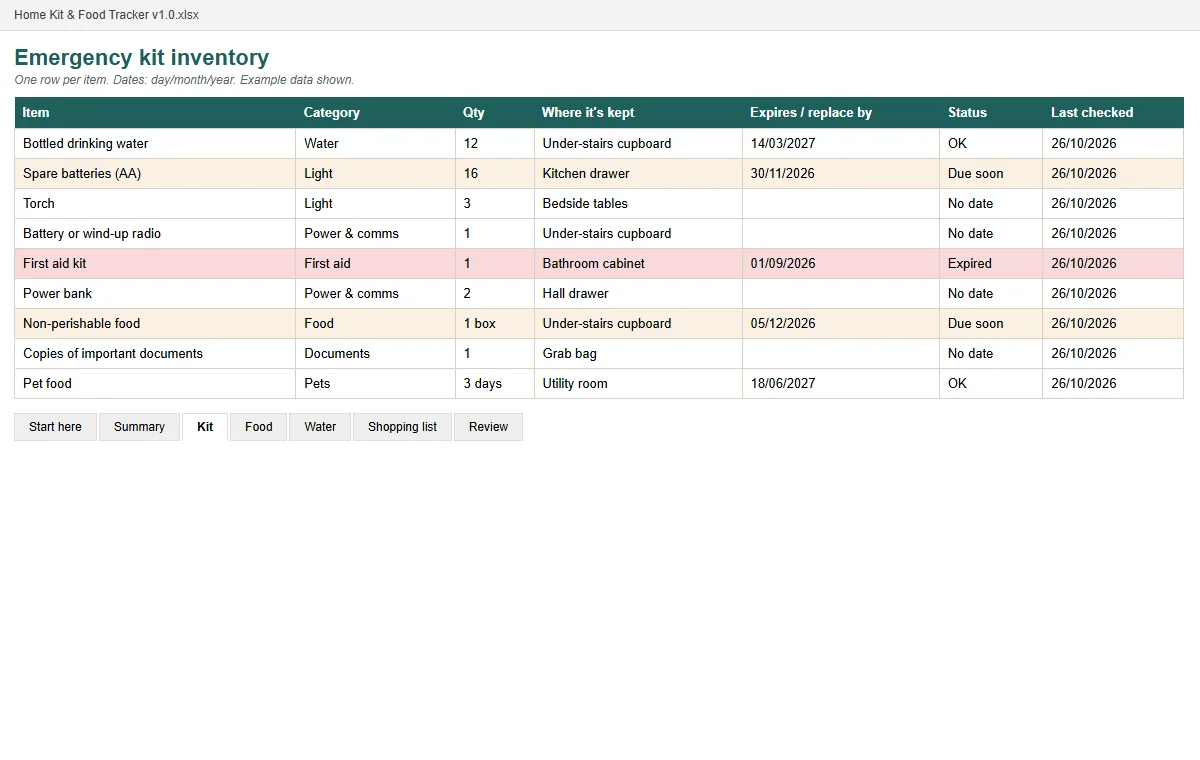 Bundle · £15.97 separatelyPrepared, Not Panicked bundle£9.99
Real pages shown before you buy · instant PDF · one-off price · 30-day refund.
Get the free 72-hour UK household checklist
Tick-box lists for each part of a UK home emergency kit, plus the key numbers on one page. Enter your email and we'll take you straight to the download.
That email address doesn't look right — please check it and try again.
We'll also email you when we publish new guides — occasional, never daily. Unsubscribe any time. See our privacy notice.
Frequently asked questions
What is a good practical gift for an elderly parent?
Something they will use in an ordinary week and be glad of in a power cut: a bright torch with spare batteries, a battery or wind-up radio, a power bank, or a carbon monoxide alarm. GOV.UK Be Ready and the NHS both recommend these items.
Is a carbon monoxide alarm a good gift?
Yes, if your parent has a boiler, gas fire, log burner or other fuel-burning appliance. The NHS advises one alarm for each room with appliances that burn gas, oil, coal or wood.
Can I sign my parents up to the Priority Services Register?
They, or you with their agreement, can contact their energy supplier and network operator. Ofgem says you can also nominate someone, such as a family member, to receive communications.
Sources
- GOV.UK Be Ready: Power cuts (checked 30 Oct 2026)
- NHS: Carbon monoxide poisoning (checked 30 Oct 2026)
- Ofgem: Join your supplier's Priority Services Register (checked 30 Oct 2026)