In short: GOV.UK Be Ready suggests supplies for 3 days, including 3 litres of water per person per day, a torch and a battery or wind-up radio. In a student room, keep it small. Fire services advise never leaving cooking unattended and never wedging fire doors open. The NHS says you don't need ID to register with a GP.
Key facts
- GOV.UK Be Ready suggests 3 litres of water per person per day for drinking, food with a long shelf life that doesn't need refrigeration or cooking, and a battery or wind-up torch. Source
- Be Ready says to set a reminder every six months to check expiry dates and swap out items that need replacing. Source
- Merseyside Fire and Rescue Service says never leave cooking unattended, don't prop or wedge fire doors open, and candles are not allowed in student halls of residence. Source
- Scottish Fire and Rescue Service advises using the charger that came with a device or one from a reputable supplier, and not charging devices while you are asleep. Source
- The NHS says you do not need ID, proof of address or proof of immigration status to register with a GP surgery. Source
 Want this written down for your home? Grab Bag Planner — printable, £3.99.
Moving into halls or a first flat is a good moment to set up a few simple habits. You don't need a big box of supplies; a small kit in a drawer, a quick look at the fire exits and a GP registration cover most of it. This guide adapts GOV.UK Be Ready for one room, with fire safety from Merseyside and Scottish fire services and GP advice from the NHS. It sits with our household plan guides.
A small kit for a student room
Be Ready suggests being ready for 3 days, with 3 litres of water per person per day for drinking, food that doesn't need a fridge or cooking, and a battery or wind-up torch. In a shared kitchen, space is tight, so keep it modest:
- A torch and spare batteries (Be Ready says torches are safer than candles)
- A charged power bank and cable
- A few bottles of water and no-cook snacks
- Any regular medicines, with enough time left to order repeats
- A printed list of contacts, in case your phone is flat
- A copy of your ID and your accommodation details
- A small first aid kit
Our grab bag list shows how to fit the essentials into one bag if you ever need to leave quickly.
Fire safety in shared housing
Fire services' student advice starts in the kitchen, and the same few points come up again and again:
- Never leave cooking unattended, and keep the hob and grill clean (Merseyside FRS).
- Never wedge fire doors open. Scottish Fire and Rescue Service says closed fire doors protect your escape route from smoke and fire.
- Know two ways out. Merseyside FRS says to plan a second route in case the first is blocked, and keep exits clear.
- Charge safely. Use the charger that came with the device or one from a reputable supplier, don't charge while asleep, and don't charge e-bikes or e-scooters in escape routes (Scottish FRS).
- No candles in halls. Merseyside FRS says they are not allowed in student halls of residence.
- Never ignore an alarm. Go to your assembly point.
In a private rented flat, GOV.UK says your landlord must provide a smoke alarm on each storey, a carbon monoxide alarm in any room with a solid fuel burning appliance, and give you a copy of the gas safety check record. Large shared houses (HMOs) must also have fire alarms and extinguishers. See our fire escape plan guide.
Register with a GP early
The NHS says you don't need ID, proof of address or proof of immigration status to register with a GP surgery, and many surgeries offer online registration. If you feel unwell and can't reach your GP, the NHS says 111 can help, online or by phone. In an emergency, call 999.
First week tick-list
- Kit in a drawer: torch, power bank, water, snacks, medicines
- Both escape routes walked once
- Smoke alarm found and test button tried
- Registered with a local GP
- Contacts list printed and an ICE contact set on your phone
- Six-monthly reminder set to check dates and recharge the power bank
Limitations
This page summarises official and fire service advice for students. Your halls or landlord may have their own rules, which you should follow. In a fire, get out, stay out and call 999.
Turn this guide into a written plan
Reading helps. Writing it down is what makes it work when the phones are flat. Start with the free plan builder, or get the full printable version:
For this topicGrab Bag Planner£3.99 Your whole household planHousehold Emergency Plan Pack£6.99
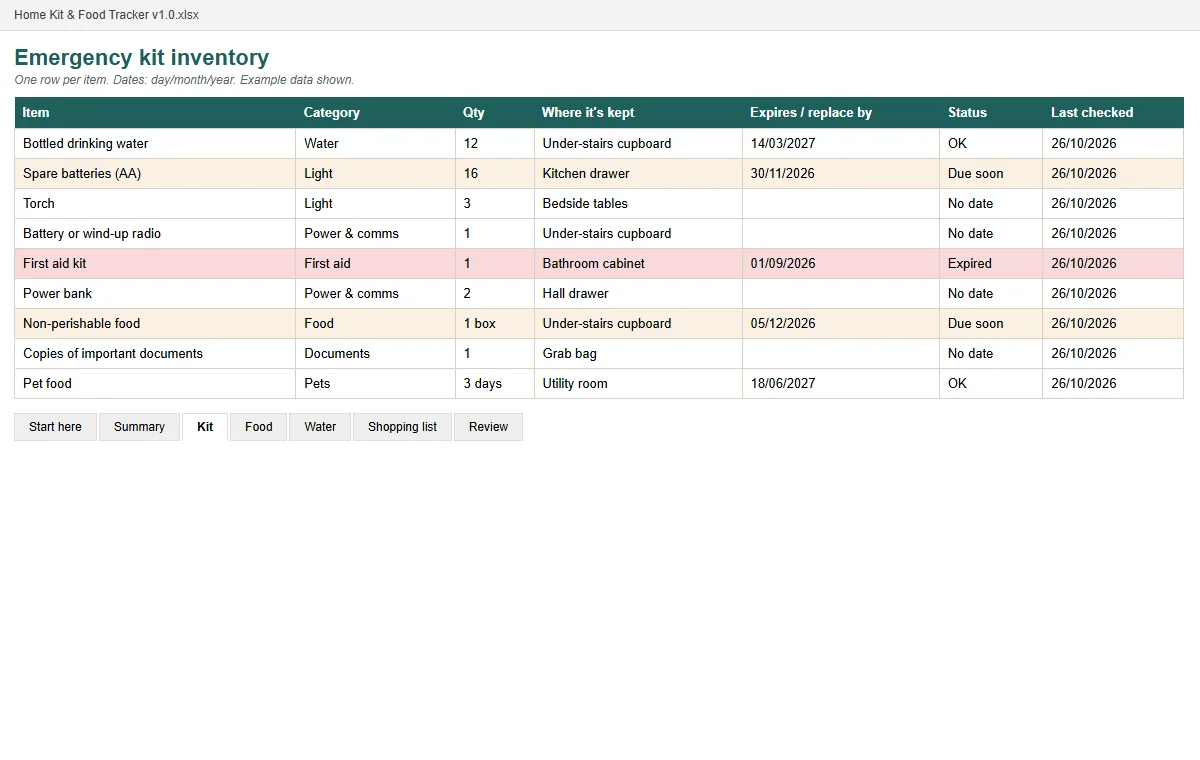 Bundle · £15.97 separatelyPrepared, Not Panicked bundle£9.99
Real pages shown before you buy · instant PDF · one-off price · 30-day refund.
Get the free 72-hour UK household checklist
Tick-box lists for each part of a UK home emergency kit, plus the key numbers on one page. Enter your email and we'll take you straight to the download.
That email address doesn't look right — please check it and try again.
We'll also email you when we publish new guides — occasional, never daily. Unsubscribe any time. See our privacy notice.
Frequently asked questions
What should a student keep in an emergency kit?
Keep it small: a torch with spare batteries, a power bank, bottled water, a few no-cook snacks, any regular medicines, a printed list of contacts and a copy of your ID. This follows the GOV.UK Be Ready checklist, scaled down for one room.
Do I need ID to register with a GP at university?
The NHS says you don't need ID, proof of address or proof of immigration status to register. Many surgeries let you register online. Doing it in your first week means help is easier to get later.
Can I have candles in student halls?
Merseyside Fire and Rescue Service says candles are not allowed in student halls of residence, and Scottish Fire and Rescue Service says they are probably against your accommodation agreement. A battery torch or LED candle is the safer choice.
Sources
- GOV.UK Be Ready: Be ready for emergencies (checked 30 Oct 2026)
- Merseyside Fire and Rescue Service: Student fire safety (checked 30 Oct 2026)
- Scottish Fire and Rescue Service: Student fire safety (checked 30 Oct 2026)
- GOV.UK: Private renting, your landlord's safety responsibilities (checked 30 Oct 2026)
- NHS: How to register with a GP surgery (checked 30 Oct 2026)
- NHS: When to use 111 (checked 30 Oct 2026)