What is in the Be Ready household emergency plan?
8 pages free from GOV.UK, fill in and print
A meeting point, service numbers (999, 111, 101, 105), family contacts, neighbours to check on, medicines, insurance, water, gas and electricity shut-offs, radio stations, and a supplies list. Be Ready says keep it with your important documents and update it regularly.
Source: GOV.UK Be Ready: Household emergency plan (PDF) (checked 31 October 2026)
In short: GOV.UK Be Ready's free household emergency plan is an 8-page form you download, fill in, discuss with the people you live with, and keep somewhere easy to find in a power cut. It covers a meeting point, key service numbers (999, 111, 101, and 105 for power cuts), family contacts, neighbours to check on, a medicines list, insurance details, where to turn off water, gas and electricity, and the radio stations you use for news. Most households can finish it in under an hour.
Key facts
- The Be Ready household emergency plan says a written plan could help when there is no electricity, phone or internet, and asks you to fill it in, discuss it with those you live with, print or write it out, keep it somewhere easy to find in a power cut and update it regularly. Source
- For an emergency outside the home, the plan says go in, stay in, tune in; for one inside the home, get out, stay out, ring 999. Source
- The plan's service numbers are 999 for emergencies, 111 for the NHS non-emergency number, 101 for the police when it is not an emergency, and 105 to report a power cut (03457 643643 in Northern Ireland). Source
- The plan warns that you can turn the water and electricity back on yourself, but not the gas, which must be done by a qualified engineer. Source
- Be Ready says to choose a meeting point that is easy to reach and open to the public, or a family member's home if it is safe. Source
The government's 2026 preparedness survey found that only 14% of people had a written household emergency plan, and the Be Ready campaign wants to change that. Its free household emergency plan is a short form you fill in once and keep by your documents. This guide goes through it page by page, with tips for the parts people get stuck on.
We're an independent site, not part of the campaign. The official site is beready.campaign.gov.uk.
Before you start
The plan asks you to fill it in, talk it through with the people you live with, print it (or write it out), and keep it somewhere safe and easy to find in a power cut. Set a reminder to update it. Have these to hand:
- your phone, for family numbers
- an insurance letter or email, for policy numbers
- a torch, to find the stopcock and gas valve
Page 1: what to do in an emergency
The first page is advice, not a form. It gives two short rules worth learning:
| Where the emergency is | What the plan says |
|---|---|
| Outside the home | Go in (close windows and doors if needed), stay in, tune in to local radio, TV and official channels |
| Inside the home | Get out, stay out, ring 999 |
Read it aloud with your household. Children remember short rules well; see talking to children about emergencies.
Page 2: meeting point and service numbers
Meeting point. Be Ready says choose somewhere easy to reach and open to the public, or a family member's home if it's safe. A community hub works if you have one nearby. Pick two: one close to home, one further away in case your street is closed.
Service numbers. The plan lists 999, 111 (NHS non-emergency), 101 (police, when it is not an emergency) and 105 to report a power cut (03457 643643 in Northern Ireland). Add your GP in the space given. It's worth adding your pharmacy and your water company too.
Page 3: who else you might need to contact
Family and friends, with mobile and landline numbers. Tips:
- Include at least one person who lives outside your area.
- Write numbers in full. Nobody remembers numbers once they're saved in a phone.
- Our emergency contacts list guide has more prompts.
Page 4: others you might want to check on
Neighbours or relatives who may need help, with addresses and numbers. Be Ready asks people to think about neighbours with medical needs, people who live alone, people new to the area, and people who struggle with technology or English. If you're not sure who, our street emergency plan guide shows a gentle way to ask.
Page 5: list of current medication
Medicine name, dose, how often, and who takes it. Copy it from the labels or the repeat prescription slip. Be Ready also advises ordering repeat prescriptions at least 5 working days before you run out.
Page 6: insurance details
Company names, phone numbers and policy numbers: home, contents, car, pet, travel, life. Our important documents checklist covers what else to keep copies of.
Page 7: utilities and radio stations
Utilities. Write where your water stopcock, gas isolation valve and electricity isolation switch are. Go and find them now, with a torch. The plan's warning is clear: you can turn the water and electricity back on yourself, but not the gas; that must be done by a qualified engineer. See how to turn off gas, electricity and water.
Radio stations. Write down the stations and frequencies you use for local and national news. If you're not sure which, see which radio station to use in a power cut.
Page 8: emergency supplies
A checklist of what to keep at home, the same as the Be Ready checklist: bottled water (3 litres per person per day for at least 3 days), no-cook food and a tin opener, hygiene items, a torch and spare batteries, blankets, an FM radio, a power bank, cash and cards, copies of documents, first aid, medicines, and baby and pet items. Tick what you have and buy the rest gradually.
Free plan, our free builder, or a fuller pack?
| Be Ready plan | Our free plan builder | Household Emergency Plan Pack | |
|---|---|---|---|
| Price | Free | Free | £6.99 |
| Length | 8 pages | 1 page | 26 pages |
| Meeting point, contacts, shut-offs, kit list | Yes | Yes | Yes |
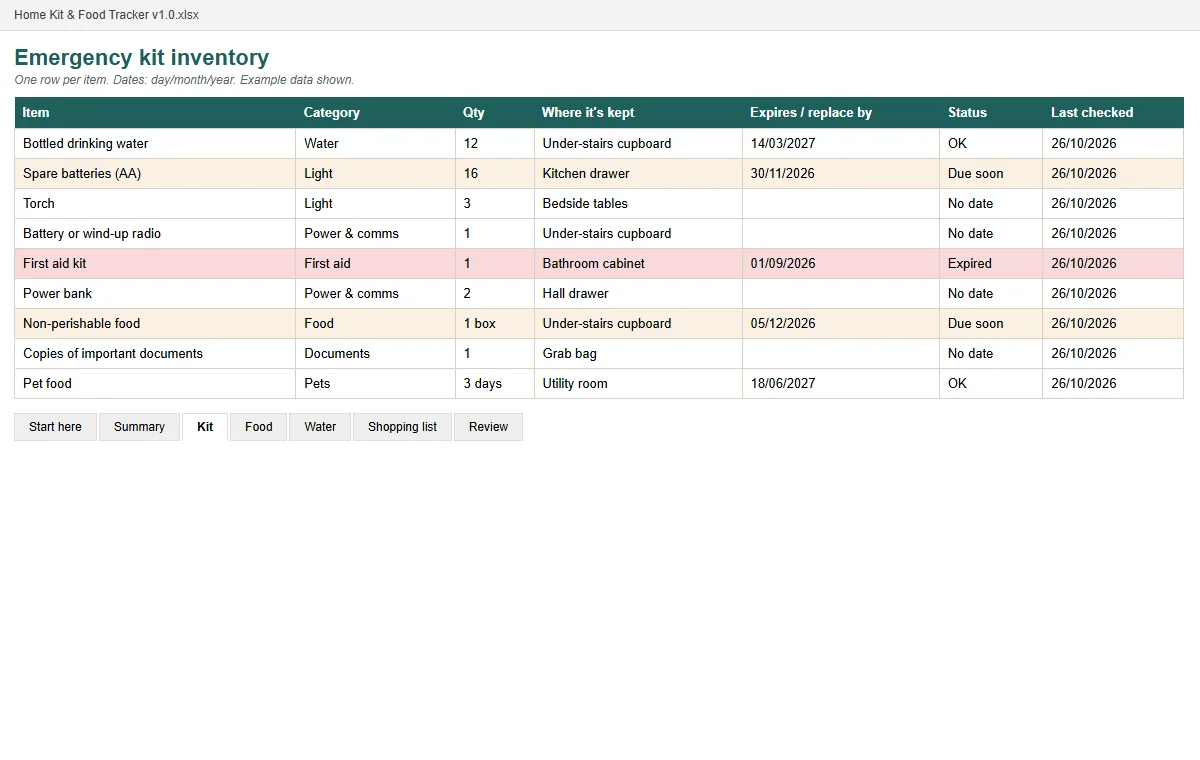
| Separate pages for pets, documents and kit logs, plus a worked example | No | No | Yes |
For many households the free Be Ready plan is enough, and we'd rather you filled that in today than nothing at all. Our free plan builder makes a one-page version in about 10 minutes. The Plan Pack is for people who want more room and more prompts; you can see real pages before you buy.
Limitations
This guide describes the Be Ready plan as published in October 2026; GOV.UK may update it, so use the latest version from the official site. It is general information, not professional advice. In an emergency, follow official instructions and call 999 if anyone is in immediate danger. Numbers differ in Northern Ireland, as shown above.
Turn this guide into a written plan
Reading helps. Writing it down is what makes it work when the phones are flat. Start with the free plan builder, or get the full printable version:
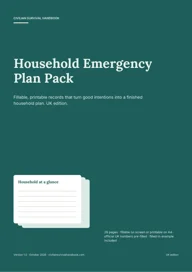 Your whole household planHousehold Emergency Plan Pack£6.99
 Bundle · £15.97 separatelyPrepared, Not Panicked bundle£9.99
Real pages shown before you buy · instant PDF · one-off price · 30-day refund.
Get the free 72-hour UK household checklist
Tick-box lists for each part of a UK home emergency kit, plus the key numbers on one page. Enter your email and we'll take you straight to the download.
That email address doesn't look right — please check it and try again.
We'll also email you when we publish new guides — occasional, never daily. Unsubscribe any time. See our privacy notice.
Frequently asked questions
Where do I get the Be Ready household emergency plan?
It's a free PDF on the official Be Ready site, beready.campaign.gov.uk, in the 'Make a plan' section. Download it, fill it in, and print or write it out.
How long does it take to fill in?
The form is 8 pages. Most of it is names and numbers you already know, so many households finish it in under an hour. Finding the stopcock and the gas valve may take longest.
Where should I keep my household emergency plan?
Be Ready says keep it with your important documents, somewhere safe and easy to find in a power cut, and set a reminder to update it regularly.
Do I need to pay for a household emergency plan?
No. The Be Ready plan is free, and so is our one-page plan builder. Paid packs, including ours, add more pages and prompts, but they're optional.
What does 'go in, stay in, tune in' mean?
It's the plan's advice for an emergency outside your home: go inside and close windows and doors if needed, stay inside, and follow local radio, TV and official channels for advice.
Sources
- GOV.UK Be Ready: Household emergency plan, English PDF (read 31 Oct 2026)
- GOV.UK Be Ready: Be ready for emergencies, make a plan (checked 31 Oct 2026)
- GOV.UK Be Ready: Power cuts (checked 31 Oct 2026)