In short: In a UK heatwave, keep curtains and blinds closed on sunny windows in the day and open windows when it is cooler outside, use electric fans only below 35°C, and move to the coolest room to sleep. In England, UKHSA heat-health alerts run from 1 June to 30 September. Store medicines as the packet says, check on anyone at higher risk, and call 999 if you think someone has heatstroke, or NHS 111 for urgent advice.
Key facts
- UKHSA's core heat-health alert season runs from 1 June to 30 September, with extraordinary alerts possible outside those dates. Source
- UKHSA says a red heat-health alert indicates significant risk to life even for the healthy population. Source
- GOV.UK's Beat the Heat advice says some medicines must be stored below 25°C or in the fridge, so follow the storage instructions on the packaging. Source
- GOV.UK advises using electric fans only if the air temperature is below 35°C, and not aiming the fan directly at your body. Source
- The NHS says someone with heat exhaustion should start to feel better within 30 minutes of cooling down; call 999 if they are still unwell after 30 minutes. Source
 Want this written down for your home? Care & Support Emergency Plan — printable, £4.99.
Most UK homes are built to hold on to heat, which is great in January and harder work in July. The good news is that keeping a home and the people in it safe in a heatwave mostly comes down to a few simple habits, plus knowing who needs an extra check. This guide goes deeper on the home and family side; for how weather warnings work in general, see our extreme weather guide. Prepared, not panicked.
Which heat warnings should I watch?
There are two, and they do different jobs.
- Heat-health alerts come from the UK Health Security Agency (UKHSA), working with the Met Office. The core season runs from 1 June to 30 September, with "extraordinary" alerts possible outside those dates. They are issued for the nine regions of England, and anyone can register to get them by email.
- Met Office extreme heat warnings are impact-based weather warnings, using the same yellow, amber and red colours as rain or wind warnings. The Met Office notes that the heat-health alert covers England only.
UKHSA's user guide describes what each heat-health alert colour means:
| Alert | What UKHSA says | What it means at home |
|---|---|---|
| Yellow | Most people unlikely to be affected, but those who are particularly vulnerable are likely to struggle | Check on older relatives, babies and anyone unwell |
| Amber | Impacts likely across the whole health service, with potential for the whole population to be at risk | Everyone should follow the cooling advice below |
| Red | Significant risk to life even for the healthy population | Follow official advice closely and check on others often |
UKHSA stresses that yellow alerts should not be ignored. Be Ready suggests using the Met Office app to set alerts for your area.
Who is most at risk from heat?
The NHS lists:
- older people, especially those aged 65 and over
- babies and children aged 5 and under
- people who are pregnant
- people with serious long-term conditions, such as heart or breathing problems, dementia, diabetes, kidney disease, Parkinson's, or mobility or mental health problems
- people who live alone and may struggle to look after themselves
- people taking several medicines, or medicines that may make heat more harmful
- people who are already ill and dehydrated
Be Ready adds people in top-floor flats or homes with restricted window opening.
How do I keep my home cool?
GOV.UK's keep cool at home checklist says some homes overheat more easily: top-floor flats, homes with windows on only one side, large unshaded east, west or south-facing windows, and highly insulated homes that trap heat.
Before hot weather:
- Fit or check blinds and curtains on sunny windows. External shutters and awnings work well.
- Check the fridge, freezer and fans are working.
- Check medicines are stored as the packaging says.
- If you have a ventilation system, set it to "summer mode" if it has one.
During hot weather:
- Close blinds and curtains on windows that get direct sun in the day.
- Open windows when the air outside feels cooler, such as at night, if it is safe to do so.
- Use electric fans only if the air is below 35°C, and don't aim them directly at your body.
- Make sure the heating is off. Turn off lights and equipment you're not using, and cook at cooler times of day.
- Move to the coolest room, especially for sleeping.
- Check room temperatures where at-risk people live and sleep.
If the house stays too hot, Be Ready suggests cooler public places such as libraries, places of worship or supermarkets, if you can get there safely.
If your home keeps overheating: the NHS says your council's environmental health office can inspect rented homes for heat hazards. Private renters can also contact their landlord or Citizens Advice. Homeowners can use an accredited Home Improvement Agency; GOV.UK gives First Stop Care Advice on 0300 124 0315.
How should I store medicines in a heatwave?
GOV.UK's Beat the Heat advice is simple:
- Keep taking prescribed medicines unless a health professional tells you otherwise.
- Some medicines must be stored below 25°C or in the fridge. Follow the storage instructions on the packet.
Be Ready notes that heat can also cause power cuts, so if anyone relies on fridge-stored medicine or powered equipment, ask about the Priority Services Register.
Heat exhaustion or heatstroke: what's the difference?
The NHS says symptoms are often the same in adults and children.
| Heat exhaustion | Heatstroke | |
|---|---|---|
| Signs | Tiredness, dizziness, headache, feeling or being sick, heavy sweating with pale clammy skin, cramps, raised temperature, intense thirst | Very high temperature, hot skin that isn't sweating, fast breathing and heartbeat, confusion, seizure, loss of consciousness |
| What to do | Cool them down (steps below) and stay with them | Call 999. GOV.UK says to call 999 first, then cool them down |
To cool someone with heat exhaustion, the NHS says:
- Move them to a cool place.
- Remove unnecessary clothing.
- Give plenty of water, or a sports or rehydration drink.
- Spray or sponge their skin with cool water and fan them. Cold packs wrapped in cloth can go under the armpits or on the neck.
They should start to feel better within 30 minutes. Call 999 if they are still unwell after 30 minutes of rest and cooling, or show any heatstroke sign. Don't drive yourself to A&E. While you wait, the NHS suggests wrapping them in a cool, wet sheet, or fanning or sponging them with cold water.
Call 999 in an emergency, and NHS 111 for urgent advice or if you're struggling to treat symptoms.
Checking on neighbours and family
Be Ready asks you to make sure people at higher risk know what to do, and to offer practical help such as stocking up on water or medication. GOV.UK suggests that if you are at higher risk, you ask others to check on you.
If you're worried about someone's health, contact their pharmacist, GP or NHS 111. Our guide for older people and carers covers who checks on whom.
Babies, children and cars
GOV.UK says to shade prams and pushchairs with a parasol, keep air flowing, remove extra clothing and check babies regularly for overheating. Never leave babies, children, older people or pets alone in a parked car or other closed space. For babies at night, see our baby emergency plan guide.
Pets in a heatwave
Advice from the British Veterinary Association, published by the Met Office:
- Give all pets fresh water, ventilation and shade.
- Walk dogs early morning or late evening. If the pavement is too hot for your hand after five seconds, it's too hot for paws.
- Take extra care with flat-faced breeds, older or overweight dogs, and dogs with heart or lung problems.
- Never leave a pet in a car or conservatory, even briefly. If you see a dog in distress in a hot car, dial 999.
- Check rabbits and guinea pigs twice a day for flystrike, and call a vet straight away if in doubt.
Our pet emergency plan guide covers the rest.
Limitations
This is general information based on UKHSA, Met Office, GOV.UK Be Ready, GOV.UK Beat the Heat and NHS advice, checked on 29 October 2026. It isn't medical advice. Call 999 in an emergency and NHS 111 for urgent advice. Heat-health alerts cover England; in Scotland, Wales and Northern Ireland, follow Met Office warnings and local health advice.
If you look after someone who would struggle in the heat, the Care and Support Emergency Plan gives you one place to record their medicines, storage needs and who checks on them.
Turn this guide into a written plan
Reading helps. Writing it down is what makes it work when the phones are flat. Start with the free plan builder, or get the full printable version:
For this topicCare & Support Emergency Plan£4.99 Your whole household planHousehold Emergency Plan Pack£6.99
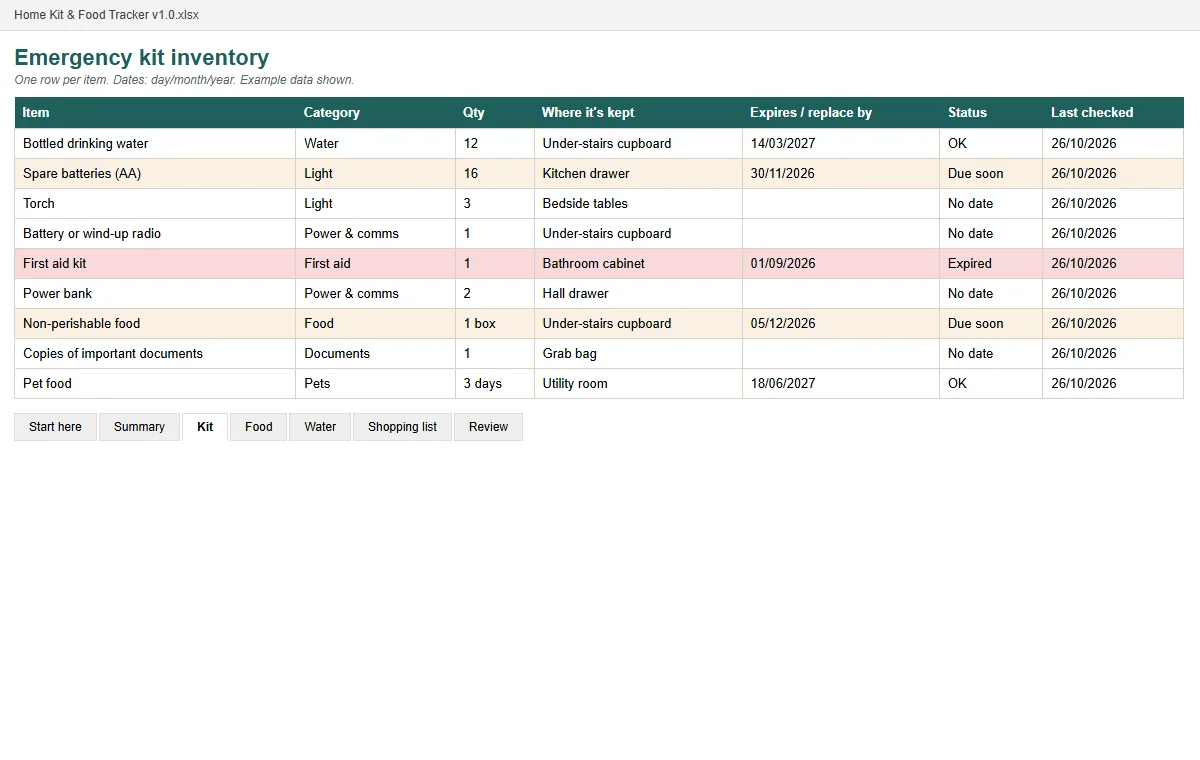 Bundle · £15.97 separatelyPrepared, Not Panicked bundle£9.99
Real pages shown before you buy · instant PDF · one-off price · 30-day refund.
Get the free 72-hour UK household checklist
Tick-box lists for each part of a UK home emergency kit, plus the key numbers on one page. Enter your email and we'll take you straight to the download.
That email address doesn't look right — please check it and try again.
We'll also email you when we publish new guides — occasional, never daily. Unsubscribe any time. See our privacy notice.
Frequently asked questions
When is heatwave season in the UK?
UKHSA's heat-health alerts for England have a core season from 1 June to 30 September. Alerts can be issued outside those dates if there is unusual heat, and the Met Office can issue extreme heat warnings at any time.
What is the difference between a heat-health alert and a Met Office extreme heat warning?
Heat-health alerts come from UKHSA with the Met Office and focus on health, for regions of England. The Met Office extreme heat warning is a separate weather warning (yellow, amber or red) based on how much impact the heat could have.
How do I tell heat exhaustion from heatstroke?
The NHS lists heat exhaustion signs such as tiredness, dizziness, headache, heavy sweating with pale clammy skin, cramps and intense thirst. Heatstroke signs include a very high temperature, hot skin that isn't sweating, fast breathing, confusion, a seizure or loss of consciousness. Heatstroke is an emergency: call 999.
Should I use a fan in a heatwave?
GOV.UK says electric fans can help if the air temperature is below 35°C. Don't point the fan directly at your body.
Do medicines need special storage in hot weather?
GOV.UK says some medicines must be stored below 25°C or in the fridge, so follow the instructions on the packaging. Keep taking prescribed medicines unless a health professional tells you otherwise.
What should I do if I see a dog in a hot car?
Advice from the British Veterinary Association, published by the Met Office, is to dial 999 and report it to the police if a dog is in distress in a hot car.
Sources
- GOV.UK (UKHSA): Weather-Health Alerting System (checked 29 Oct 2026)
- UKHSA: Weather-health alerting system user guide, PDF (checked 29 Oct 2026)
- UKHSA data dashboard: Heat health alerts (checked 29 Oct 2026)
- Met Office: Weather warnings guide (checked 29 Oct 2026)
- GOV.UK Be Ready: Hot weather and heatwaves (checked 29 Oct 2026)
- GOV.UK: Beat the heat, staying safe in hot weather (checked 29 Oct 2026)
- GOV.UK: Beat the heat, keep cool at home checklist (checked 29 Oct 2026)
- NHS: Heatwave, how to cope in hot weather (checked 29 Oct 2026)
- NHS: Heat exhaustion and heatstroke (checked 29 Oct 2026)
- Met Office: Looking after your pets during hot weather (checked 29 Oct 2026)