What is the most useful first step for an elderly parent?
Free Priority Services Register sign-up
Be Ready advises registering with energy and water suppliers' Priority Services Register, which tells them someone may need extra support during a supply cut. Then check whether their landline or telecare works in a power cut and agree who will visit if they can't be reached.
Source: GOV.UK Be Ready: Advice for disabled people and carers (checked 31 October 2026)
In short: Start with the GOV.UK Be Ready list (3 days of water at 3 litres per person per day, no-cook food, a torch, an FM radio, a power bank, cash, documents, first aid and medicines), then adjust it for an older person: easy-to-use torch and radio, enough regular medicines, a written medicines list, warm layers and blankets, numbers on paper, the Priority Services Register, a check on whether their landline or telecare works in a power cut, and an agreed person who will visit if they can't be reached.
Key facts
- Be Ready asks households to plan for 3 days, including bottled water at 3 litres per person per day for drinking, and to request repeat prescriptions at least 5 working days before running out. Source
- Be Ready advises agreeing a back-up plan with anyone who needs extra support, especially people who live alone: someone should visit in person if they cannot be reached. Source
- If someone can only call 999 by landline or uses a telecare device, Be Ready says ask the provider whether it works in a power cut; providers may offer a free back-up such as a battery unit lasting at least one hour. Source
- Be Ready advises keeping regular medication, enough for several days, somewhere easy to find, ideally in a waterproof container, with a written list of medicines and doses. Source
- Be Ready advises heating the rooms you use most to at least 18°C in cold weather and wearing several thin layers. Source
If you've seen the government's Be Ready adverts and thought "what about Mum?" or "is Dad sorted?", you're not alone. Older people often have plenty in the cupboard already. What they're more likely to be missing is the paperwork, the phone numbers on paper, and a plan for who checks on them. This guide takes the GOV.UK Be Ready checklist and adjusts it for an older parent, with the extra steps Be Ready gives for disabled people and carers.
The best way to do this is together, over a cup of tea, not as a surprise box on the doorstep.
The Be Ready basics, adjusted for an older person
| Be Ready item | For an older parent |
|---|---|
| Bottled water for 3 days, 3 litres per person per day | 9 litres for one person. Smaller bottles are easier to lift than a big pack. |
| Non-perishable food for 3 days, no cooking needed | Foods they actually like, in tins with ring-pulls or easy openers. Soft foods if chewing is hard. |
| Torch and spare batteries | A light torch with one large switch, by the bed. See choosing a torch. |
| Battery or wind-up FM radio | A simple one with big buttons, and their usual station's frequency written on it. |
| Charged power bank | Check it fits their phone, and show them how to use it. |
| Blankets and warm clothes | Several thin layers, a hat, slippers with grip, a hot water bottle. |
| Cash (coins and notes) and cards | Enough for a few days of essentials. |
| Copies of documents | Including instructions for any medical equipment they rely on. |
| First aid kit and medicines | Enough regular medicines for several days, with a written list. |
Five things that matter more than the kit
1. The Priority Services Register
Be Ready advises signing up to the Priority Services Register (PSR). It's free, and tells their electricity, gas and water companies they may need extra help in a supply cut. Be Ready says many households qualify. Our Priority Services Register guide explains how to join with the main suppliers. In Northern Ireland it's the Customer Care Registers.
2. The phone, the landline and the alarm pendant
Landlines are moving to digital, and a digital landline doesn't work in a power cut without a back-up. Be Ready says if someone can only call 999 by landline, or uses a telecare alarm, ask the provider whether it works in a power cut. Providers may offer a free back-up, such as a battery unit lasting at least one hour. See our digital landline switchover guide.
Make sure they also have a charged mobile phone they're comfortable using. Be Ready says 999 calls from a mobile can connect through other available networks.
3. Medicines
Be Ready advises:
- keeping enough regular medication for several days, somewhere easy to find, ideally in a waterproof container
- ordering repeat prescriptions at least 5 working days before they run out
- writing down a list of medicines and doses
Talk to their GP or pharmacist before building up extra. If any medicine needs a fridge, read medicines that need a fridge in a power cut. A Message in a Bottle in the fridge helps paramedics find the key details.
4. A check-in plan
Be Ready asks families to agree a back-up plan with anyone who needs extra support, especially people who live alone: someone should visit in person if they can't be reached. Agree:
- who your parent calls first, and who calls them
- a neighbour or friend nearby who will knock on the door (Be Ready suggests asking neighbours to check on people you're worried about)
- whether that person has a spare key
- what happens if they're told to leave home: where they would go
5. Staying warm
Homes cool quickly when the heating goes off. Be Ready's cold weather advice is to heat the rooms you use most to at least 18°C and wear several thin layers (Be Ready). In a power cut, close doors to unused rooms and draw the curtains. See keeping warm without heating and the Cold-Health Alerts guide.
Hearing, sight and mobility
From Be Ready's advice for disabled people:
- Hearing aids: keep spare batteries, and a spare charged battery pack if the device uses one.
- Sight: keep a long cane or other mobility aid in a familiar place.
- Mobility: think about what a power cut means for a stairlift or powered chair, and keep the mobile phone within reach.
- Equipment: if they rely on oxygen or other powered equipment, plan now with the care provider or clinical team.
Our longer emergency plan for older people and carers goes into more detail.
A one-afternoon checklist
- Sign up to the Priority Services Register
- Ask the phone or telecare provider about power cuts and a back-up
- Put a torch by the bed and one in the kitchen
- Write key numbers on paper: family, GP, pharmacy, 105 for power cuts (03457 643643 in Northern Ireland), 111
- Write the medicines list and keep it with the medicines
- 3 days of water and food they like
- Agree who visits if nobody can reach them
- Put a reminder in your diary to check it all in six months
Thinking about a Christmas present? Our practical gifts for elderly parents list keeps to the same calm idea.
Limitations
This is general information, not medical or professional advice. Ask a GP, pharmacist or care provider about medicines and equipment. Follow official instructions in an emergency and call 999 if anyone is in immediate danger. Services and registers differ in Northern Ireland, Scotland and Wales.
Turn this guide into a written plan
Reading helps. Writing it down is what makes it work when the phones are flat. Start with the free plan builder, or get the full printable version:
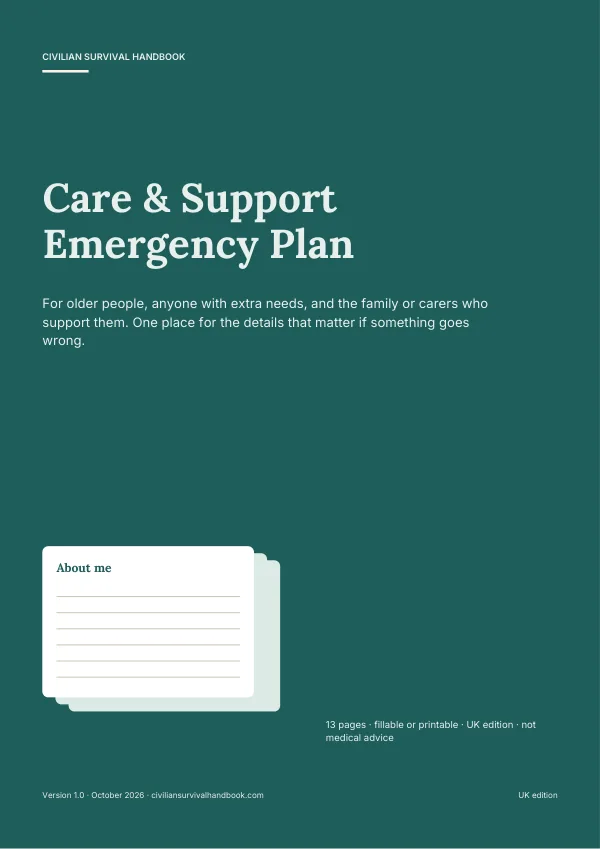 For this topicCare & Support Emergency Plan£4.99
 Your whole household planHousehold Emergency Plan Pack£6.99
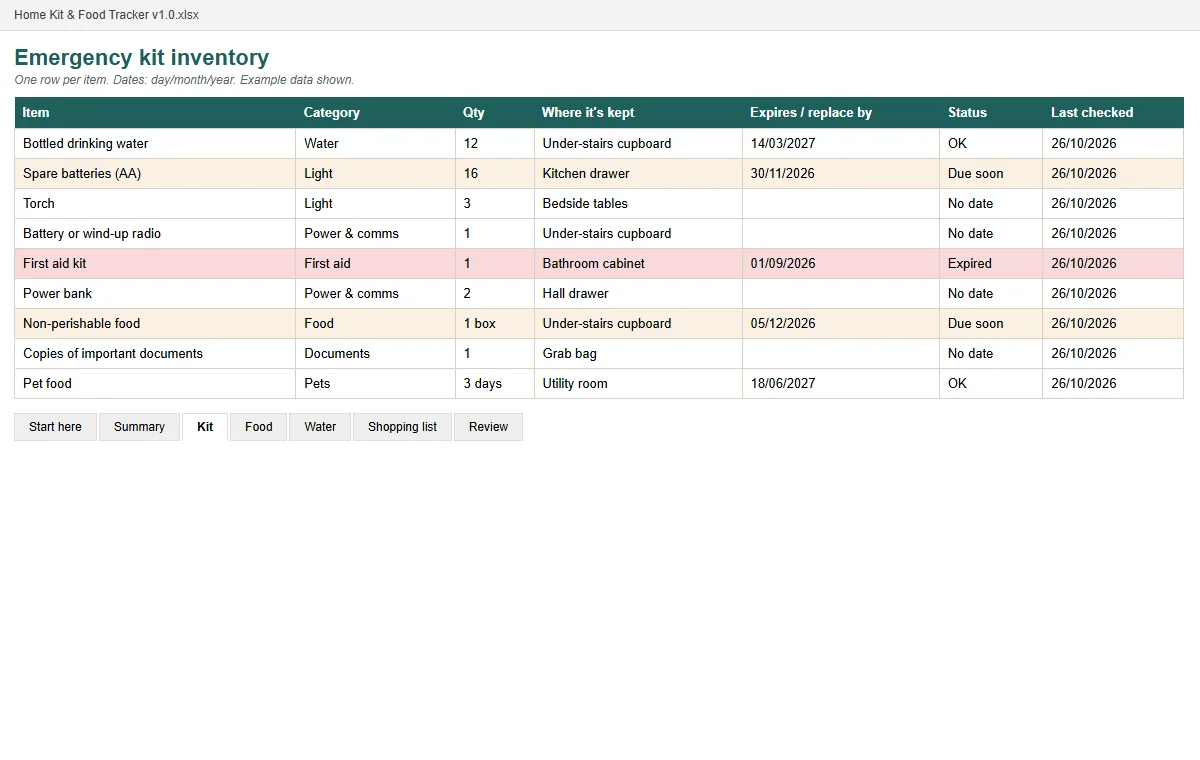 Bundle · £15.97 separatelyPrepared, Not Panicked bundle£9.99
Real pages shown before you buy · instant PDF · one-off price · 30-day refund.
Get the free 72-hour UK household checklist
Tick-box lists for each part of a UK home emergency kit, plus the key numbers on one page. Enter your email and we'll take you straight to the download.
That email address doesn't look right — please check it and try again.
We'll also email you when we publish new guides — occasional, never daily. Unsubscribe any time. See our privacy notice.
Frequently asked questions
What should be in an emergency kit for an elderly person?
The Be Ready basics (3 days of water and no-cook food, torch, FM radio, power bank, cash, documents, first aid, medicines) plus things that suit them: an easy torch, a simple radio, a written medicines list, spare glasses and hearing aid batteries, warm layers and blankets, and numbers on paper.
Should my elderly parent join the Priority Services Register?
If they're eligible, yes. Be Ready advises it. It's free and tells their energy and water companies they may need extra support in an outage. In Northern Ireland the equivalent is the Customer Care Registers.
Will my parent's telecare alarm work in a power cut?
Not always. Be Ready says to ask the provider whether a landline or telecare device works in a power cut, and about a free back-up such as a battery unit lasting at least one hour.
How much medicine should they keep?
Be Ready says keep enough regular medication for several days, and order repeat prescriptions at least 5 working days before running out. Ask their GP or pharmacist before building up any extra.
What if I live far away from my parent?
Agree a check-in plan: who they call, who calls them, and a neighbour or friend nearby who will visit in person if nobody can reach them, as Be Ready advises. Give that person a spare key if your parent is happy to.
Sources
- GOV.UK Be Ready: Be ready for emergencies, checklist and plan (checked 31 Oct 2026)
- GOV.UK Be Ready: Advice for disabled people and carers (checked 31 Oct 2026)
- GOV.UK Be Ready: Power cuts (checked 31 Oct 2026)
- GOV.UK Be Ready: Cold weather, snow and ice (checked 31 Oct 2026)
- Priority Services Register (checked 31 Oct 2026)