In short: GOV.UK says you can clear snow and ice from pavements yourself, and that it's unlikely you'll be sued or held responsible if someone is injured on a path you've cleared carefully. Clear early while the snow is fresh and loose, use salt if possible, use ash or sand if you don't have enough salt, and don't use water because it can refreeze as black ice. Don't take salt from council grit bins. The Met Office says ordinary table or dishwasher salt works, about a tablespoon for each square metre.
Key facts
- GOV.UK says you can clear snow and ice from pavements yourself, and it's unlikely you'll be sued or held responsible if someone is injured on a path you've cleared carefully. Source
- GOV.UK advises clearing early in the day, using salt if possible and not using water, which might refreeze and turn to black ice. Source
- GOV.UK says not to use the salt from council salting bins, as it is used to keep roads clear. Source
- The Met Office says ordinary table or dishwasher salt can be used, a tablespoon for each square metre you clear. Source
- The Met Office says snow can leave you without food, heat or light for several days, and lists the British Red Cross Support Line, 0808 196 3651. Source
 Want this written down for your home? Household Emergency Plan Pack — printable, £6.99.
Snow doesn't arrive every winter in most of the UK. When it does, a cleared path and a few supplies at home make it much easier to manage. This guide covers clearing your own path and the pavement outside, based on GOV.UK's snow-clearing guidance, and getting through a snow day at home, based on Met Office and Be Ready advice.
Can I clear the pavement outside my home?
Yes. GOV.UK says you can clear snow and ice from pavements yourself. Many people hold back because they're worried about being blamed if someone slips. GOV.UK addresses this directly: it says it's unlikely you'll be sued or held responsible if someone is injured on a path or pavement you've cleared carefully.
Clearing carefully means following the steps below.
How to clear snow and ice safely
GOV.UK's advice:
- Start early in the day. Fresh, loose snow is easier to move than snow that has been walked on and packed down.
- Don't use water. GOV.UK warns it might refreeze and turn to black ice.
- Use salt if possible. Salt melts the ice or snow and stops it refreezing overnight.
- Use ash or sand if you don't have enough salt. These give grip underfoot.
- Take extra care on steps and steep paths, where you may need more salt.
You don't need special rock salt. The Met Office says ordinary table or dishwasher salt can be used, about a tablespoon for each square metre you clear.
Leave the grit bin alone
GOV.UK says not to use the salt from council salting bins, because it's used to keep roads clear. Your council decides which roads and pavements it grits. Check your council's website for its gritting routes.
Look after yourself while you clear
Wear warm layers and shoes with good grip, which Be Ready and UKHSA both recommend for icy surfaces.
Clear a path for a neighbour
The Met Office suggests clearing paths for elderly neighbours when you clear your own, and salting them to reduce slips. It also asks you to check whether elderly relatives or neighbours need practical help, and that they have enough food.
The NHS suggests helping older or vulnerable people collect prescriptions before bad weather. If they do go out, it suggests shoes with good grip and a scarf over the mouth.
Getting ready for a snow day at home
The Met Office notes that snow can leave people without food, heat or light for several days. Before snow is forecast, it suggests having:
- torches and spare batteries
- candles, and matches or lighters
- plenty of blankets and warm clothing
Be Ready adds having enough medication and food in case it's hard to leave the house, and arranging for someone to help if you need it. It also suggests acting on any Met Office National Severe Weather Warnings or Cold-Health Alerts for your area. Our Cold-Health Alerts guide explains the colours.
Be Ready also suggests asking your water and power suppliers whether you qualify for the free Priority Services Register, and preparing your car for winter driving with essential items in the boot.
While you're snowed in
The Met Office's tips for staying safe if you're cut off:
- Keep your home at a steady temperature day and night.
- Switch off electric heaters and put out fires before you go to bed.
- Open kitchen and bathroom cabinet doors so warmer air reaches the pipes. Our frozen pipes guide covers what to do if one freezes.
- Never use a hob or oven to heat your home, because it can increase carbon monoxide levels.
- Make sure pets have a warm spot.
- Dress in loose layers.
Be Ready suggests heating the rooms you use most to at least 18°C. If the heating fails, our guide to keeping warm without heating has more ideas.
If the power goes off
Snow can bring down power lines. The Met Office suggests keeping a phone power pack ready, switching off appliances that shouldn't be left running, and leaving one light on so you know when the power is back. Call 105 for power cut information (free in England, Scotland and Wales). Our winter power cut checklist has the rest.
Travelling in snow
The Met Office says it is safer not to drive in heavy snow and icy conditions. If you must go:
- plan your route and check for closures
- allow extra time, and check wipers, tyres and screenwash
- take warm clothes, food, drink, a blanket and a torch
- take a fully charged phone and an in-car charger
If you walk, the Met Office suggests leaving five minutes early and using main roads that have been gritted. Our car emergency kit guide lists what to keep in the boot.
Who to call
| Need | Who |
|---|---|
| Power cut | 105 (England, Scotland, Wales) |
| Someone may have hypothermia | NHS 111 |
| Support in severe weather | British Red Cross Support Line: 0808 196 3651 |
| Anyone in danger | 999 |
Limitations
This is general information based on GOV.UK, Met Office, GOV.UK Be Ready and NHS advice, checked on 29 October 2026. It isn't legal advice. Council services and local rules may differ in Scotland, Wales and Northern Ireland, so check your council's website. In an emergency, call 999.
If you'd like one place to write down neighbours' numbers, your stop tap, fuse box and who checks on whom in bad weather, the Household Emergency Plan Pack has fillable pages for each.
Turn this guide into a written plan
Reading helps. Writing it down is what makes it work when the phones are flat. Start with the free plan builder, or get the full printable version:
Your whole household planHousehold Emergency Plan Pack£6.99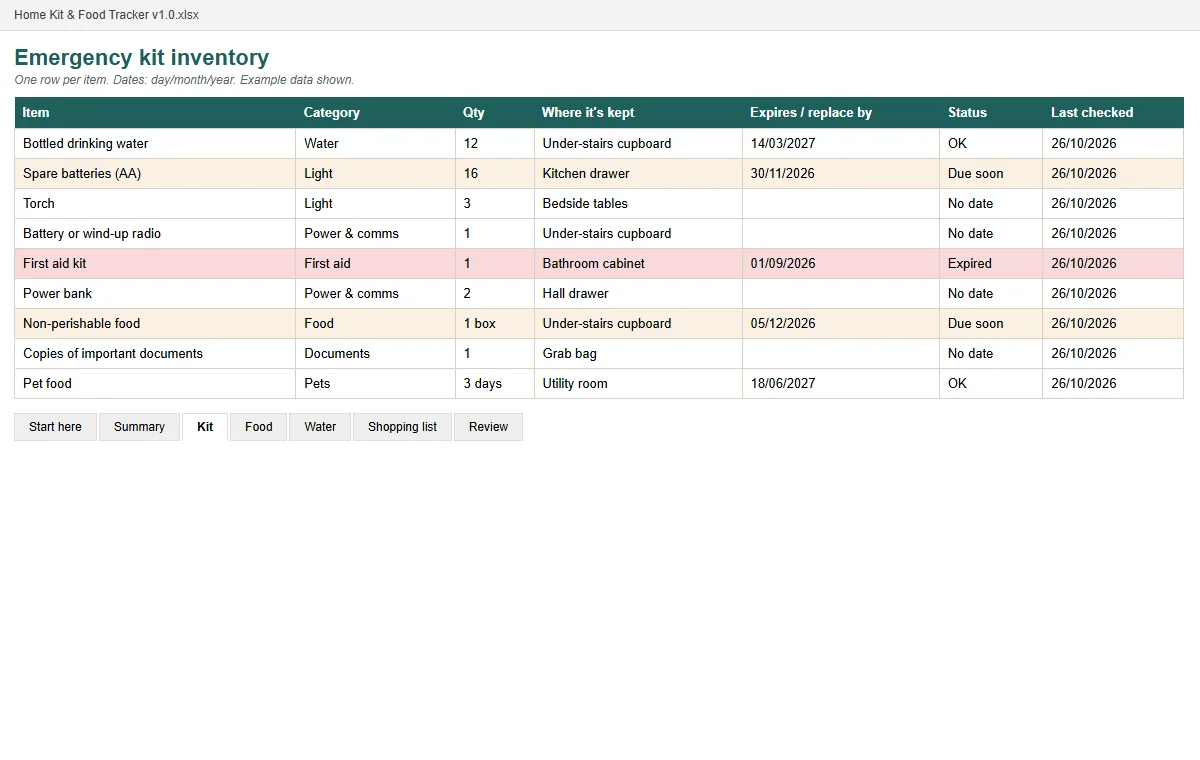 Bundle · £15.97 separatelyPrepared, Not Panicked bundle£9.99
Real pages shown before you buy · instant PDF · one-off price · 30-day refund.
Get the free 72-hour UK household checklist
Tick-box lists for each part of a UK home emergency kit, plus the key numbers on one page. Enter your email and we'll take you straight to the download.
That email address doesn't look right — please check it and try again.
We'll also email you when we publish new guides — occasional, never daily. Unsubscribe any time. See our privacy notice.
Frequently asked questions
Can I be sued for clearing snow outside my house?
GOV.UK says it's unlikely you'll be sued or held responsible if someone is injured on a path or pavement you've cleared carefully. Follow its advice: clear early, use salt, and don't use water.
Should I pour hot water on an icy path?
No. GOV.UK says not to use water, because it might refreeze and turn to black ice.
How much salt do I need for my path?
The Met Office says ordinary table or dishwasher salt works, about a tablespoon for each square metre you clear. If you don't have enough salt, GOV.UK says ash or sand can be used.
Can I use salt from the council grit bin?
GOV.UK says not to use the salt from salting bins, because it's used to keep roads clear.
What should I do if snow means I can't get out?
The Met Office suggests keeping torches, batteries, blankets and warm clothing ready, keeping your home at a steady temperature and never using a hob or oven for heat. Make sure you have enough food and medicines, as Be Ready advises.
Sources
- GOV.UK: Clear snow from a road, path or cycleway (checked 29 Oct 2026)
- Met Office: 5 tips for staying safe in snow (checked 29 Oct 2026)
- Met Office: WeatherReady tips for snow and ice, 19 Nov 2025 (checked 29 Oct 2026)
- GOV.UK Be Ready: Cold weather, snow and ice (checked 29 Oct 2026)
- NHS: Keep warm, keep well (checked 29 Oct 2026)