In short: GOV.UK Be Ready's advice before cold weather is to have heating and cooking appliances checked by a Gas Safe registered engineer, fit a carbon monoxide alarm, ask energy and water suppliers about their Priority Services Registers, deal with damp and mould, get seasonal vaccinations, keep enough medicines and food in case going out is hard, and get the car ready. In a cold spell, heat the rooms you use most to at least 18°C, wear several thin layers, follow Met Office warnings and Cold-Health Alerts, and check on vulnerable family and neighbours.
Key facts
- Be Ready advises having heating and cooking appliances checked by a Gas Safe registered engineer and fitting a carbon monoxide alarm that meets BS Kitemark or EN 50291. Source
- Be Ready advises heating the rooms you use most, such as the living room or bedroom, to at least 18°C, and wearing several thin layers rather than one thick layer. Source
- Be Ready advises checking you have enough medication and food in case leaving home becomes difficult, and arranging for someone to collect supplies if needed. Source
- In England, UKHSA's Cold-Health Alerts mainly run from 1 November to 31 March, and anyone can register to receive them by email. Source
- CCW says the stop tap is usually under the kitchen sink but may be elsewhere, and to thaw a frozen pipe gently, never with a naked flame. Source
- Cold Weather Payment is £25 for each 7-day period of very cold weather between 1 November 2026 and 31 March 2027, for people on certain benefits. Source
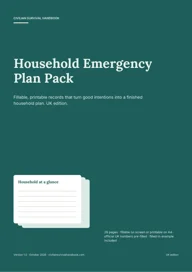 Want this written down for your home? Household Emergency Plan Pack — printable, £6.99.
Most winter problems are small and predictable: a boiler that stops, a frozen pipe, a few icy days when it's hard to get out. An hour in early November deals with most of them. This checklist follows GOV.UK Be Ready's cold weather advice, with links to the official pages for the details.
Before the cold arrives
- Heating and cooking appliances checked by a Gas Safe registered engineer (Be Ready). HSE strongly advises a service at least once a year.
- Carbon monoxide alarm fitted that meets BS Kitemark or EN 50291, and tested. Our carbon monoxide guide lists the symptoms.
- Priority Services Registers: ask your energy and water suppliers whether you qualify. See our Priority Services Register guide.
- Damp and mould: find out what's causing any and how to deal with it.
- Seasonal vaccinations through your pharmacist, GP or the NHS website, if you're eligible.
- Medicines and food for a few days in case going out is hard, and someone lined up to collect supplies if needed.
- The car: ready for winter driving, with a few essentials in the boot. Our car emergency kit guide has a winter list.
- Hypothermia: everyone knows the signs. Be Ready says it is a medical emergency.
Heating and a warm room
Be Ready, UKHSA and the NHS advise heating the rooms you use most, such as the living room or bedroom, to at least 18°C. Several thin layers keep you warmer than one thick one. Keep windows closed at night, reduce draughts and keep moving indoors.
Write down how your heating works and how to reset the boiler, so anyone at home could do it. If the heating stops, our guide to keeping warm without heating explains what to do. Never use a hob or oven to heat your home, because it can raise carbon monoxide levels (Met Office).
Pipes and water
CCW says the stop tap is usually under the kitchen sink, but it can be elsewhere in the house or even outside. Find it now and check it turns.
- Lag outside taps and pipes in cold spaces.
- Know how to thaw a frozen pipe gently: a hairdryer on a warm setting, a hot water bottle or a heated cloth. Never a naked flame.
- Keep a plumber's number. CCW points to WaterSafe for registered plumbers.
More in our guide to frozen and burst pipes.
Alerts, and who checks on whom
- Met Office app or warnings page set up for your area. See what the warning colours mean.
- Cold-Health Alerts (England): UKHSA issues them mainly from 1 November to 31 March, and anyone can sign up by email. Our Cold-Health Alerts guide explains the colours.
- Check-ins agreed: Be Ready asks us to make sure vulnerable family, friends and neighbours know the safety steps, and to offer practical help such as getting food or medication.
If you're worried about someone's health, contact a pharmacist, GP or NHS 111. In an emergency, call 999.
Power cuts in winter
Storms can bring power cuts. Call 105 (Great Britain) or 03457 643 643 (Northern Ireland). Our winter power cut checklist covers torches, keeping warm and what to do about the fridge.
Help with winter costs
| Help | In short | Our guide |
|---|---|---|
| Cold Weather Payment | £25 for each 7-day period at 0°C or below, 1 Nov 2026 to 31 Mar 2027, if you get certain benefits. Not in Scotland. | Cold Weather Payment |
| Warm Home Discount | A one-off £150 off the electricity bill if eligible. Not in Northern Ireland. | Warm Home Discount |
| Winter Fuel Payment | £100 to £300 for people born on or before 27 June 1960. Scotland has its own scheme. | Winter Fuel Payment |
| Your energy supplier | Ofgem says to ask about a payment plan, payment break or hardship fund. | Keeping warm without heating |
Figures are from the GOV.UK pages linked in each guide, with the date we checked them.
Turn this guide into a written plan
Reading helps. Writing it down is what makes it work when the phones are flat. Start with the free plan builder, or get the full printable version:
Your whole household planHousehold Emergency Plan Pack£6.99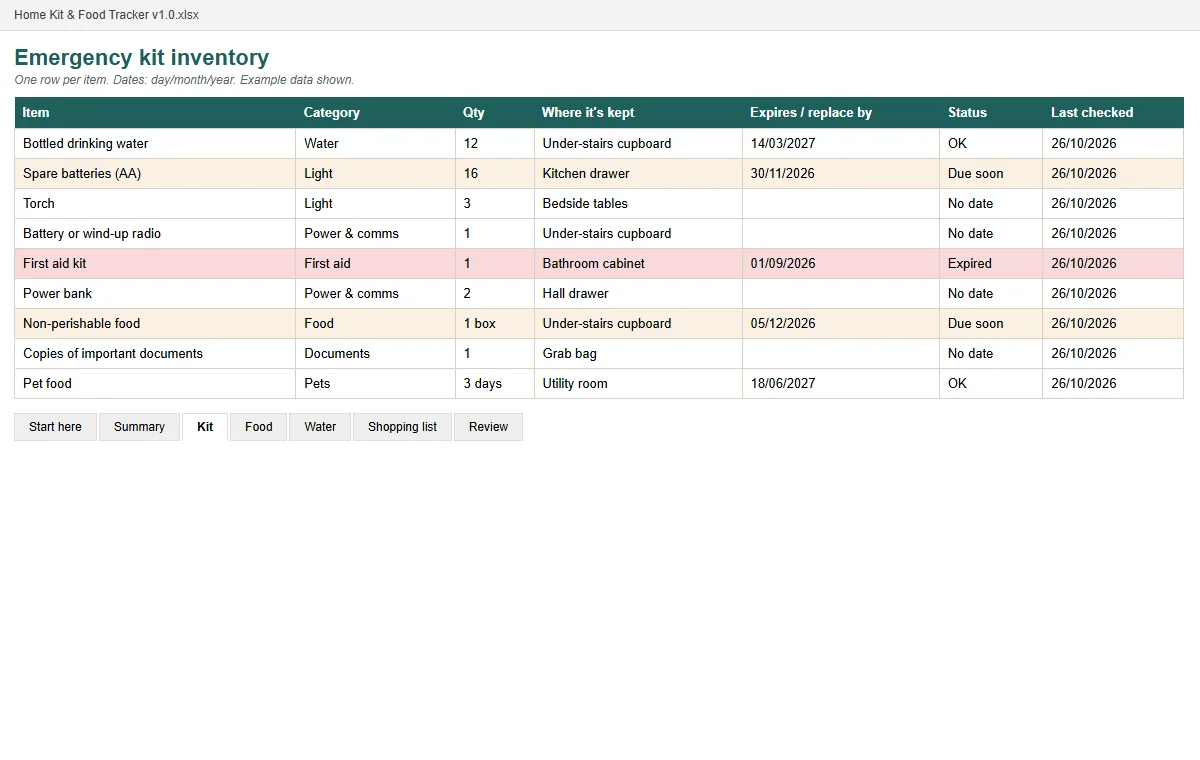 Bundle · £15.97 separatelyPrepared, Not Panicked bundle£9.99
Real pages shown before you buy · instant PDF · one-off price · 30-day refund.
Get the free 72-hour UK household checklist
Tick-box lists for each part of a UK home emergency kit, plus the key numbers on one page. Enter your email and we'll take you straight to the download.
That email address doesn't look right — please check it and try again.
We'll also email you when we publish new guides — occasional, never daily. Unsubscribe any time. See our privacy notice.
Frequently asked questions
What temperature should I heat my home to in winter?
Be Ready, UKHSA and the NHS advise heating the rooms you use most, such as the living room or bedroom, to at least 18°C.
When should I get my boiler serviced?
Before the cold arrives. Be Ready advises having heating and cooking appliances checked by a Gas Safe registered engineer, and HSE strongly advises a service at least once a year.
What should I do if a pipe freezes?
Turn off the water at the stop tap and thaw the pipe gently with a hairdryer on a warm setting, a hot water bottle or a heated cloth. CCW says never use a naked flame. If it has burst, call a plumber.
How do I get cold weather alerts?
Use the Met Office app or warnings page for weather warnings anywhere in the UK. In England you can also register for UKHSA's Cold-Health Alerts by email.
Is there help with heating costs?
Depending on where you live and your circumstances: Cold Weather Payment, the Warm Home Discount, Winter Fuel Payment, and help from your energy supplier such as a payment plan or hardship fund. Our guides to each explain who qualifies.
Sources
- GOV.UK Be Ready: Cold weather, snow and ice (checked 31 Oct 2026)
- UKHSA: Top tips for keeping warm and well this winter (checked 29 Oct 2026)
- GOV.UK: Weather-health alerting system (checked 28 Oct 2026)
- CCW: Winter advice (checked 29 Oct 2026)
- HSE: Gas safety in the home, FAQs (checked 29 Oct 2026)
- GOV.UK: Cold Weather Payment (checked 31 Oct 2026)
- Met Office: Weather warnings guide (checked 29 Oct 2026)